
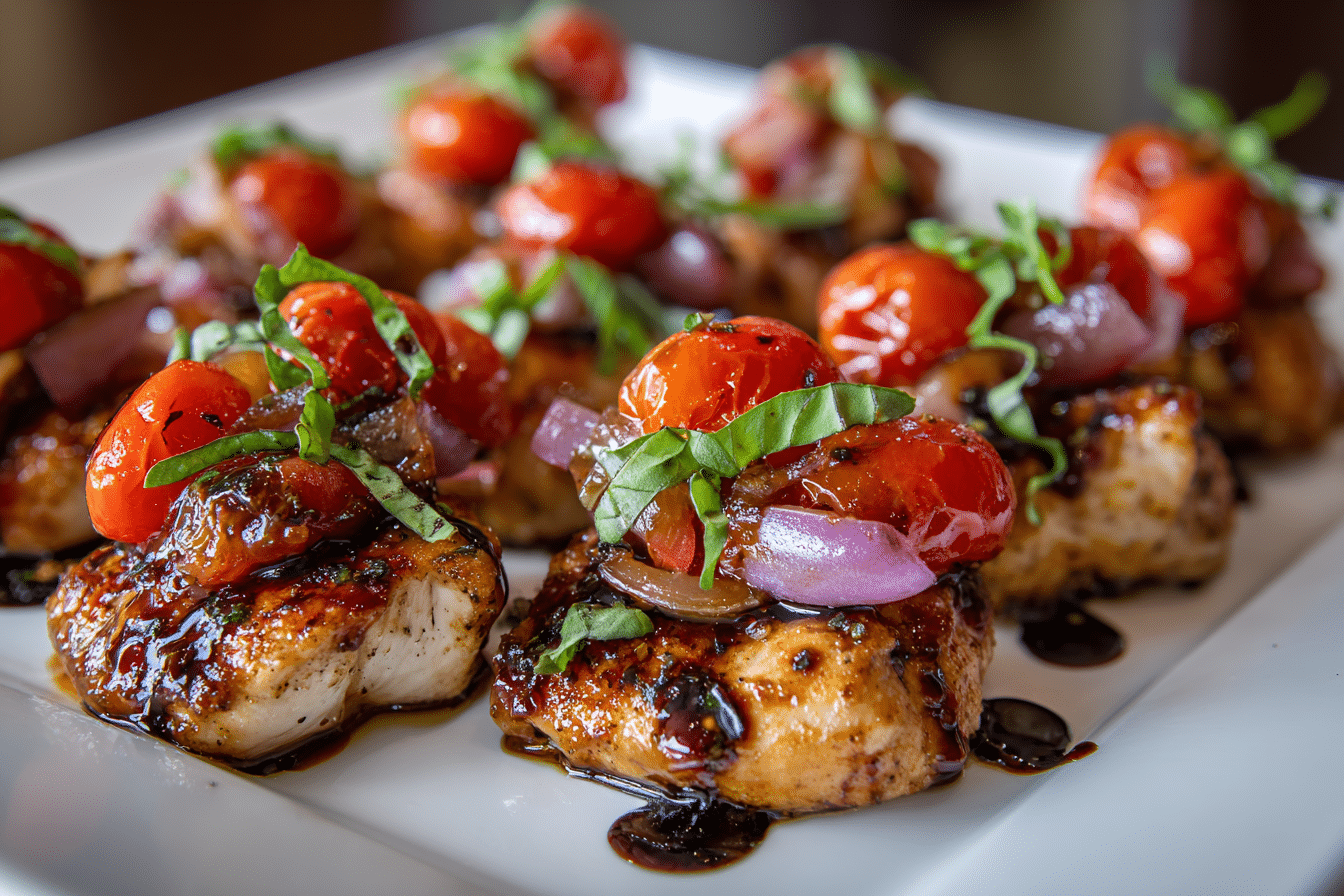
When time is short but you want a meal that tastes like it took hours, this Balsamic Chicken Skillet is the answer. It’s a one-pan wonder that marries juicy seared chicken with caramelized vegetables, all enveloped in a velvety balsamic glaze that tastes both homey and elegant.
Inspired by rustic Italian cooking, this dish pairs bold vinegar with sweet tomatoes, aromatic garlic, and a hint of honey to create a glossy sauce that coats everything in the pan. As it roasts, the sauce thickens, and the flavors intensify — no fancy techniques required.
Perfect for weeknight dinners or casual entertaining, this is one of those reliable, satisfying meals that you’ll find yourself making on repeat.
Ingredient Breakdown
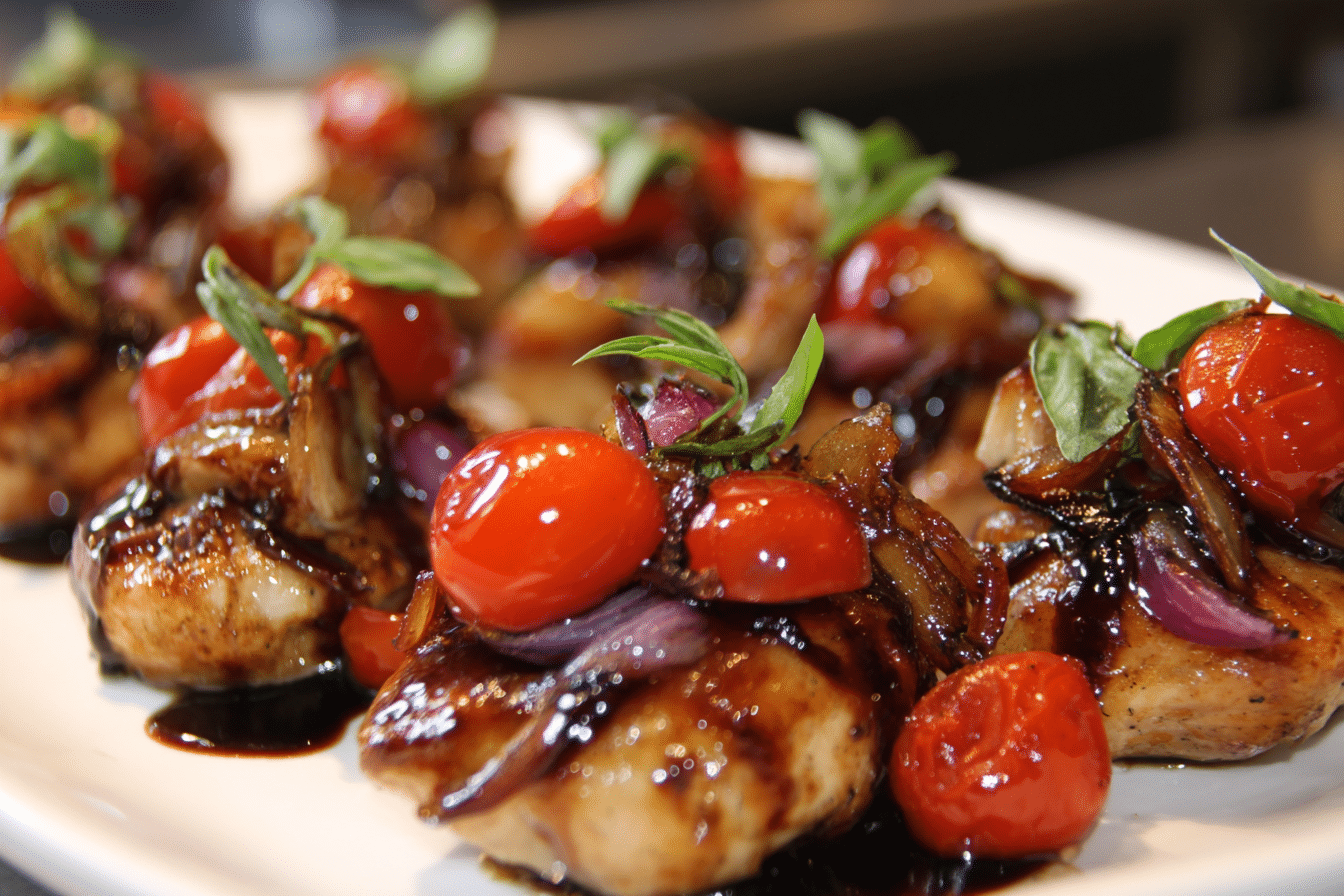
Here’s what you’ll need to create this simple yet flavorful dish, along with why each component matters:
-
Chicken (Breasts or Thighs): Thighs are naturally juicier and richer, but breasts are a great leaner alternative. Just make sure the pieces are similar in size so they cook evenly.
-
Balsamic Vinegar: This adds the signature tang and sweetness to the dish. Go for a thicker balsamic if you can — something aged or with a syrupy consistency works best.
-
Honey: Used to offset the acidity in the vinegar and give the sauce its subtle sweetness. You only need a touch.
-
Garlic: Essential for depth and aroma. Fresh garlic brings a stronger, more complex flavor than pre-minced.
-
Cherry Tomatoes: These soften in the oven and release natural juices, helping create the glaze while adding pops of sweetness.
-
Red Onion: Adds body and a slight sharpness that mellows with roasting.
-
Olive Oil: Used to sear and roast the ingredients. Choose extra virgin for more flavor.
-
Salt & Pepper: The only seasonings you’ll need — they let the core ingredients shine.
-
Fresh Herbs (Optional): A sprinkle of basil or parsley at the end gives a bright, fresh contrast to the rich sauce.
Ingredient Tips and Substitutions:
-
Vegan-Friendly: Replace chicken with tofu, tempeh, or thick slices of eggplant. Maple syrup works well in place of honey.
-
Low-Carb Adjustments: Use sugar-free sweeteners instead of honey, and swap tomatoes for lower-carb vegetables like zucchini.
-
Add More Vegetables: Roasting bell peppers, green beans, or mushrooms in the same pan adds variety without extra work.
Cooking Instructions
This meal goes from stovetop to oven in just a few steps, with minimal cleanup afterward. Here’s how to make it:
-
Preheat Your Oven:
-
Set your oven to 400°F (200°C) so it’s ready to go once your chicken is seared.
-
-
Prepare the Chicken:
-
Pat the chicken dry using paper towels — this helps it brown nicely.
-
Season both sides with salt and pepper.
-
-
Sear the Chicken:
-
Heat olive oil in a large, oven-safe skillet over medium-high heat.
-
Cook the chicken on each side for 3–4 minutes until golden brown. It doesn’t need to cook through at this stage.
-
-
Add the Vegetables:
-
Move the chicken aside in the skillet.
-
Add sliced red onions, halved cherry tomatoes, and minced garlic to the empty side of the pan. Stir gently to combine.
-
-
Make the Glaze:
-
In a bowl, mix balsamic vinegar with honey.
-
Pour the mixture evenly over the chicken and vegetables.
-
-
Roast It All Together:
-
Place the skillet in the oven.
-
Roast for 12–15 minutes until the chicken is fully cooked (165°F internal temperature).
-
-
Let It Rest and Finish:
-
Remove from oven and let the dish sit for 5 minutes.
-
Garnish with fresh herbs and spoon the sauce over the chicken before serving.
-
Kitchen Notes:
-
A cast-iron pan is ideal here — it holds heat well and gives the chicken a great sear.
-
If you prefer a thicker glaze, you can simmer the sauce on the stovetop after roasting until it reaches the desired consistency.
-
To prevent burning, don’t add garlic too early — mix it with the vegetables just before roasting.
Creative Variations & Helpful Substitutes
-
Batch Cooking: Double the recipe and use a large baking sheet. Brown the chicken in batches and roast everything together.
-
Different Veggies: Try baby potatoes, squash, or carrots — just make sure to cut them small enough to roast in the same time frame.
-
Add a Kick: Red pepper flakes or a splash of hot sauce give the dish a bit of heat.
-
Flavor Enhancers: Add a teaspoon of Dijon mustard or a splash of stock to the balsamic mixture for a richer flavor.
-
Herb Variations: Fresh rosemary or thyme can be added to the pan before roasting for an earthy note.
When to Serve & How to Pair
This balsamic chicken skillet is a go-to option for nearly any occasion:
-
With Sides: Serve alongside buttered pasta, mashed cauliflower, crusty bread, or steamed green beans.
-
For Meal Prep: Portion into containers with rice or quinoa and store for up to four days.
-
Special Meals: This dish is elegant enough for date night or dinner with friends, yet unfussy enough for casual weekday meals.
-
Leftover Ideas: Slice the chicken and toss with arugula and extra vinaigrette for a next-day salad.
Nutrition Snapshot
This recipe offers a well-rounded nutritional profile with high-quality protein, antioxidant-rich vegetables, and heart-healthy fats from olive oil.
Tomatoes provide vitamin C and lycopene, garlic supports immune health, and balsamic vinegar adds flavor without heavy calories. The dish is naturally gluten-free and can easily be made lower in carbs or fully plant-based with simple swaps.
Controlling the sweetness by adjusting honey or using a sugar-free alternative gives you flexibility depending on your dietary goals.
FAQs
Q1: Can I prepare this dish ahead of time?
A1: Definitely. Cook it as directed, cool it completely, and store it in an airtight container in the fridge for up to four days. Reheat gently in the oven or on the stovetop to maintain moisture.
Q2: What type of balsamic should I buy?
A2: Look for a bottle that’s labeled “aged” or has a slightly thick texture. It should taste balanced — not overly acidic. Balsamic from Modena is usually a good choice.
Q3: Can I cook this with bone-in chicken?
A3: Yes, just plan for additional roasting time — about 10–15 extra minutes. Always check that the internal temp reaches 165°F before serving.
Q4: My sauce isn’t thickening — how can I fix it?
A4: Remove the chicken once it’s done and simmer the remaining sauce on the stovetop for 5 minutes to reduce. You can also add a cornstarch slurry if needed.
Q5: Is this a good option for low-carb eaters?
A5: With small changes, yes. Reduce or skip the honey and stick to non-starchy vegetables. The balsamic glaze still provides great flavor.
Q6: Will it freeze well?
A6: The chicken freezes well for up to 2 months. The vegetables may soften more upon reheating, but the flavor remains intact. Thaw overnight and reheat gently.
Q7: What are some vegetarian alternatives?
A7: Roasted tofu, cauliflower steaks, or thick portobello mushrooms are excellent substitutes. Coat them with the same glaze and roast until tender.
An easy one-skillet recipe featuring seared chicken, cherry tomatoes, and onions roasted in a balsamic and honey glaze for a flavorful, no-fuss dinner.