
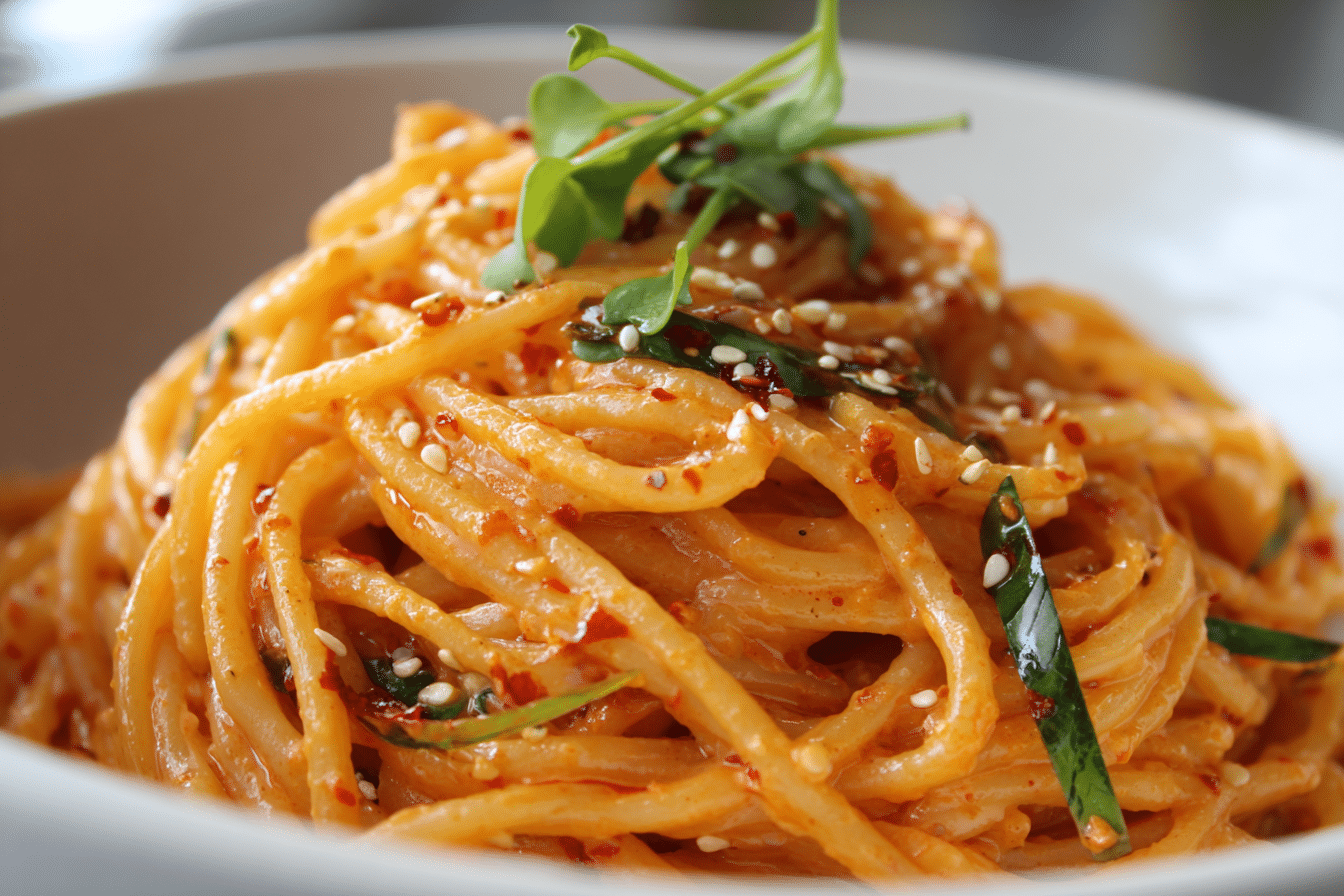
Creamy Gochujang Pasta is a bold, rich, and crave-worthy fusion of Korean heat and Italian comfort. It combines the fiery umami of gochujang — a Korean fermented chili paste — with a creamy, savory sauce that clings to pasta perfectly. The result is a velvety, spicy dish that’s both comforting and exciting.
This recipe is perfect for adventurous weeknight dinners or a quick 30-minute meal that doesn’t compromise on flavor. It’s spicy, slightly sweet, garlicky, and utterly satisfying — a new favorite for fans of Asian-inspired pasta dishes.
Ingredients Overview
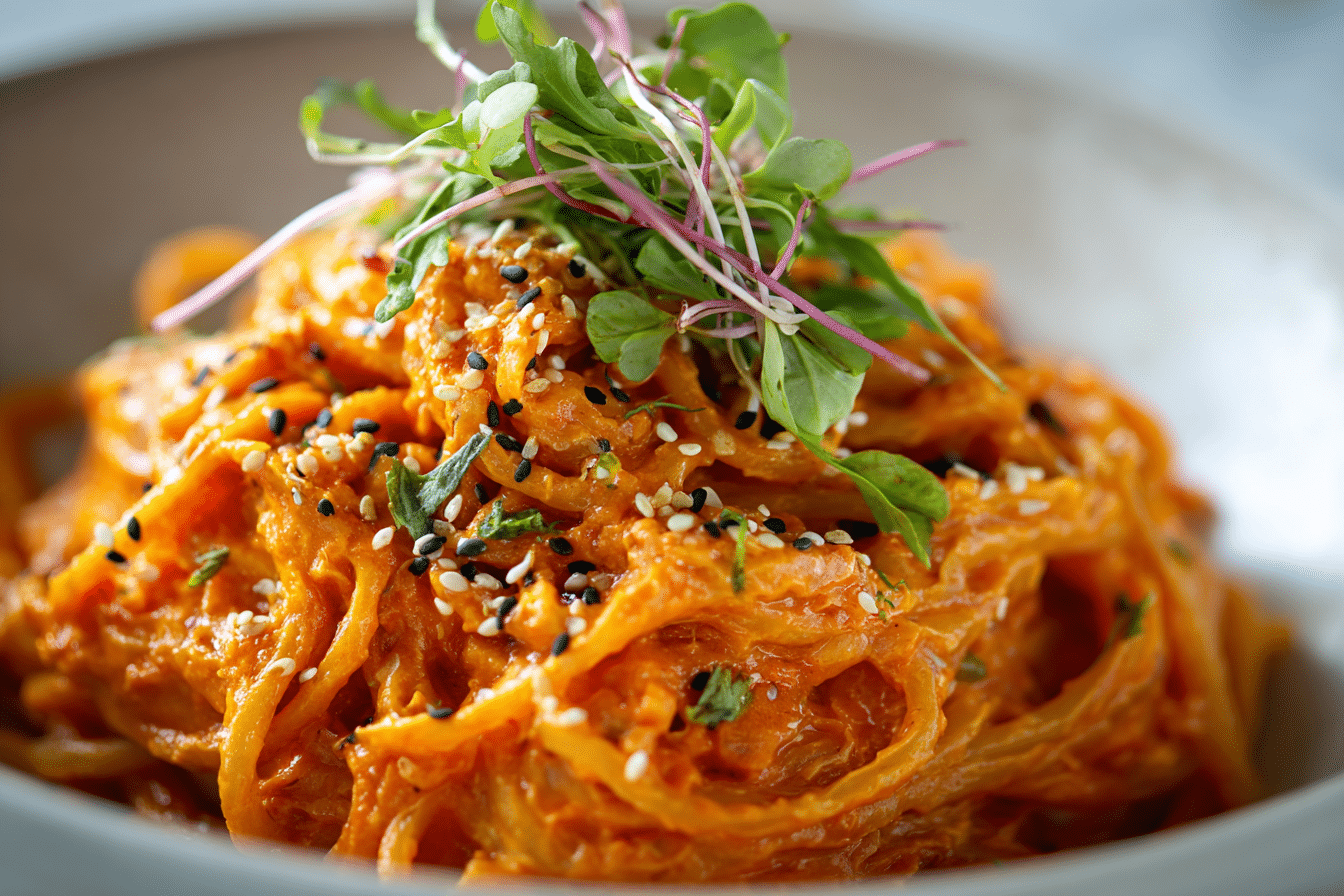
Each ingredient plays a role in building a well-balanced sauce that’s spicy, creamy, and just a little tangy.
Gochujang
This Korean chili paste is the star of the show. Made from fermented soybeans, red chili powder, and glutinous rice, it brings deep heat, a touch of sweetness, and loads of umami.
Tip: Start with 1 tablespoon and adjust to your heat preference — it packs a punch!
Pasta
Long noodles like spaghetti, linguine, or fettuccine work best, as they hold the creamy sauce well. For a heartier twist, use rigatoni or penne. Cook the pasta just to al dente so it doesn’t get mushy in the sauce.
Want a healthier base? Substitute with whole wheat, chickpea, or rice-based pasta.
Cream
Heavy cream or half-and-half is used to create that smooth, luxurious texture. It tempers the spice from the gochujang and creates balance.
Dairy-free option: Use full-fat coconut milk or a plant-based cream alternative.
Butter
A bit of butter adds richness and helps emulsify the sauce. You can use vegan butter or olive oil if preferred.
Garlic & Onion
Fresh garlic and finely chopped onion (or shallots) build the aromatic foundation. Cook them slowly in butter to release sweetness and soften their bite.
Soy Sauce & Sesame Oil
-
Soy sauce deepens the umami flavor and adds saltiness.
-
Toasted sesame oil adds a nutty, fragrant finish — drizzle it on just before serving.
Optional Add-ins
-
Parmesan cheese or nutritional yeast for extra umami and creaminess.
-
Scallions for freshness.
-
Chili flakes for extra heat.
-
Protein options: Add sautéed shrimp, grilled tofu, or shredded chicken.
Step-by-Step Instructions
1. Boil the Pasta
Bring a large pot of salted water to a boil.
-
Add 8 oz of pasta and cook until al dente (check 1 minute before package instructions).
-
Reserve 1 cup of pasta water, then drain and set aside.
Tip: Don’t rinse the pasta — the starch helps bind the sauce.
2. Sauté the Aromatics
In a large skillet over medium heat:
-
Melt 2 tablespoons of butter.
-
Add 1/2 small onion, finely chopped, and cook for 2–3 minutes.
-
Add 3 cloves garlic, minced, and sauté until fragrant, about 30 seconds.
3. Add Gochujang and Cream
-
Stir in 1 to 1.5 tablespoons of gochujang, depending on your spice tolerance.
-
Cook for 30 seconds to release flavor.
-
Add 1/2 cup heavy cream and 1 tablespoon soy sauce.
-
Whisk together and let simmer for 2–3 minutes, stirring often.
If the sauce is too thick, add a splash of pasta water to loosen.
4. Combine with Pasta
-
Add the cooked pasta to the sauce.
-
Toss to coat evenly, adding pasta water a little at a time until silky and glossy.
At this point, you can stir in:
-
1–2 tablespoons grated Parmesan (optional)
-
1/2 teaspoon toasted sesame oil
-
A pinch of red pepper flakes if desired
5. Finish and Serve
Serve immediately, topped with:
-
Sliced scallions
-
Toasted sesame seeds
-
Extra Parmesan or a drizzle of sesame oil
Optional protein: Add shrimp, tofu, or thinly sliced chicken on top.
Tips, Variations & Substitutions
Pro Cooking Tips
-
Gochujang varies in spice level between brands. Start small and build up.
-
Use a splash of pasta water to adjust consistency and help the sauce cling.
-
Don’t overcook the cream — simmer gently to avoid curdling.
Variations
-
Vegan: Use coconut cream or oat-based cream and vegan butter. Omit Parmesan or sub nutritional yeast.
-
Gluten-free: Use gluten-free pasta and tamari instead of soy sauce.
-
Meaty twist: Add crispy pancetta or ground pork sautéed with the onions.
Flavor Boosters
-
Add a teaspoon of rice vinegar or lime juice for brightness.
-
Stir in a teaspoon of sugar or honey for a touch more sweetness.
-
Top with a soft-boiled egg or fried egg for richness.
Serving Ideas & Occasions
This pasta is best served hot and fresh but also makes great leftovers.
-
Weeknight dinner: Quick, cozy, and spicy — pair with a side of cucumber salad.
-
Impress guests: Garnish with scallions, sesame, and a poached egg.
-
Fusion meal prep: Store in glass containers and reheat gently for flavorful weekday lunches.
Serve alongside:
-
Pickled vegetables
-
Seaweed salad
-
Light Asian slaw
-
Miso soup for contrast
Nutritional & Health Notes
This dish is rich and satisfying, with a balance of carbs, fat, and protein depending on your add-ins.
-
Gochujang offers antioxidants and fermented benefits.
-
Cream adds fat for satiety; use in moderation or opt for dairy-free versions.
-
Protein options like shrimp or tofu add staying power and balance.
-
Whole grain or legume pasta can increase fiber and plant-based protein.
To lighten the dish, reduce cream slightly and bulk it with sautéed spinach, mushrooms, or zucchini.
FAQs
Q1: Is gochujang very spicy?
A1: Gochujang has a medium heat level with sweetness and umami. It’s milder than sriracha but builds in intensity the more you use. Start with 1 tablespoon and adjust to taste.
Q2: Can I make this without cream?
A2: Yes. Use full-fat coconut milk, cashew cream, or even a splash of oat milk with a spoon of tahini to maintain richness without dairy.
Q3: What’s the best pasta shape for this dish?
A3: Long noodles like spaghetti or linguine coat well in creamy sauces, but short shapes like rigatoni or shells work too. Choose what you enjoy most.
Q4: Can I use store-bought gochujang?
A4: Definitely. Most Korean grocery stores and many supermarkets carry gochujang in red tubs. Choose one without too many additives for the best flavor.
Q5: How long does creamy gochujang pasta last?
A5: Store in an airtight container in the fridge for up to 3 days. Reheat gently on the stove or in the microwave with a splash of water or cream to loosen.
Q6: Can I add vegetables?
A6: Yes! Add sautéed mushrooms, spinach, zucchini, or bell peppers. Stir them in after the aromatics or toss in roasted veggies at the end.
Q7: What protein goes best with this?
A7: Shrimp, grilled tofu, thin-sliced chicken breast, or even a poached egg all pair beautifully with the spicy, creamy base.
Print
Creamy Gochujang Pasta is a bold, spicy-sweet Korean fusion dish made with chili paste, garlic, and cream — ready in under 30 minutes for an easy, crave-worthy meal.
- Prep Time: 15 minutes
- Cook Time: 15 minutes
- Total Time: 30 minutes
- Yield: 4 servings 1x
Ingredients
-
8 oz pasta (spaghetti, linguine, or rigatoni)
-
2 tbsp butter
-
1/2 small onion, finely chopped
-
3 cloves garlic, minced
-
1 to 1.5 tbsp gochujang
-
1/2 cup heavy cream (or coconut cream)
-
1 tbsp soy sauce
-
1/2 tsp toasted sesame oil
-
Optional: 2 tbsp grated Parmesan
-
Salt and pepper to taste
-
Pasta water, as needed
Toppings:
-
Sliced scallions
-
Toasted sesame seeds
-
Red pepper flakes
Instructions
-
Cook pasta in salted water until al dente. Reserve 1 cup of water and drain.
-
In a skillet, melt butter and sauté onion for 2–3 minutes.
-
Add garlic and gochujang; cook 30 seconds.
-
Stir in cream and soy sauce; simmer 2–3 minutes.
-
Add pasta and toss to coat. Use reserved water to thin if needed.
-
Stir in sesame oil and Parmesan (if using).
-
Serve with toppings and optional protein.