
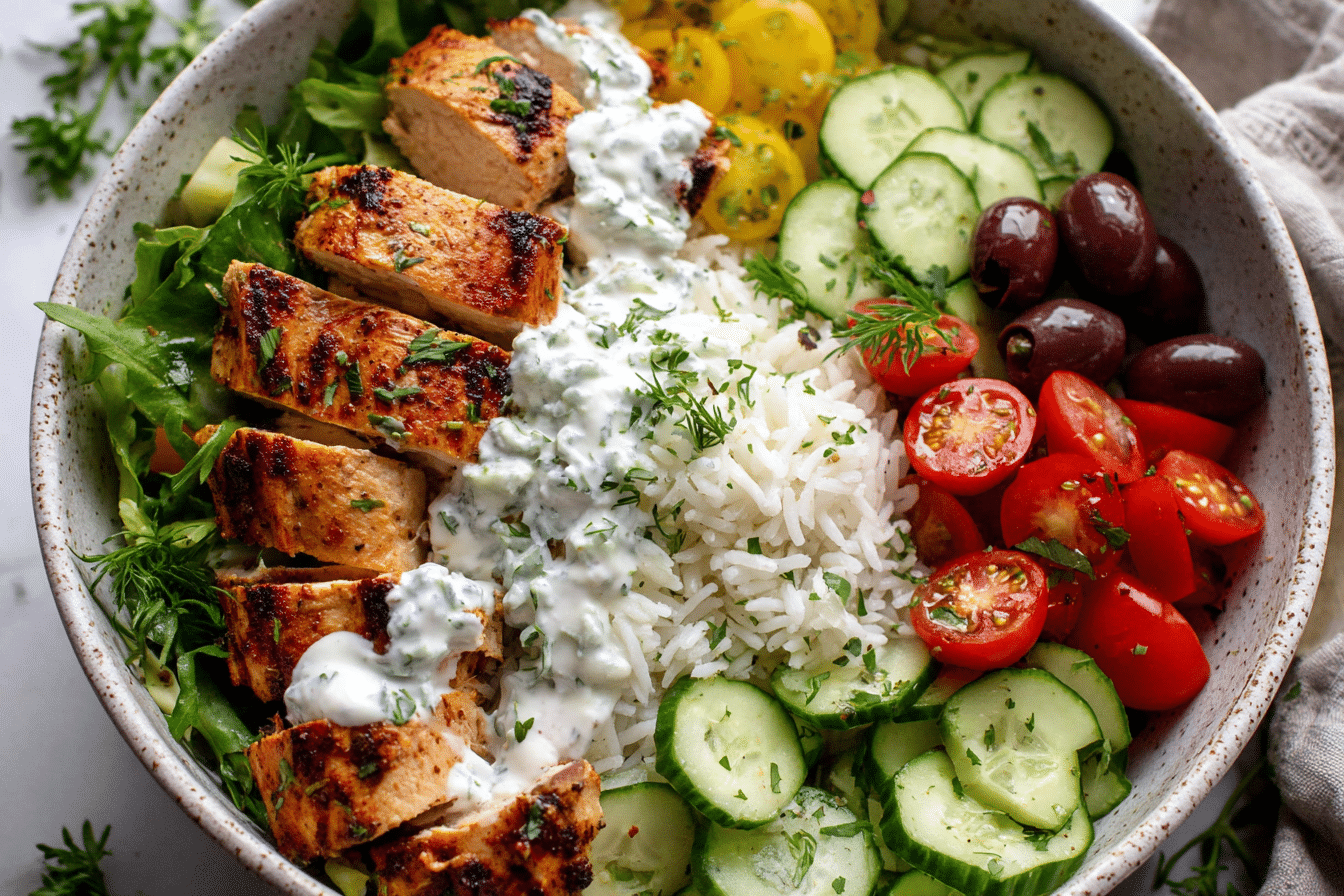
Greek Chicken Bowls: Easy Clean Eating Meal Prep delivers bright Mediterranean flavor with balanced ingredients arranged in a satisfying bowl. Each portion brings together tender marinated chicken, fluffy grains, crisp vegetables, and a creamy yogurt-based sauce. The combination creates contrast between warm grilled protein and refreshing toppings.
Mediterranean cuisine often centers around herbs, citrus, olive oil, and fresh produce. This recipe follows that tradition with oregano, lemon juice, garlic, and cucumber. Every bite carries herb aroma, gentle acidity, and savory depth from well-seasoned chicken.
Meal preparation becomes simple when ingredients cook in batches and assemble quickly during the week. Cooked grains hold texture, marinated chicken reheats well, and chopped vegetables remain crisp when stored properly. That balance helps maintain flavor and structure even after refrigeration.
Greek Chicken Bowls: Easy Clean Eating Meal Prep also offers flexibility. Portions adjust easily for individual lunches, family dinners, or weekly preparation sessions. With vibrant vegetables, hearty protein, and tangy sauce layered together, this bowl delivers both comfort and nourishment in every serving.
Ingredients Overview
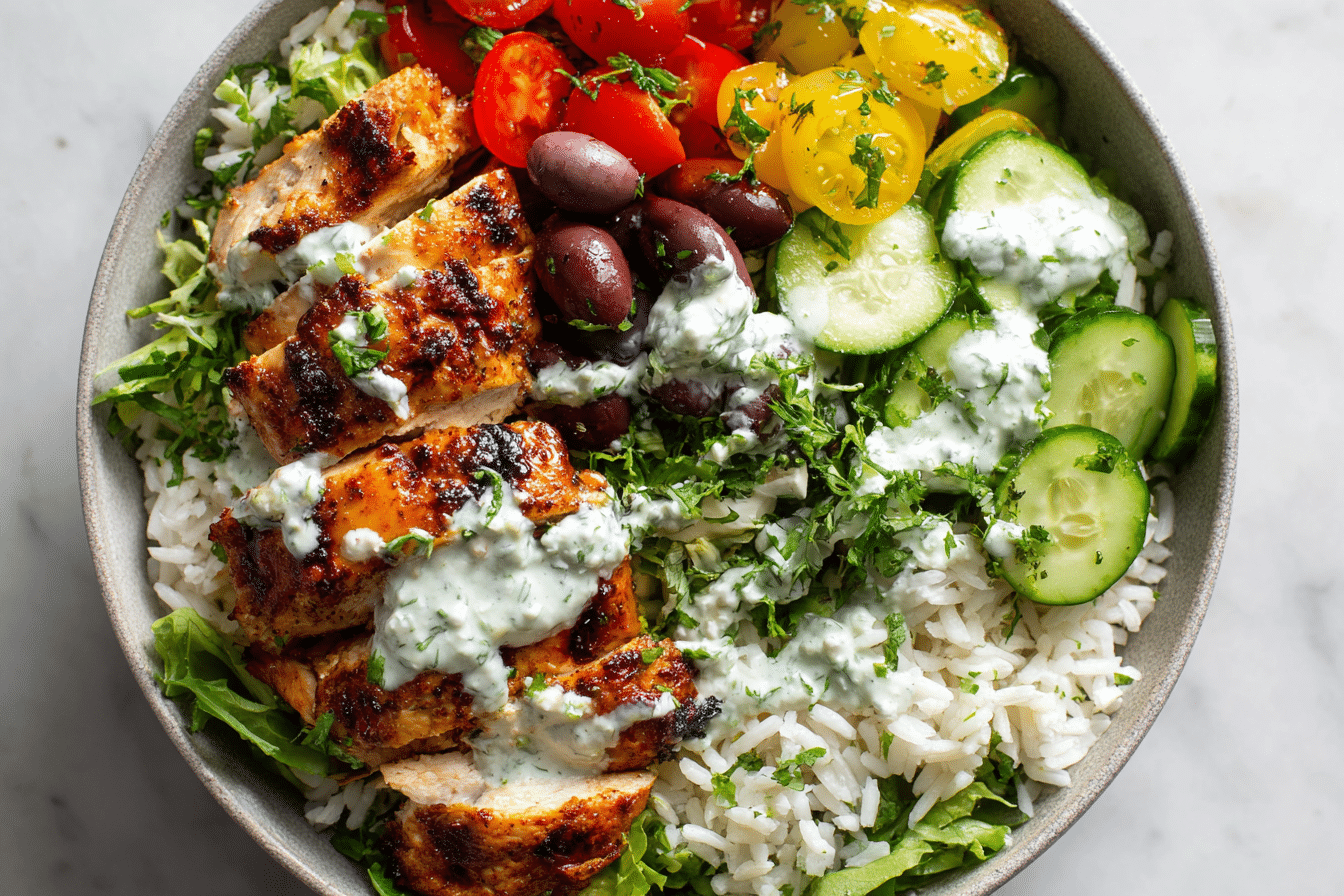
Chicken serves as the primary protein and absorbs Mediterranean seasoning beautifully. Boneless chicken breast or chicken thighs both work well. Breast provides lean texture while thighs deliver richer flavor. A marinade of olive oil, lemon juice, garlic, oregano, and paprika penetrates the meat and builds aromatic depth during cooking.
Brown rice or quinoa creates the base of the bowl. Brown rice contributes nutty flavor and hearty chew, while quinoa provides lighter texture with additional plant protein. Either grain holds structure during refrigeration, which supports reliable meal preparation throughout the week.
Fresh vegetables bring color and crisp contrast. Cucumber adds cool crunch, cherry tomatoes contribute gentle sweetness, and red onion introduces mild sharpness that balances the creamy elements. Romaine lettuce or baby spinach can also accompany the grain layer for additional freshness.
Kalamata olives deliver classic Greek character with their briny richness. A small portion adds complexity without overwhelming other ingredients. Crumbled feta cheese contributes creamy saltiness and pairs naturally with lemon and herbs.
Tzatziki sauce ties the entire bowl together. Traditional tzatziki combines Greek yogurt, grated cucumber, garlic, lemon juice, olive oil, and dill. The yogurt provides tangy creaminess while cucumber adds refreshing texture.
Substitutions remain straightforward. Farro or couscous can replace rice or quinoa. Dairy-free yogurt alternatives work well in the sauce for lactose-sensitive diets. Grilled zucchini, roasted peppers, or chickpeas can expand the vegetable selection without disrupting Mediterranean character.
Step-by-Step Instructions
Begin with the chicken marinade. In a mixing bowl combine olive oil, fresh lemon juice, minced garlic, dried oregano, paprika, salt, and black pepper. Stir until the mixture becomes fragrant and evenly blended.
Place chicken breasts or thighs into the marinade and coat thoroughly. Cover and refrigerate for at least thirty minutes. During longer preparation sessions, two hours of marination produces deeper herb flavor.
While the chicken rests, cook the grain base. Rinse brown rice or quinoa under cold water. Transfer to a saucepan with water or broth and simmer gently until tender. Brown rice typically cooks for about forty minutes, while quinoa finishes within fifteen minutes. After cooking, fluff the grains with a fork and allow steam to escape so texture remains light.
Prepare the vegetables during this stage. Dice cucumber into small cubes, halve cherry tomatoes, and slice red onion thinly. If onion sharpness feels strong, rinse slices briefly under cold water. This quick step softens intensity while preserving flavor.
For homemade tzatziki, grate half a cucumber and squeeze away excess liquid using a clean kitchen towel. Combine the cucumber with thick Greek yogurt, minced garlic, lemon juice, chopped dill, olive oil, and a pinch of salt. Stir until smooth and chill until assembly.
Heat a grill pan or skillet over medium heat. Place marinated chicken into the pan and cook until golden on the outside and fully cooked inside. Chicken breasts generally require six to seven minutes per side depending on thickness. Internal temperature should reach 165°F.
Allow cooked chicken to rest briefly before slicing. Resting preserves juiciness and prevents moisture from escaping during cutting.
Assembly becomes quick once components sit ready. Spoon a portion of rice or quinoa into each container or serving bowl. Arrange sliced chicken across the grain layer. Add cucumber, tomatoes, red onion, olives, and crumbled feta in separate sections across the bowl.
Finish with a generous spoonful of tzatziki sauce. A drizzle of olive oil and an extra squeeze of lemon can brighten the bowl further.
During weekly preparation, store grains and chicken together while vegetables and sauce remain in separate containers. This method keeps vegetables crisp and prevents excess moisture from affecting texture.
Tips, Variations & Substitutions
Consistent seasoning begins with balanced marinade ratios. Olive oil distributes herbs evenly while lemon juice tenderizes the chicken gently. Allowing adequate marination gives oregano and garlic time to infuse throughout the meat.
Chicken thighs provide extra moisture and remain juicy during reheating. For leaner options, chicken breast works well when cooked carefully without overcooking.
Grain alternatives introduce subtle changes in flavor. Quinoa produces lighter bowls with slightly nutty character. Farro creates hearty chew that pairs beautifully with roasted vegetables.
Vegetable combinations can shift according to seasonal availability. Roasted eggplant, grilled zucchini, shredded carrots, or chopped bell peppers integrate naturally within Mediterranean flavor profiles.
A dairy-free variation replaces feta cheese with marinated chickpeas and uses coconut yogurt or almond yogurt in the tzatziki. Add additional lemon and dill to maintain brightness.
Spice adjustments also change the bowl’s personality. Smoked paprika introduces deeper warmth, while a small amount of ground cumin adds earthy undertones. Fresh parsley scattered across the finished bowl contributes vibrant herb aroma.
Batch preparation works smoothly when ingredients cool fully before storage. Cooling prevents condensation inside containers and protects the texture of grains and vegetables.
Serving Ideas & Occasions
Greek Chicken Bowls: Easy Clean Eating Meal Prep fits comfortably into many dining settings. During busy weekdays, preportioned containers simplify lunchtime routines. Balanced nutrients help maintain steady energy throughout afternoon hours.
For relaxed dinners, arrange components buffet-style across a table. Guests can assemble bowls according to personal preference with additional vegetables, sauces, or grains available.
Warm pita bread pairs beautifully alongside the bowl. Soft bread provides a gentle contrast to crisp vegetables and creamy sauce. Hummus or baba ghanoush can accompany the meal for additional Mediterranean character.
Refreshing beverages complement the bright citrus and herb notes within the dish. Sparkling water with lemon slices, cucumber-infused water, or lightly brewed herbal tea provide clean, refreshing balance.
Outdoor gatherings and casual summer meals also benefit from this dish. Prepared ingredients transport easily and assemble quickly without complex cooking during the event.
Nutritional & Health Notes
This meal provides a balanced combination of protein, fiber, healthy fats, and complex carbohydrates. Chicken delivers high-quality protein that supports muscle maintenance and sustained fullness.
Whole grains such as brown rice or quinoa supply dietary fiber and steady carbohydrate release. Fiber supports digestive comfort and helps maintain consistent energy levels.
Olive oil contributes monounsaturated fats widely associated with Mediterranean dietary patterns. These fats support heart health when consumed in moderate amounts.
Fresh vegetables add vitamins, minerals, and hydration. Cucumbers contain significant water content while tomatoes provide vitamin C and antioxidants. Herbs such as dill and oregano contribute additional plant compounds and aromatic freshness.
Greek yogurt within tzatziki introduces calcium and beneficial probiotics. When combined with lean protein and vegetables, the overall bowl structure encourages balanced eating without excessive heaviness.
Portion balance remains important. Adjust grain quantities, sauce portions, or cheese levels depending on dietary preferences or calorie goals.
FAQs
Can Greek Chicken Bowls be prepared several days ahead?
Yes. Greek Chicken Bowls: Easy Clean Eating Meal Prep works extremely well for multi-day preparation. Cooked chicken and grains store safely in sealed containers for up to four days in the refrigerator. For ideal texture, vegetables and tzatziki should remain in separate containers until serving. This storage method prevents excess moisture from softening the grains or diluting the sauce. When reheating, warm the chicken and grain portion gently in a microwave or skillet before adding cold vegetables and sauce. The contrast between warm protein and chilled toppings maintains the bowl’s refreshing Mediterranean character.
Which grain works well besides brown rice?
Several grains pair nicely with Mediterranean ingredients. Quinoa provides a lighter texture and additional plant protein. Farro creates hearty chew and slightly nutty flavor that complements grilled chicken. Couscous cooks quickly and offers a soft, fluffy base ideal for rapid meal preparation sessions. Bulgur wheat also performs well due to its subtle flavor and tender texture. Each grain absorbs lemon, olive oil, and herb seasoning effectively, allowing the bowl to retain its Mediterranean identity while introducing small variations in taste and texture.
How can the chicken remain juicy after reheating?
Juicy reheated chicken begins with proper cooking. Avoid extended cooking that dries the meat. Cooking until the internal temperature reaches 165°F keeps moisture intact. After cooking, resting the chicken before slicing allows juices to redistribute within the meat. During reheating, gentle microwave intervals or a lightly covered skillet help maintain moisture. Adding a small splash of broth or lemon juice during reheating can also refresh the chicken. Pairing the reheated chicken with tzatziki sauce further restores creaminess and balance.
Is tzatziki required for the bowl?
Tzatziki adds traditional Greek flavor, though alternatives also work well. A lemon-tahini sauce provides creamy texture with nutty depth. Hummus thinned with olive oil and lemon juice creates another Mediterranean-inspired option. Yogurt mixed with chopped herbs and garlic can serve as a simplified substitute when cucumbers are unavailable. Even a light drizzle of olive oil with lemon and fresh parsley offers refreshing brightness. Each variation complements the chicken and vegetables while maintaining a balanced flavor profile.
What vegetables fit well in Greek-style bowls?
Cucumber, tomato, and red onion represent classic components due to their crisp texture and bright flavor. Additional vegetables expand variety without altering the Mediterranean character. Roasted zucchini, grilled eggplant, bell peppers, artichoke hearts, and shredded lettuce integrate naturally within the bowl. Carrots introduce gentle sweetness, while radishes contribute subtle peppery bite. Combining raw and roasted vegetables builds interesting contrast between cool freshness and warm caramelized notes.
Can the recipe support a dairy-free diet?
Yes. Several simple adjustments allow dairy-free preparation. Replace feta cheese with marinated chickpeas or roasted vegetables for savory depth. Dairy-free yogurt alternatives such as coconut or almond yogurt can replace Greek yogurt within tzatziki. Adding extra lemon juice, garlic, and dill helps balance the flavor. These adjustments preserve the bright Mediterranean character of the bowl while accommodating dairy restrictions.
How should meal prep containers be organized?
Efficient organization keeps ingredients fresh throughout the week. Place grains on the bottom of the container with sliced chicken layered above. Vegetables can occupy separate compartments within divided containers or remain in a small side container. Tzatziki sauce should stay sealed in a separate container until serving. This arrangement prevents moisture from softening grains and keeps vegetables crisp. During lunchtime, warm the grain and chicken section, then add chilled vegetables and sauce before eating.
Print
Greek Chicken Bowls prepared with herb-marinated chicken, wholesome grains, crisp vegetables, and creamy tzatziki sauce. This Mediterranean meal prep dish provides balanced flavor, vibrant ingredients, and convenient portions suitable for weekday lunches or relaxed dinners.
Ingredients
2 pounds boneless chicken breast or chicken thighs
3 tablespoons olive oil
2 tablespoons fresh lemon juice
3 cloves garlic, minced
2 teaspoons dried oregano
1 teaspoon paprika
1 teaspoon salt
1/2 teaspoon black pepper
2 cups uncooked brown rice or quinoa
4 cups water or broth
1 cucumber, diced
1 cup cherry tomatoes, halved
1/2 red onion, thinly sliced
1/2 cup Kalamata olives
3/4 cup crumbled feta cheese
For Tzatziki Sauce:
1 cup Greek yogurt
1/2 cucumber, grated and drained
1 clove garlic, minced
1 tablespoon lemon juice
1 tablespoon olive oil
1 tablespoon chopped fresh dill
Pinch salt
Instructions
-
In a bowl combine olive oil, lemon juice, garlic, oregano, paprika, salt, and pepper. Coat chicken thoroughly and refrigerate for 30 minutes.
-
Rinse rice or quinoa and cook with water or broth until tender. Fluff and allow steam to escape.
-
Prepare vegetables by dicing cucumber, halving tomatoes, and slicing red onion.
-
Prepare tzatziki by mixing yogurt, grated cucumber, garlic, lemon juice, olive oil, dill, and salt. Refrigerate until serving.
-
Cook marinated chicken in a grill pan or skillet over medium heat until internal temperature reaches 165°F.
-
Rest chicken briefly, then slice into strips.
-
Assemble bowls with rice or quinoa as the base.
-
Add sliced chicken, cucumber, tomatoes, onion, olives, and feta cheese.
-
Spoon tzatziki sauce over the bowl before serving.