
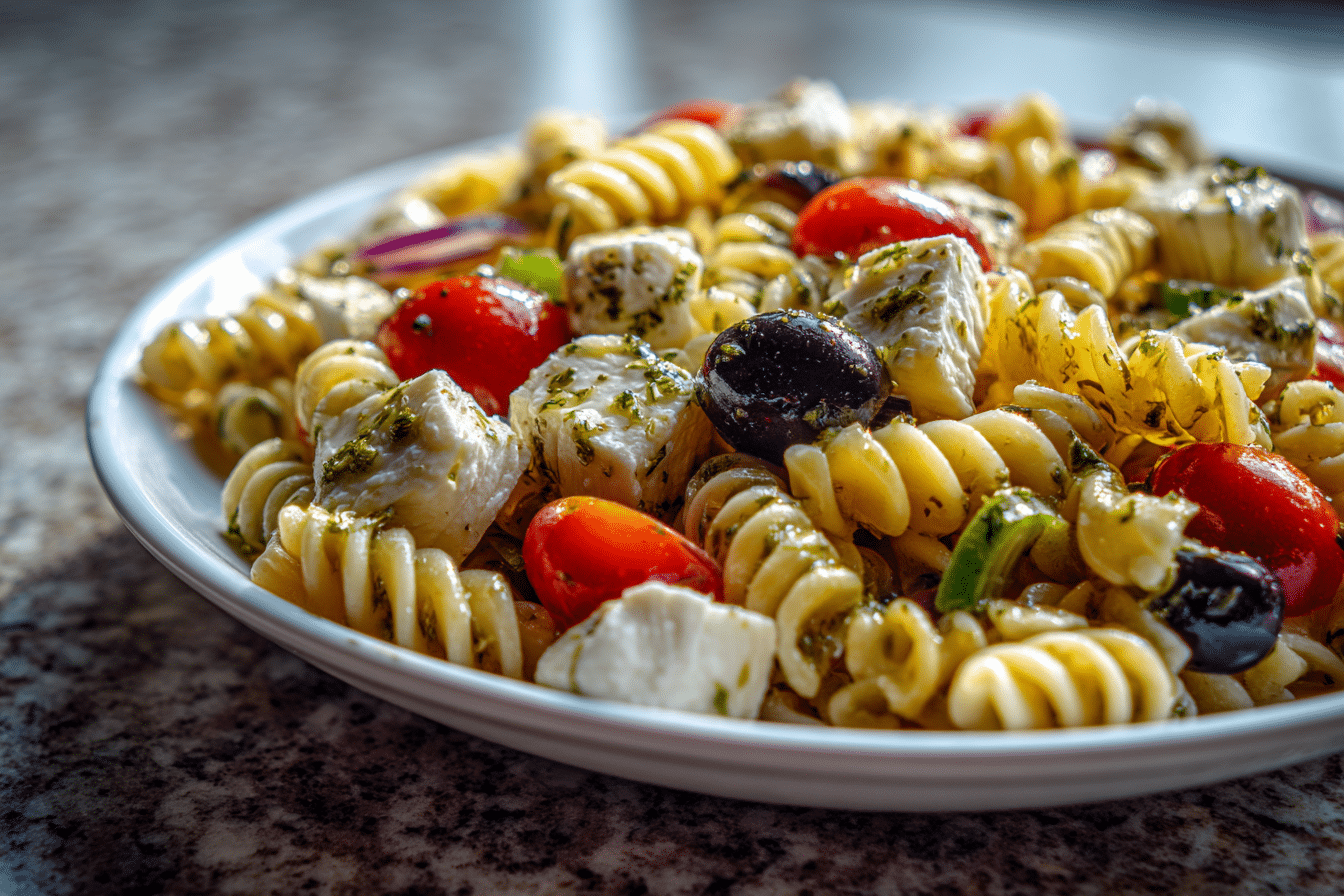
Italian Pasta Salad (Vegetarian) is a chilled pasta dish built from tender pasta, crisp vegetables, briny olives, creamy cheese, and a light herb dressing. It is often served cold, making it suitable for make-ahead meals, gatherings, and everyday lunches. Each ingredient plays a specific role, from texture to flavor balance, creating a dish that stays satisfying even after chilling.
This version of Italian Pasta Salad (Vegetarian) focuses on clean, balanced flavor and a mix of textures in every bite. The pasta provides a soft but structured base, while vegetables bring crunch and juiciness. Olives add a salty contrast, and cheese gives a creamy note that ties everything together. The dressing coats the ingredients lightly, allowing each component to remain distinct while still carrying seasoning throughout the bowl.
Because it holds up well in the refrigerator, Italian Pasta Salad (Vegetarian) works well for meal preparation ahead of time. The flavors settle as it rests, and the texture stays firm when the pasta is cooked properly. It can be served as a main dish or a side depending on portion size and added ingredients.
Ingredients Overview
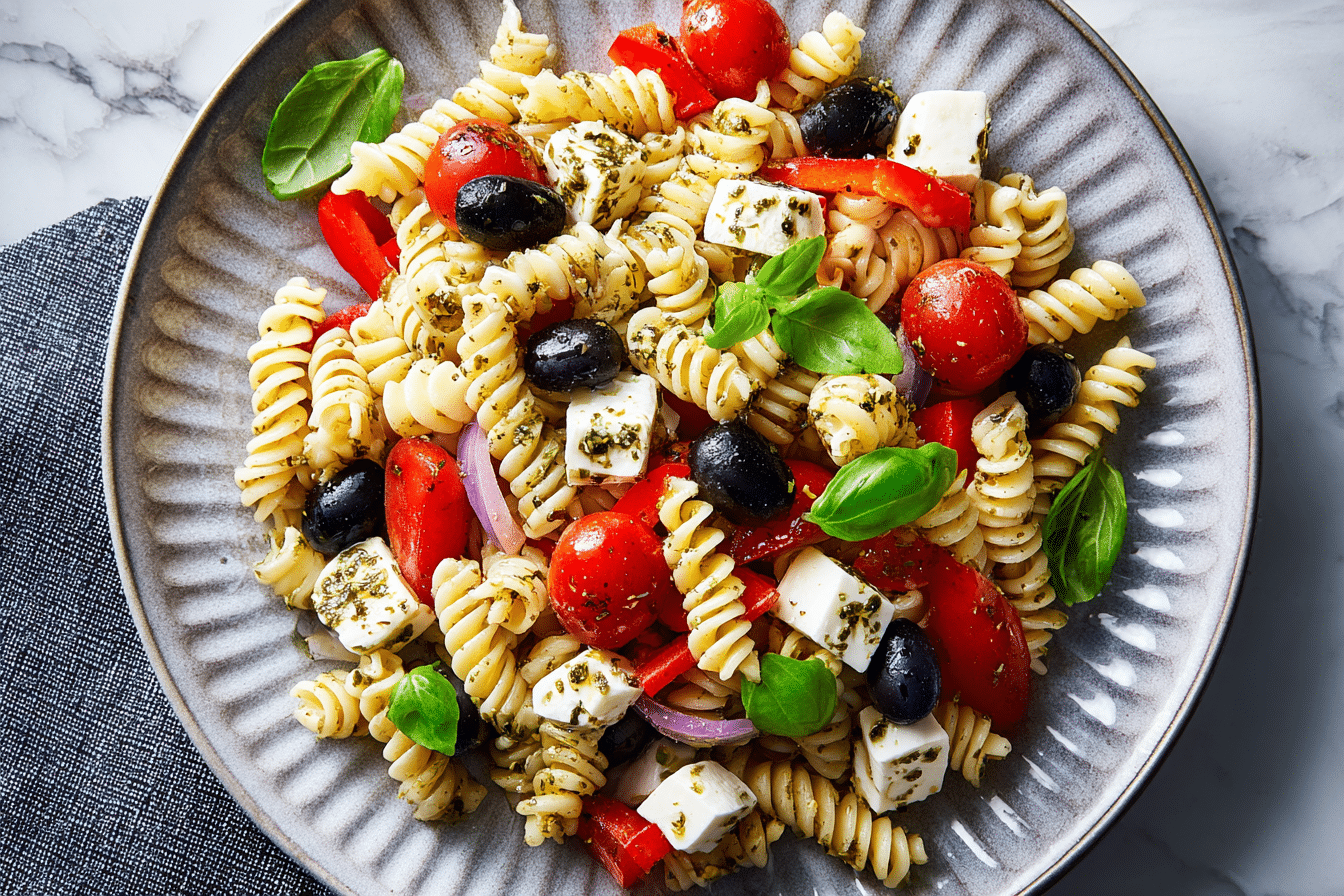
The foundation of Italian Pasta Salad (Vegetarian) is short pasta. Shapes like rotini, penne, or farfalle are commonly chosen because they hold onto dressing in their curves and ridges. This helps distribute flavor evenly across the dish. Cooking the pasta until it is firm rather than soft is important since it continues to absorb moisture after cooling.
Fresh vegetables give the salad its color and texture contrast. Cherry tomatoes bring juiciness and mild sweetness. Cucumber adds crispness and a cooling effect. Bell peppers contribute a light crunch and subtle vegetal flavor. Red onion introduces a sharp bite that balances richer elements in the dish.
Olives add depth and a salty note that lifts the overall flavor profile. Black olives are often used, though green varieties can also work depending on preference. Cheese, such as mozzarella pearls, provides a soft and creamy texture that blends smoothly with the vegetables and pasta.
The dressing is simple but important. Olive oil acts as the base, coating each ingredient evenly. Red wine vinegar adds brightness and a slight tang. Dried oregano and garlic powder give a familiar Italian-inspired aroma. Salt and black pepper round out the seasoning.
Ingredient swaps are flexible. Gluten-free pasta can be used without changing the structure of the dish. Dairy-free cheese alternatives work for those avoiding dairy. Additional vegetables like zucchini or spinach can be included if more variety is desired. The key is maintaining a balance of soft, crisp, and creamy textures.
Ingredients
12 oz rotini pasta
1 1/2 cups cherry tomatoes, halved
1 cup cucumber, diced
1 cup bell pepper, diced
1/2 cup red onion, thinly sliced
3/4 cup black olives, sliced
1 cup mozzarella pearls
1/3 cup olive oil
2 tablespoons red wine vinegar
1 teaspoon dried oregano
1/2 teaspoon garlic powder
1 teaspoon salt
1/2 teaspoon black pepper
2 tablespoons fresh parsley, chopped
Step-by-Step Instructions
Start by bringing a large pot of salted water to a steady boil. Add the pasta and cook until it reaches a firm texture. It should be tender but still hold its shape when bitten. Drain the pasta and rinse it under cool water to stop the cooking process. Allow it to drain fully so excess moisture does not collect in the salad.
While the pasta cools, prepare the vegetables. Cut cherry tomatoes in half, dice the cucumber and bell pepper into small, even pieces, and slice the red onion thinly. Uniform sizing helps the ingredients mix evenly and creates a consistent bite.
Place the vegetables into a large mixing bowl along with the sliced olives and mozzarella pearls. This combination creates a mix of textures ranging from crisp to soft, with salty and creamy elements throughout.
In a separate bowl, whisk together olive oil, red wine vinegar, dried oregano, garlic powder, salt, and black pepper. Stir until the mixture looks well blended and slightly thickened. This dressing will coat the pasta and vegetables evenly.
Add the cooled pasta to the bowl with the vegetables. Pour the dressing over the mixture and gently fold everything together. Use slow, sweeping motions so the pasta does not break and the cheese remains intact. Continue mixing until the dressing is evenly distributed.
Transfer the salad into a covered container and place it in the refrigerator for at least one hour. This resting time allows the seasoning to settle into the pasta and vegetables. The flavors become more consistent as the dish sits.
Before serving, give the salad a gentle stir. If it appears dry, add a small drizzle of olive oil and mix lightly. This helps bring back moisture and keeps the texture smooth. Serve chilled for the best result.
Tips, Variations & Substitutions
Italian Pasta Salad (Vegetarian) can be adjusted in many ways without changing its structure. Roasted vegetables such as zucchini or eggplant can be added for a deeper flavor profile. Fresh herbs like basil or parsley can be increased for a stronger herbal note.
For a lighter version, reduce the amount of cheese and increase the vegetable ratio. This keeps the dish fresh and crisp while lowering richness. For a more filling version, add chickpeas or white beans, which blend well with the pasta and dressing.
Different pasta shapes can also be used based on preference. Rotini holds dressing very well, while penne gives a firmer bite. Farfalle adds a slightly different texture due to its shape.
If a dairy-free version is needed, plant-based cheese can replace mozzarella. The dressing remains unchanged and still provides enough flavor to carry the dish.
Serving Ideas & Occasions
Italian Pasta Salad (Vegetarian) fits well into many meal settings. It can be served as a main dish for light lunches or as a side dish for larger meals. It also works well for outdoor meals, shared gatherings, and packed lunches due to its stability when chilled.
It pairs nicely with grilled vegetables, toasted bread, or light soups. The contrast between warm dishes and chilled pasta salad creates a balanced meal.
Drink pairings such as sparkling water with citrus or chilled herbal tea complement the flavors without overpowering them. The light acidity in the salad works well with refreshing beverages.
Nutritional & Health Notes
Italian Pasta Salad (Vegetarian) provides a balance of carbohydrates, fats, and fiber. Pasta supplies energy through complex carbohydrates, while vegetables contribute fiber and natural nutrients. Olive oil adds healthy fats that support fullness and flavor.
Cheese provides protein and calcium, though it can be adjusted based on dietary preferences. Increasing vegetables while reducing pasta shifts the dish toward a lighter profile.
Because the ingredients are whole and minimally processed, the dish fits into many eating styles. Portion size and ingredient balance can be adjusted depending on individual needs without changing the core structure.
FAQs
What pasta works best for Italian Pasta Salad (Vegetarian)?
Short pasta shapes are the best choice for Italian Pasta Salad (Vegetarian). Rotini, penne, and farfalle are commonly used because they hold dressing well and keep their structure after chilling. These shapes also mix easily with vegetables and cheese, giving consistent texture in every bite. Long pasta tends to clump and does not mix as evenly, which can affect the final result.
Can Italian Pasta Salad (Vegetarian) be made ahead of time?
Yes, Italian Pasta Salad (Vegetarian) is well suited for preparation in advance. In fact, resting time in the refrigerator allows the flavors to blend more evenly. After chilling, a light stir helps redistribute the dressing. If the salad seems dry, a small amount of olive oil can restore moisture and keep the texture smooth.
Which vegetables work well in this salad?
Common choices include cherry tomatoes, cucumber, bell peppers, and red onion. These vegetables provide a mix of crunch, juiciness, and mild sharpness. Other options like zucchini or spinach can also be added. Cutting vegetables into similar sizes helps maintain balance and improves the overall eating experience.
Can cheese be left out of Italian Pasta Salad (Vegetarian)?
Yes, cheese can be removed without affecting the structure of the dish. The salad will still have strong flavor from the dressing, olives, and vegetables. For those who want a similar texture, dairy-free cheese alternatives can be used. Adjusting seasoning slightly may help maintain flavor balance when cheese is omitted.
How should Italian Pasta Salad (Vegetarian) be stored?
Store Italian Pasta Salad (Vegetarian) in a sealed container in the refrigerator. This keeps the ingredients fresh and prevents drying. Before serving, stir gently to mix the dressing again. If needed, add a small amount of olive oil to refresh the texture.
What dressing is best for Italian Pasta Salad (Vegetarian)?
A simple olive oil and vinegar dressing works best. Olive oil coats the pasta evenly, while vinegar adds a light tang. Dried oregano and garlic powder provide a classic flavor base. The dressing should stay light so it does not weigh down the vegetables or pasta.
Can protein be added to Italian Pasta Salad (Vegetarian)?
Yes, protein additions like chickpeas or white beans work well. They blend easily with the pasta and vegetables while keeping the vegetarian structure. These additions also make the dish more filling without changing its overall balance.