
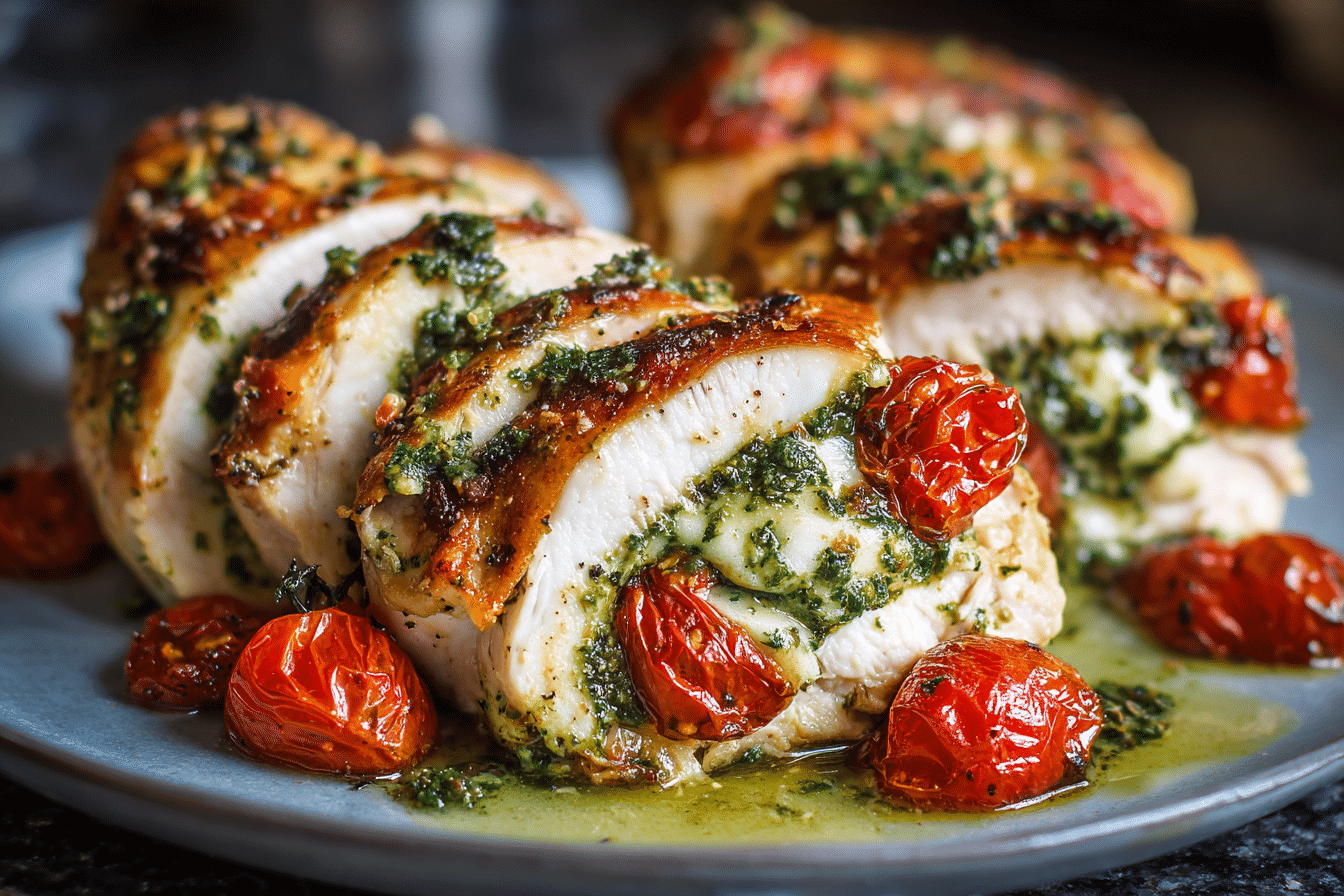
Easy Pesto Mozzarella and Tomato Stuffed Chicken Breasts bring together tender baked chicken filled with basil pesto, melted cheese, and juicy tomato slices. Each portion reveals a rich center wrapped inside a lightly seared exterior, creating a balanced mix of textures and flavors.
This dish works well for both weeknight cooking and relaxed weekend meals. The ingredients are familiar and widely available, yet they come together in a way that feels thoughtfully layered and satisfying.
The chicken holds a warm herb-infused filling that melts during baking, blending into the meat and adding depth without heaviness. Every slice delivers a combination of creamy, savory, and slightly tangy notes.
Ingredients Overview
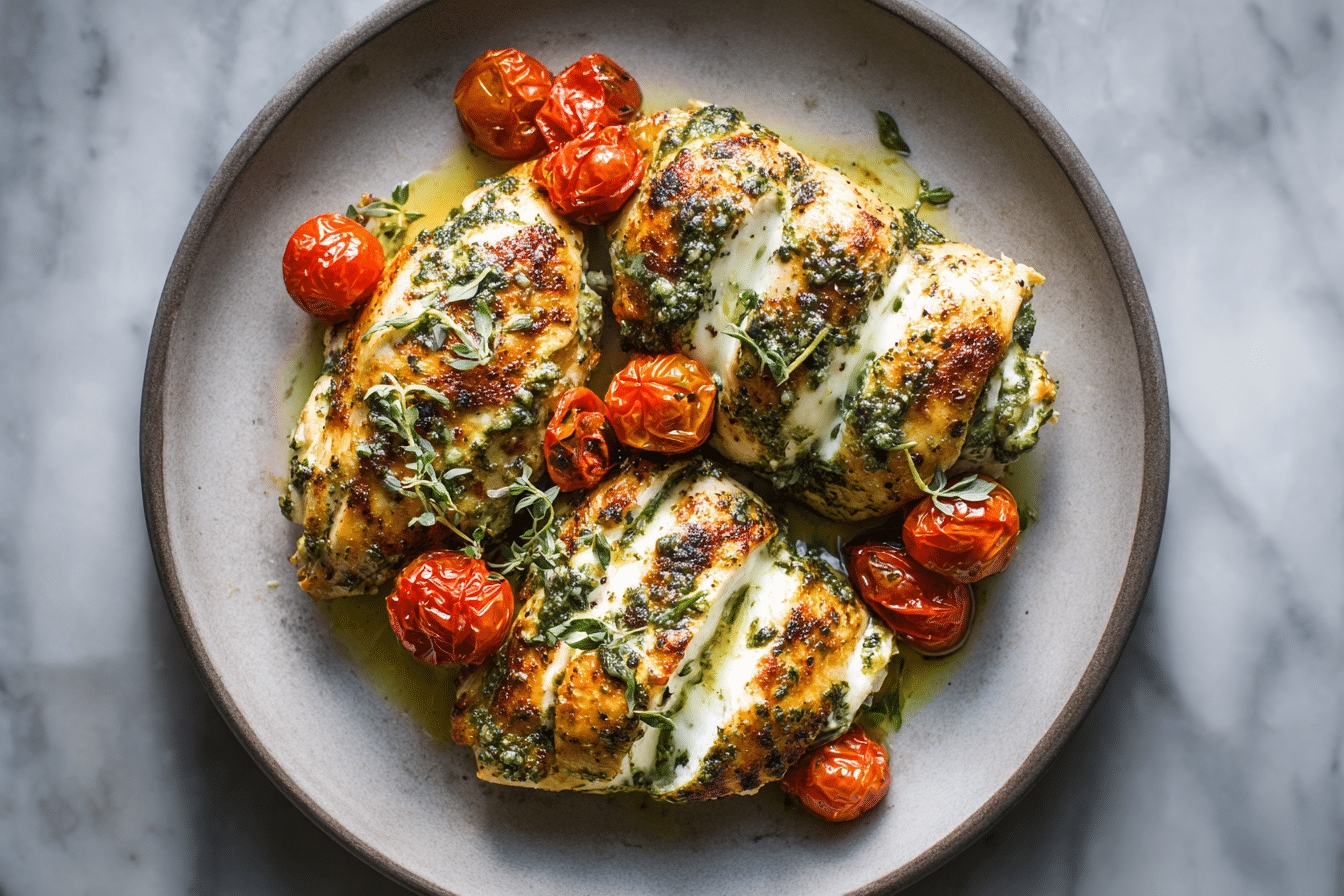
The structure of Easy Pesto Mozzarella and Tomato Stuffed Chicken Breasts depends on a few core components that each contribute something important to the final result.
Chicken breasts form the base of the dish. Boneless, skinless pieces are best because they can be opened and filled without difficulty. Their mild flavor works as a blank canvas, allowing the filling to stand out. Choosing pieces with similar thickness helps them cook at the same pace.
Basil pesto brings the strongest flavor presence. It combines basil leaves, garlic, olive oil, and nuts into a thick sauce that coats the inside of the chicken. As it heats, it releases aroma and blends into the cheese, giving the dish its signature herbal note.
Mozzarella cheese adds softness and creaminess. When heated, it melts into a smooth layer that binds the pesto and tomatoes together. Fresh mozzarella creates a softer melt, while low-moisture versions give a slightly firmer bite.
Tomatoes introduce brightness and a light acidic contrast. Their natural juiciness cuts through the richness of the cheese and pesto. Roma tomatoes are a reliable choice because they contain less liquid, helping maintain structure inside the chicken.
Seasonings like salt, black pepper, Italian herbs, and garlic provide background depth. Olive oil is used during searing to create a golden surface and support moisture retention during baking.
Possible substitutions allow flexibility. Provolone or fontina can replace mozzarella for a stronger dairy flavor. Sun-dried tomatoes can stand in for fresh ones when a more concentrated taste is preferred. Chicken thighs can also be used, though they typically need additional cooking time.
Ingredients
4 boneless, skinless chicken breasts
1/2 cup basil pesto
8 slices mozzarella cheese
2 medium Roma tomatoes, thinly sliced
2 tablespoons olive oil
2 cloves garlic, finely minced
1 teaspoon salt
1/2 teaspoon black pepper
1/2 teaspoon Italian seasoning
1/4 teaspoon red pepper flakes (optional)
1/4 cup grated Parmesan cheese
Fresh basil leaves for garnish
Step-by-Step Instructions
Start by preparing the chicken. Place each breast on a cutting board and carefully slice a pocket along the thicker side. The cut should be deep enough to hold filling but should not pass through the opposite edge.
Season the inside and outside of each piece with salt, black pepper, and Italian seasoning. This early seasoning step builds flavor directly into the meat rather than relying only on the surface.
Spread pesto inside each pocket, coating the interior evenly. Layer mozzarella slices over the pesto, followed by tomato slices. Keep the filling balanced so it stays inside during cooking. If needed, use toothpicks to close the opening.
Warm olive oil in a heavy oven-safe skillet over medium heat. Place the stuffed chicken breasts into the pan once the oil is hot. Sear each side for several minutes until a golden surface forms. This step develops color and helps the structure of the chicken hold together.
Add minced garlic during the final moments of searing. Stir it gently in the oil so it releases aroma without browning too quickly, which can lead to bitterness.
Transfer the skillet into an oven preheated to 375°F (190°C). Bake for 18 to 22 minutes, depending on the size of the chicken breasts. The meat is ready when it reaches an internal temperature of 165°F (74°C) and the juices appear clear.
Sprinkle Parmesan over the top near the end of baking so it melts lightly across the surface.
Once finished, allow the chicken to rest for about five minutes before slicing. This pause helps the juices settle inside the meat, keeping it tender.
Common issues include overfilling the chicken, which can cause leakage, and overcooking, which leads to dryness. Using a thermometer helps keep cooking time accurate.
Tips, Variations & Substitutions
Choosing chicken breasts with similar size and thickness helps them cook evenly. If one piece is thicker, gently flatten it before slicing the pocket.
Mozzarella can be replaced with provolone for a sharper dairy flavor or fontina for a creamier melt. A small amount of goat cheese can also be added for a tangy contrast.
Sun-dried tomatoes offer a deeper flavor compared to fresh ones. When using them, reduce the pesto slightly so the filling does not become too dense.
Adding spinach leaves inside the chicken provides extra color and a mild earthy layer without changing the main flavor direction.
For a lighter version, reduce the cheese quantity and spread a thinner layer of pesto. Cooking on a grill is also possible, though the chicken must be sealed well to hold the filling.
A dairy-free version can be made using plant-based cheese and pesto alternatives. While texture changes slightly, the herbal and tomato notes remain present.
Serving Ideas & Occasions
Easy Pesto Mozzarella and Tomato Stuffed Chicken Breasts pair well with side dishes that balance their richness. Roasted vegetables such as asparagus, zucchini, or green beans add color and contrast.
Pasta lightly coated in olive oil or garlic butter works well for a more filling plate. Mashed potatoes also complement the dish with a soft, creamy texture.
For a lighter approach, serve the chicken over a simple salad with lemon dressing. The acidity pairs well with the pesto and cheese.
This dish fits many occasions, from weekday meals to small gatherings. When sliced, the layered filling creates a visually appealing presentation suitable for serving guests.
A light sparkling drink or crisp white wine pairs well with the herb and cheese combination.
Nutritional & Health Notes
This dish provides a balance of protein, fats, and vegetables. Chicken breast contributes lean protein that supports everyday energy needs.
Pesto adds fats from olive oil and nuts, contributing flavor and richness. Tomatoes bring vitamins and natural plant compounds that add freshness to the dish.
Mozzarella supplies calcium and protein, while also increasing overall richness. Adjusting portion size allows control over fat content.
When paired with vegetables or lighter sides, this dish can fit into a balanced meal structure. Using fresh ingredients and moderate seasoning keeps the overall profile steady without overpowering the palate.
FAQs
Can this dish be prepared earlier in the day?
Yes, the chicken can be assembled in advance and kept refrigerated until cooking time. This helps shorten preparation during busy hours.
If cooked directly from chilled, a few extra minutes in the oven may be needed. Checking the internal temperature helps confirm doneness.
It is best to avoid assembling too far ahead, as tomatoes may release liquid over time, which can affect texture inside the chicken.
What helps keep the chicken moist?
Moisture retention depends mostly on cooking time and heat level. Removing the chicken from the oven at the correct internal temperature prevents dryness.
Searing before baking forms a light outer layer that helps hold juices inside. Resting after cooking also allows moisture to settle evenly.
Choosing evenly sized chicken breasts supports consistent cooking results.
Can store-bought pesto be used?
Store-bought pesto works well in this recipe. Selecting a version with simple ingredients gives a balanced flavor.
If the pesto is thick, a small amount of olive oil can be mixed in to loosen its texture for easier spreading.
Homemade pesto is also an option for a more herbal profile, but it is not required.
What keeps the filling inside during cooking?
Toothpicks are commonly used to close the pocket opening. They should be inserted securely before cooking and removed before serving.
Kitchen twine is another option for holding the chicken together.
Avoid adding too much filling, as overstuffing is the main reason for leakage during baking.
Can the chicken be frozen?
Yes, the chicken can be frozen before cooking. Wrap each piece tightly and store it in a sealed container.
Thaw in the refrigerator overnight before baking. Additional cooking time may be needed if the chicken is still slightly cold.
Freezing after cooking is also possible, though the texture of cheese and tomatoes may change slightly when reheated.
What cheeses work besides mozzarella?
Provolone, fontina, or mild cheddar can be used as alternatives. Each brings a slightly different melt and flavor.
Soft cheese like goat cheese can be added in small amounts for a tangier profile.
Combining cheeses can create a more layered filling.
Can this be cooked entirely on the stovetop?
Yes, after searing, the chicken can be cooked on low heat with a lid covering the pan.
This method requires gentle heat control to cook the chicken through without burning the exterior.
Turning the chicken occasionally helps distribute heat evenly until fully cooked.