
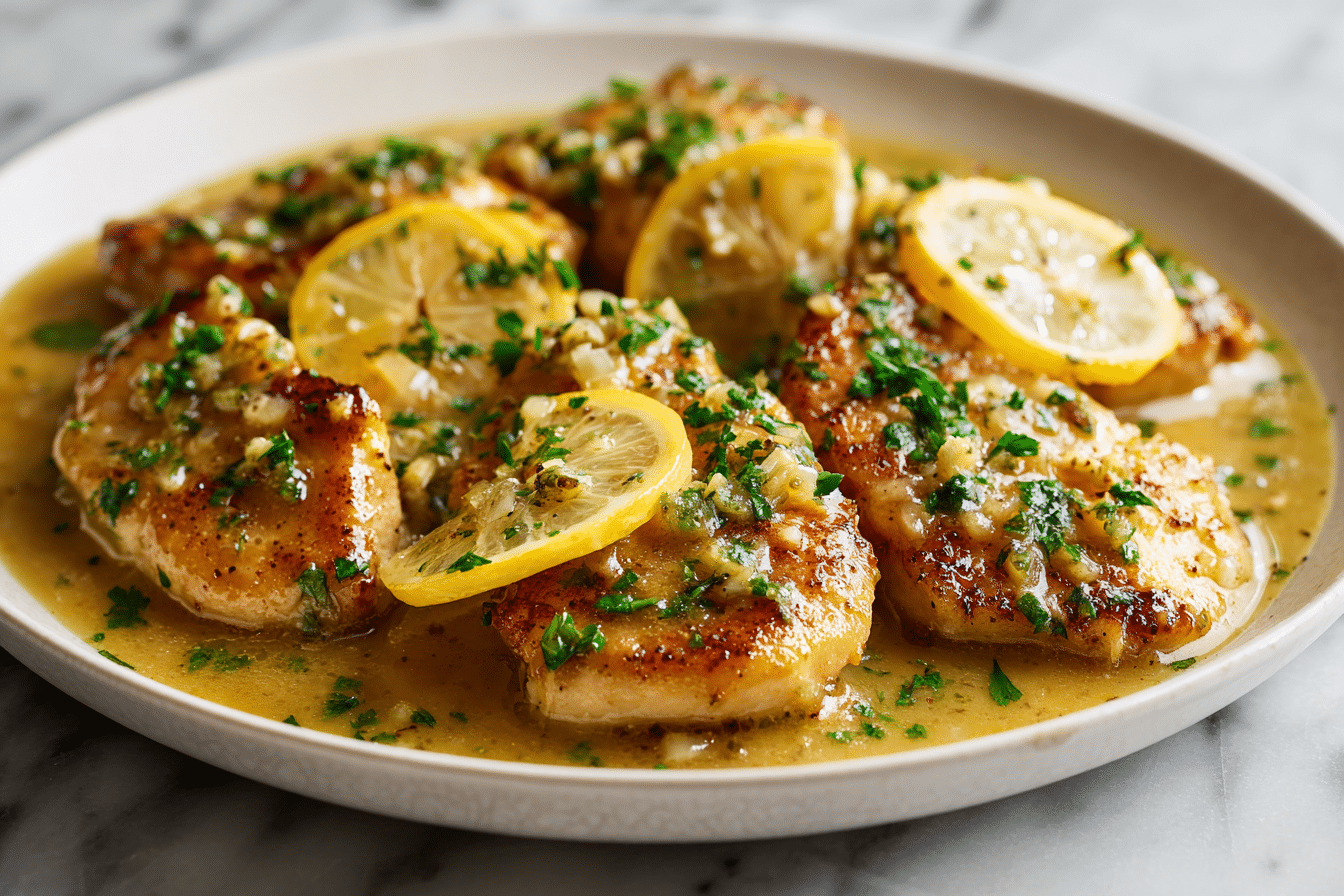
Lemon Chicken Recipe with lemon butter sauce is a skillet-cooked dish that blends tender chicken with a citrus-forward, buttery pan sauce. The flavor profile is clean and lively, with garlic and lemon working together to balance the richness of the butter.
This dish comes together in one pan, starting with lightly coated chicken that develops a golden exterior. The sauce is built directly in the same skillet, allowing the browned bits from cooking to become part of the final flavor. The result is a cohesive meal with layered taste and a smooth, glossy finish.
Lemon Chicken Recipe works well for both casual dinners and planned meals because it uses simple ingredients and steady cooking steps. The sauce clings to the chicken without feeling heavy, making it easy to pair with a wide range of side dishes.
Ingredients Overview
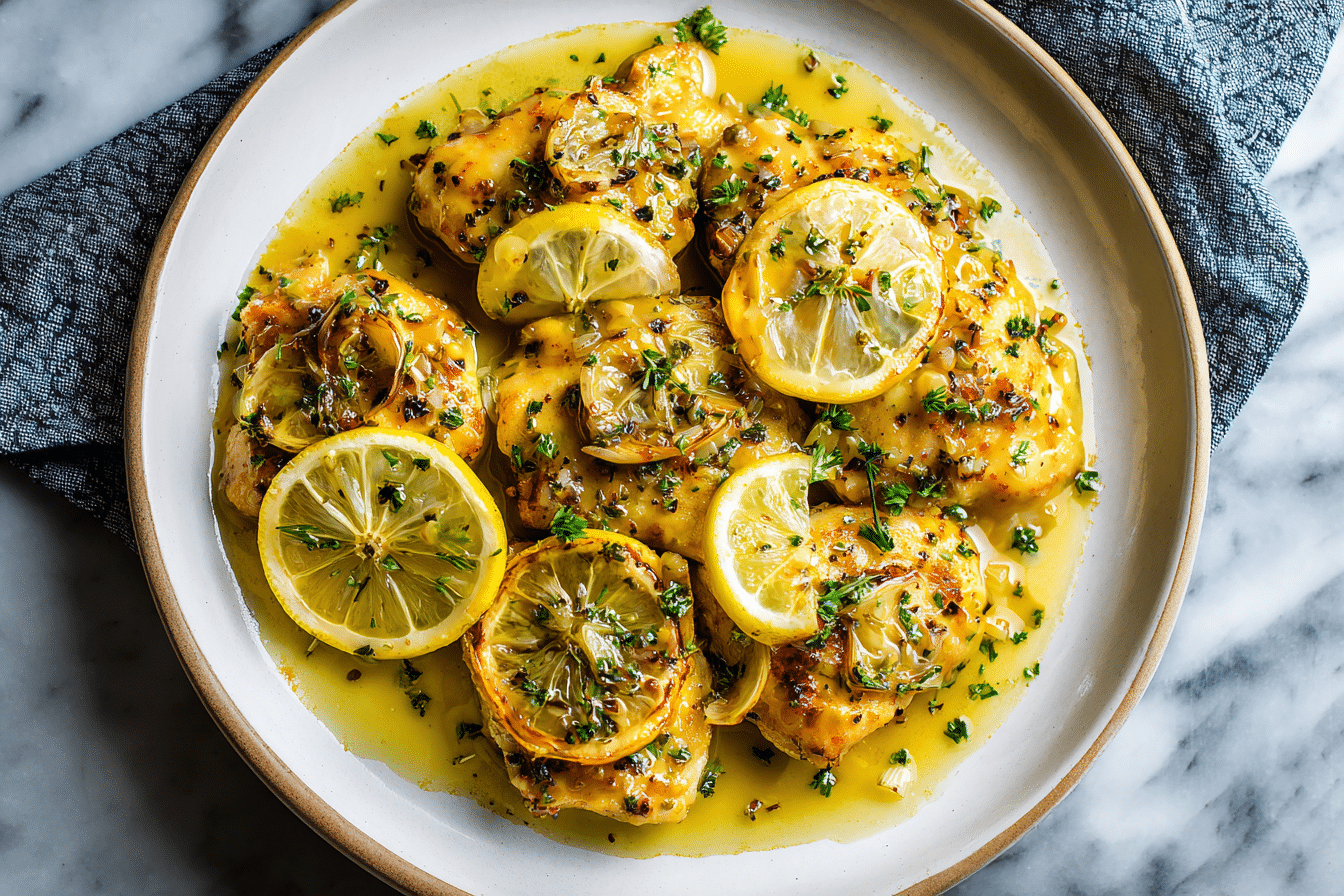
The foundation of this Lemon Chicken Recipe is boneless chicken breast, which provides a lean, tender base when cooked properly. Slicing the chicken into thinner cutlets helps it cook evenly and reduces the risk of dryness. Chicken thighs can also be used if a richer texture is preferred.
Fresh lemon juice plays a central role in shaping the flavor. It brings acidity that balances the butter and lifts the overall taste of the dish. Lemon zest adds aromatic oils from the peel, giving the sauce a fuller citrus character. Using freshly squeezed lemons is important for the most natural flavor.
Butter forms the body of the sauce, creating a smooth texture that coats the chicken. Olive oil is used during searing to help regulate heat and prevent the butter from browning too quickly. Together, they create a stable cooking fat base.
Garlic adds depth and a savory note that blends into the sauce without overpowering the citrus. Chicken broth is used to loosen the browned bits in the pan, which builds additional flavor while also forming the liquid base of the sauce.
A light coating of flour on the chicken helps with browning and contributes a subtle thickening effect once the sauce simmers. Seasonings such as salt, black pepper, and paprika provide balance, warmth, and a touch of color.
Fresh parsley is added at the end for a mild herbal note and visual contrast. If needed, gluten-free flour can replace all-purpose flour, and olive oil can replace part or all of the butter for a lighter variation.
Ingredients
2 large boneless skinless chicken breasts
1/2 cup all-purpose flour
1 teaspoon salt
1/2 teaspoon black pepper
1/2 teaspoon paprika
2 tablespoons olive oil
3 tablespoons unsalted butter
3 cloves garlic, finely minced
1 cup chicken broth
1/4 cup fresh lemon juice
1 teaspoon lemon zest
1 tablespoon chopped fresh parsley
Lemon slices for serving
Step-by-Step Instructions
Begin by slicing each chicken breast horizontally into thinner pieces. This step helps the chicken cook evenly and prevents the center from remaining undercooked while the outside browns. Pat each piece dry so it sears properly in the pan.
Combine flour, salt, black pepper, and paprika in a shallow dish. Lightly coat each chicken piece in the mixture, shaking off any excess. The coating should be thin so the chicken stays tender while still forming a light crust during cooking.
Heat a large skillet over medium heat. Add olive oil along with one tablespoon of butter. Once the butter melts and the pan is hot, place the chicken pieces in a single layer. Cook for about four to five minutes per side until the exterior is golden and the internal temperature reaches 165°F. Remove the chicken and set aside.
Lower the heat slightly and add another tablespoon of butter to the same skillet. Add the minced garlic and stir for about 30 seconds. The garlic should become fragrant without turning dark.
Pour in the chicken broth while scraping the bottom of the pan with a wooden spoon. This step lifts the browned bits that formed during searing, which adds depth to the sauce. Allow the broth to simmer for a few minutes so it reduces slightly.
Stir in the lemon juice and lemon zest. Let the mixture simmer gently until the sauce begins to thicken slightly. Taste and adjust seasoning if needed.
Return the chicken to the skillet and spoon the sauce over each piece. Add the remaining tablespoon of butter and let it melt into the sauce, creating a smooth, glossy texture. Simmer briefly so the chicken absorbs the flavors.
Finish by sprinkling chopped parsley over the top and adding lemon slices for presentation. Serve while warm with sauce spooned generously over the chicken.
Tips, Variations & Substitutions
For even browning, avoid overcrowding the pan during the searing stage. Cooking in batches allows each piece of chicken to develop a proper golden surface instead of steaming.
Chicken thighs can replace chicken breasts if a juicier and slightly richer flavor is preferred. They hold moisture well and remain tender even with a slightly longer cooking time.
A small splash of white wine added before the broth can introduce additional depth to the sauce. It should be allowed to reduce briefly before continuing with the remaining liquid.
For a lighter version, reduce the butter slightly and increase the amount of broth. The sauce will be less rich but still carry the lemon and garlic notes effectively.
Vegetables such as spinach, asparagus, or zucchini can be added during the final simmer. They cook quickly in the sauce and turn the dish into a more complete meal.
For a gluten-free version, replace the flour with a gluten-free blend or skip it entirely. The sauce will still develop body through reduction.
Serving Ideas & Occasions
This Lemon Chicken Recipe pairs well with simple starches that absorb the sauce. Rice, mashed potatoes, or pasta all work well and allow the lemon butter mixture to blend into each bite.
For a lighter plate, serve the chicken with roasted vegetables or a fresh green salad. The citrus flavor pairs naturally with crisp, mildly seasoned vegetables.
Crusty bread is another excellent addition, especially for collecting extra sauce from the plate. It adds texture and rounds out the meal without requiring extra preparation.
This dish fits well into weeknight cooking due to its short cooking time and straightforward steps. It also works for small gatherings because it can be prepared in a single skillet and served directly.
Nutritional & Health Notes
Chicken provides a strong source of protein, which supports a filling and balanced meal. The lemon juice adds flavor and brightness without adding significant calories.
Butter and olive oil contribute fats that carry flavor and create the sauce’s smooth texture. Adjusting the ratio of these fats can change the richness of the final dish.
Garlic adds aromatic depth along with small nutritional contributions. Lemon zest and juice provide natural acidity that reduces the need for heavy seasoning.
Serving with vegetables increases fiber and volume while keeping the meal balanced. Choosing chicken breasts results in a leaner dish, while thighs offer more richness and moisture.
FAQs
Can chicken thighs be used instead of chicken breasts?
Chicken thighs work very well in this Lemon Chicken Recipe. They contain more natural fat, which helps keep them moist during cooking. The texture is slightly richer compared to chicken breasts. Cooking time may need a small increase depending on thickness, but the overall method stays the same. The sauce pairs well with both cuts, so the choice depends on preference for lean or richer meat.
Can this dish be made ahead of time?
Yes, it can be prepared in advance. Cook the chicken and sauce, then store them together in a sealed container once cooled. When reheating, use low heat to keep the sauce from separating. A small splash of broth can help bring the sauce back to its original consistency.
How do I keep the chicken tender?
Slicing the chicken into thinner cutlets helps it cook quickly and evenly. Removing it from the pan once it reaches the correct internal temperature prevents it from drying out. Avoid extended cooking in the sauce after the chicken is done.
Can the sauce be thickened more?
If the sauce is thinner than preferred, allow it to simmer longer so extra liquid evaporates. The light flour coating also helps create mild thickness. Gentle reduction usually produces the right texture without needing extra ingredients.
Can this recipe be frozen?
Yes, it can be frozen after cooking. Let it cool completely before storing in a sealed container. When reheating, thaw in the refrigerator and warm slowly on the stove. Stirring during reheating helps restore the sauce texture.
What can replace butter in the sauce?
Olive oil or a dairy-free alternative can replace butter. The flavor will be slightly different, and the sauce may feel less creamy, but the lemon and garlic still come through clearly.
Can vegetables be cooked in the same pan?
Yes, vegetables like spinach or asparagus can be added near the end of cooking. They absorb the sauce and cook quickly, making the dish more complete without requiring extra pans.