
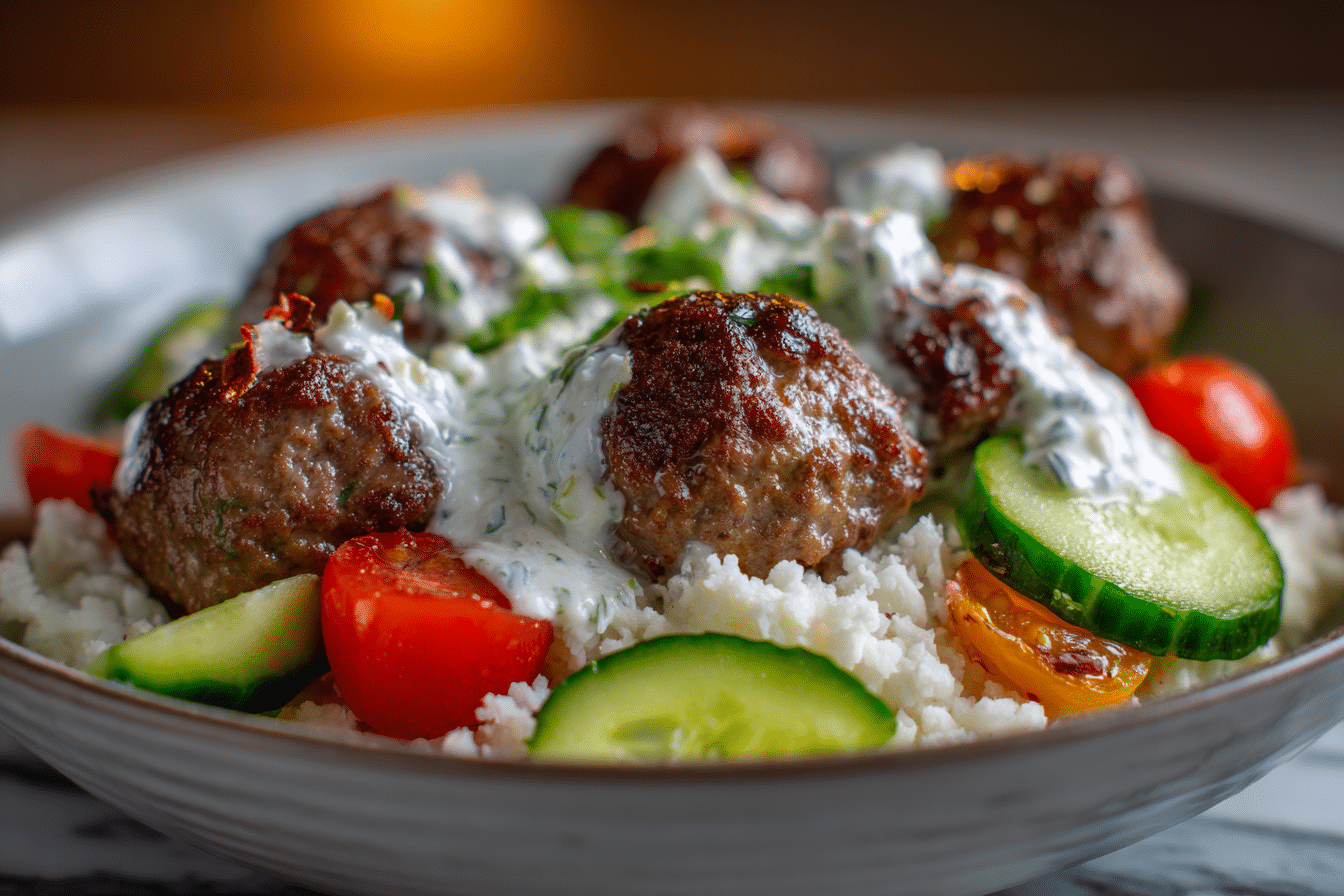
Greek Meatball Bowl Recipe brings together seasoned meatballs, grains, vegetables, and a creamy yogurt sauce in a layered bowl that reflects Mediterranean cooking traditions. Each component is prepared separately, then combined to create a complete meal with contrasting textures and flavors. The dish works well for weeknight dinners or planned meals ahead of time because most elements can be cooked in advance and assembled when needed.
This version focuses on a clear cooking process with familiar ingredients that are widely available. Ground meat is shaped into small portions, browned in a pan, and paired with rice or another grain base. Fresh vegetables add crunch, while feta cheese contributes a salty, tangy note. A yogurt-based sauce ties everything together with a smooth consistency and light acidity.
The Greek Meatball Bowl Recipe stands out because it combines warm cooked elements with cool, crisp ingredients in a single serving bowl. The result is a complete meal that is both filling and varied in texture without requiring complex cooking steps.
Ingredients Overview

The foundation of this dish is the meatball mixture. Ground beef or lamb is commonly used because both provide a strong savory base. Beef has a milder taste that many people are familiar with, while lamb offers a deeper, more distinct flavor profile. Either option works well depending on preference, and they can also be combined for a more layered taste.
To hold the meatballs together, breadcrumbs and egg are added. These ingredients help create a soft structure that keeps the meatballs tender after cooking. Without them, the meat mixture would become dense and less pleasant in texture. Finely chopped onion and garlic bring depth and aroma, blending into the meat as it cooks.
Herbs play an important role in the flavor profile. Oregano is commonly used in Mediterranean cooking and gives the meat a warm herbal note. Parsley adds a light green freshness that balances the richer ingredients. Salt and pepper round out the seasoning so the meatballs remain flavorful on their own.
The base of the bowl is usually a grain such as rice, quinoa, or couscous. Rice provides a neutral backdrop that absorbs juices well. Quinoa introduces a slightly nutty flavor and additional protein content. Couscous offers a lighter, fluffier texture that pairs well with the meatballs and sauce.
Vegetables bring contrast and structure to the bowl. Cucumber adds crunch and a cooling effect. Tomatoes bring natural acidity and juiciness. Red onion contributes sharpness that balances the softer ingredients. Feta cheese introduces saltiness and a creamy crumbly texture that blends into the bowl.
The sauce is made from yogurt combined with lemon juice, garlic, olive oil, salt, and pepper. This mixture creates a smooth, tangy layer that complements both the meat and vegetables. It also helps bring all components together so each bite feels cohesive.
Ingredients
1 pound ground beef or ground lamb
1/2 cup breadcrumbs
1 large egg
2 cloves garlic, finely minced
1/4 cup onion, finely chopped
2 tablespoons parsley, chopped
1 teaspoon dried oregano
1/2 teaspoon salt
1/4 teaspoon black pepper
2 tablespoons olive oil
1 cup cooked rice or quinoa
1 cup cucumber, diced
1 cup cherry tomatoes, halved
1/4 cup red onion, thinly sliced
1/2 cup feta cheese, crumbled
1 cup plain Greek yogurt
1 tablespoon lemon juice
1 clove garlic, grated
1 tablespoon olive oil
Salt to taste
Black pepper to taste
Step-by-Step Instructions
Start by preparing the meatball mixture. Place ground beef or lamb into a large bowl. Add breadcrumbs, egg, garlic, onion, parsley, oregano, salt, and pepper. Mix gently until the ingredients are evenly combined. Avoid heavy mixing, since excessive handling can make the meat texture firm after cooking.
Shape the mixture into small round portions, roughly the size of a walnut. Keeping them uniform in size helps them cook evenly. Place them on a tray or plate while preparing the pan.
Heat olive oil in a large skillet over medium heat. Once the pan is ready, add the meatballs in a single layer. Cook them for about 8 to 10 minutes, turning them occasionally so all sides develop a browned exterior. The inside should remain juicy while fully cooked through.
While the meatballs are cooking, prepare the remaining bowl components. Cook rice, quinoa, or couscous according to package directions. Slice cucumbers, halve cherry tomatoes, and cut red onion into thin strips. Keep each ingredient ready for assembly.
In a small bowl, prepare the sauce by mixing Greek yogurt with lemon juice, grated garlic, olive oil, salt, and pepper. Stir until the texture becomes smooth and uniform.
To assemble the bowls, start with a layer of grains at the base. Add cooked meatballs on top, followed by cucumber, tomatoes, red onion, and crumbled feta cheese. Spoon the yogurt sauce over the top or serve it on the side.
During cooking, avoid overcrowding the pan, since too many meatballs at once can prevent proper browning. Turn them gently rather than pressing down, which helps retain moisture inside. Allowing them to rest briefly after cooking helps the juices settle before serving.
Tips, Variations & Substitutions
Ground turkey or chicken can replace beef or lamb for a lighter version of the Greek Meatball Bowl Recipe. When using leaner meats, a small amount of olive oil added to the mixture helps maintain softness during cooking.
Grain choices can be adjusted based on preference. Brown rice adds a slightly firmer texture and more fiber, while couscous creates a lighter base. Quinoa adds a nutty profile and pairs well with the yogurt sauce. Cauliflower rice can be used for a lower-carbohydrate option.
Herbs can also be adjusted to shift the flavor profile. Dill adds a grassy note, while mint introduces a cooler taste. A small amount of chili flakes can be added to the meat mixture for mild heat without overpowering the dish.
For a dairy-free version, plant-based yogurt can replace Greek yogurt in the sauce. Feta can be omitted or substituted with a dairy-free alternative. The bowl still holds together well because the vegetables and grains provide structure and contrast.
Serving Ideas & Occasions
The Greek Meatball Bowl Recipe works well for both individual meals and group serving. It can be prepared ahead of time and stored in separate containers, then assembled when ready to eat. This makes it suitable for busy schedules or planned weekly meals.
For serving, it pairs well with warm pita bread or a side of roasted vegetables. A light soup or green salad can also accompany the bowl for a more complete spread.
When serving guests, each component can be arranged separately so individuals can build their own bowls. This allows flexibility in portion size and ingredient balance.
The dish can be served warm or at room temperature, which makes it adaptable for different settings, including casual dinners or packed meals.
Nutritional & Health Notes
This dish contains a balanced combination of protein, carbohydrates, and fats. The meatballs provide protein along with essential minerals such as iron and zinc. The grains supply energy through complex carbohydrates, which support steady fullness.
Vegetables add fiber, vitamins, and hydration, contributing to overall dietary balance. Cucumber and tomatoes bring lightness, while red onion adds plant compounds with strong flavor.
The yogurt-based sauce contributes protein and calcium, along with a creamy texture that replaces heavier sauces. Olive oil introduces unsaturated fats, which are commonly used in Mediterranean-style cooking.
Portion adjustments allow flexibility. Increasing vegetables while reducing grains creates a lighter meal, while adding extra meatballs increases protein content. This adaptability makes the bowl suitable for different eating styles.
FAQs
What type of meat works best for this recipe?
Ground beef and ground lamb are the most commonly used options. Beef has a mild and familiar taste, while lamb has a stronger and more distinct profile. Both work well with herbs and spices used in this dish. Some people choose to combine both meats for a more layered flavor. Ground turkey or chicken can also be used if a leaner option is preferred, though they may require a bit of added oil to maintain moisture during cooking.
Can the meatballs be prepared in advance?
Yes, the meatballs can be prepared ahead of time. The mixture can be shaped and stored in the refrigerator for up to a day before cooking. Cooked meatballs can also be stored and reheated when needed. This makes it easier to prepare meals during busy days since most of the work is already completed. Storing them in an airtight container helps maintain texture and flavor.
What grains can be used in the bowl?
Rice, quinoa, and couscous are all suitable options for this recipe. Rice provides a neutral base, quinoa adds a nutty flavor and extra protein, and couscous offers a light and soft texture. Other grains such as farro or barley can also be used for a chewier consistency. Each grain changes the overall texture of the bowl slightly while still pairing well with the meatballs and sauce.
How can meatballs be kept tender?
Keeping meatballs tender depends on how the mixture is handled and cooked. Mixing the ingredients gently prevents the meat from becoming dense. Breadcrumbs and egg help retain moisture inside the meatballs. Cooking over medium heat allows them to brown without drying out. Letting them rest briefly after cooking also helps the internal juices settle.
Is it possible to freeze the meatballs?
Yes, meatballs can be frozen either before or after cooking. Raw shaped meatballs can be frozen on a tray and then transferred to a container once firm. Cooked meatballs should be cooled completely before freezing. When ready to use, they can be thawed in the refrigerator and reheated in a pan or oven until warm throughout.
What can replace the yogurt sauce?
If yogurt is not available, a tahini-based sauce mixed with lemon juice and garlic can be used. Another option is a simple olive oil and lemon dressing. Both alternatives maintain a smooth texture and complement the meat and vegetables. Each variation changes the flavor slightly but still works well with the overall bowl structure.
Can this recipe be used for meal preparation?
Yes, this recipe works well for meal preparation. The meatballs, grains, and vegetables can be stored separately in containers and combined when ready to eat. This keeps textures fresh and prevents ingredients from becoming soggy. It also allows for quick assembly during the week while still offering variety in each serving.