
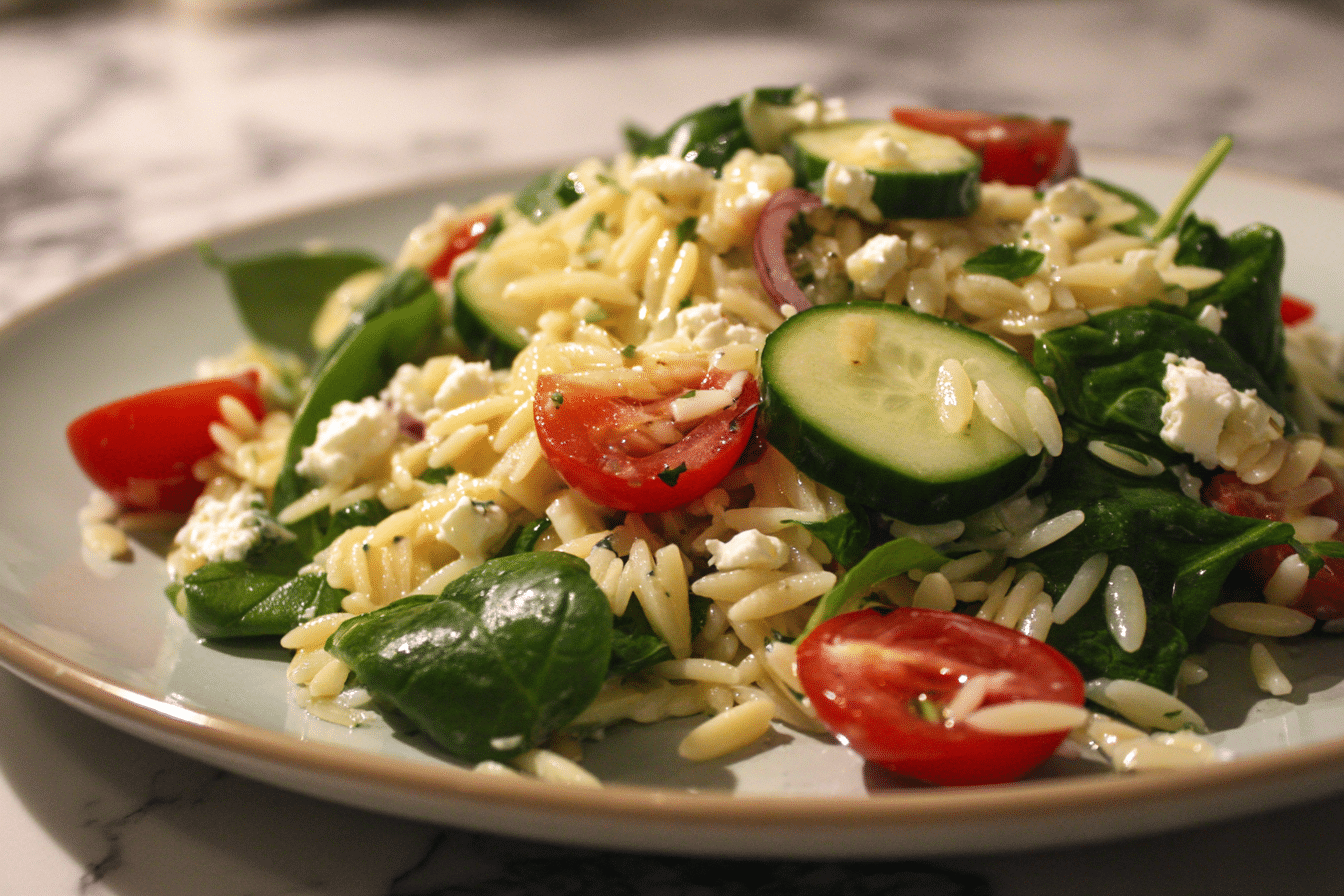
Easy Orzo Salad is a light, colorful pasta dish that brings together tender orzo, crunchy vegetables, and a bright citrus dressing. It is the kind of recipe that fits smoothly into busy weekdays, relaxed lunches, or shared meals where something cool and satisfying is needed.
This version focuses on clean textures and balanced flavor in every bite. The orzo acts as a soft base that carries the dressing well, while vegetables add crunch and natural sweetness. A light lemon and olive oil mix ties everything together without feeling heavy.
It is also a flexible dish that works with many ingredient changes depending on what is available in the kitchen. Whether served right after mixing or after resting in the fridge, the flavors stay lively and well matched.
Ingredients Overview
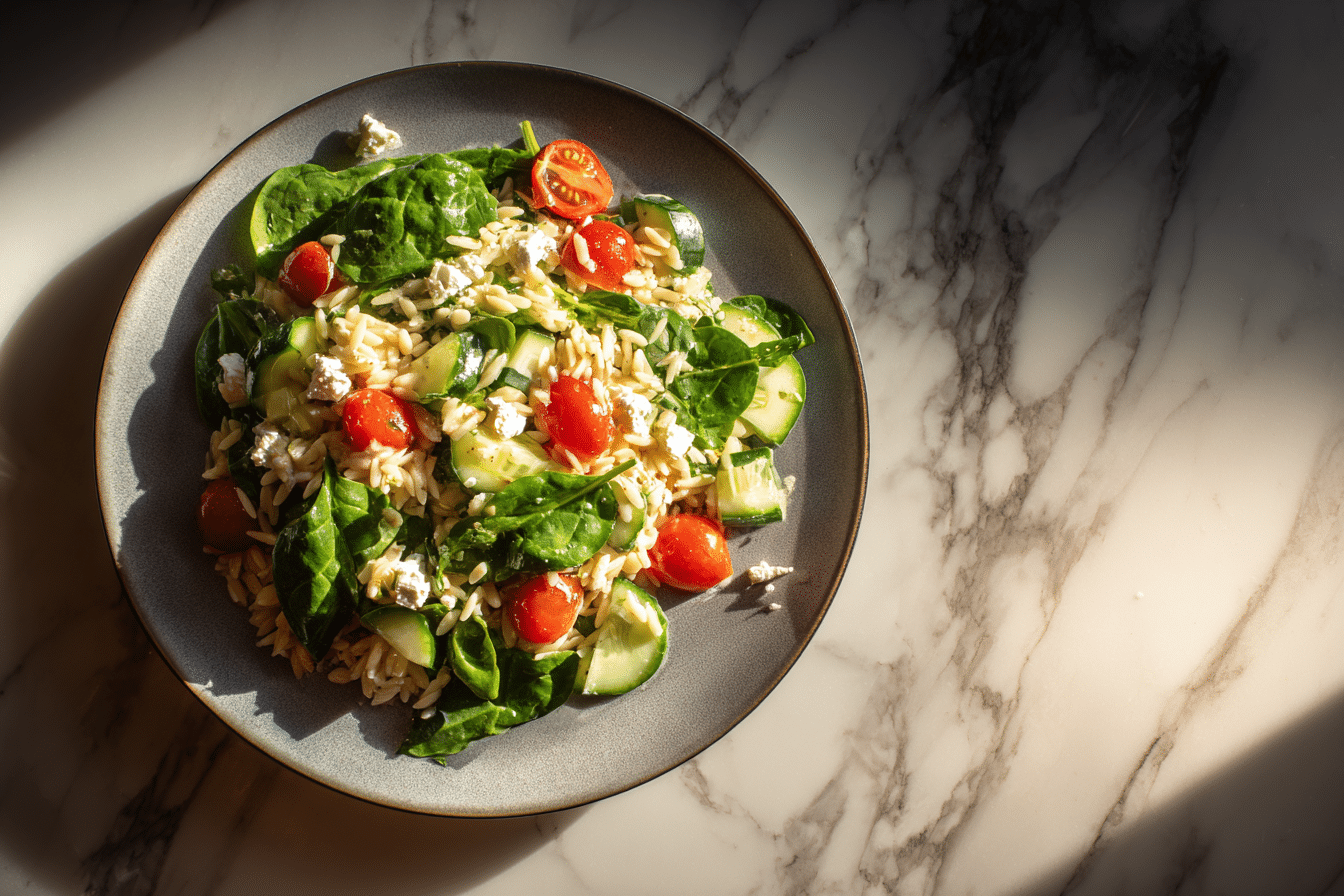
Orzo pasta forms the foundation of this salad. Its small, rice-like shape cooks quickly and absorbs flavor without becoming too soft when handled correctly. Cooking it to the right texture is important so it holds its shape once mixed with other ingredients.
Cherry tomatoes bring a juicy, slightly sweet taste that balances the starchiness of the pasta. When cut in half, they release a light juice that blends into the dressing and adds moisture throughout the bowl.
Cucumber adds a crisp bite and a cooling effect. It helps contrast the softer textures in the dish and keeps the overall mix feeling light. Red onion provides a sharp note that cuts through the mild base ingredients, adding depth without overpowering the salad.
Feta cheese contributes a creamy, slightly salty profile that blends into the vegetables and pasta. It breaks into small pieces that distribute flavor across the entire dish. Fresh parsley adds a clean herbal layer that lifts the overall taste.
The dressing is built from olive oil, lemon juice, garlic, salt, and black pepper. Olive oil gives smoothness, while lemon juice brings brightness. Garlic adds a mild savory tone, and seasoning rounds out the mixture so it coats every ingredient evenly.
Chickpeas can be added for extra texture and substance. They blend well with the pasta and vegetables while making the salad more filling. This mix of ingredients creates a balanced dish that feels satisfying without being heavy.
Ingredients
1 1/2 cups orzo pasta
1 cup cherry tomatoes, halved
1 cup cucumber, diced
1/3 cup red onion, finely chopped
1/2 cup feta cheese, crumbled
1/4 cup fresh parsley, chopped
3 tablespoons olive oil
2 tablespoons lemon juice
1 garlic clove, minced
1/2 teaspoon salt
1/4 teaspoon black pepper
1/2 cup chickpeas, drained and rinsed (optional)
Step-by-Step Instructions
Bring a large pot of salted water to a steady boil. Add the orzo and cook until it reaches a tender but slightly firm texture, usually around 8 to 10 minutes. Stir a few times during cooking so the small pasta pieces do not stick together.
Once cooked, drain the orzo and rinse it under cold water. This stops the cooking process and cools the pasta quickly, which is important for a chilled salad. Allow it to drain fully so excess water does not thin the dressing later.
While the pasta cools, prepare the vegetables. Cut the cherry tomatoes in half, dice the cucumber into small cubes, and finely chop the red onion. Place everything in a large mixing bowl so it is ready for assembly.
In a separate small bowl, whisk together olive oil, lemon juice, minced garlic, salt, and black pepper. Mix until the liquid looks smooth and slightly thickened. This step helps the dressing coat the salad evenly.
Add the cooled orzo into the bowl with the vegetables. Pour the dressing over the top and gently toss everything together. Use slow folding motions so the ingredients stay intact and evenly coated.
Sprinkle in the crumbled feta cheese and chickpeas if using. Mix lightly so the feta stays in small pieces rather than breaking down completely. This creates pockets of flavor throughout the salad.
Taste the mixture and adjust seasoning if needed. A small amount of extra lemon juice can brighten the flavor, while a pinch of salt can bring balance. Place the salad in the refrigerator for about 20 minutes before serving so the ingredients settle together.
Tips, Variations & Substitutions
This salad works well with different vegetable combinations. Bell peppers can add sweetness and crunch, while zucchini gives a softer texture. Roasted vegetables can also be used for a deeper, slightly smoky taste that changes the overall profile.
If chickpeas are not preferred, white beans or lentils can be used instead. These options add a similar level of substance while slightly changing the texture. Grilled chicken or tuna can also be added for extra protein, turning the dish into a full meal.
Herbs can be adjusted based on preference. Parsley gives a clean finish, while dill brings a light tangy note. Basil adds a mild sweetness that pairs well with tomatoes and lemon dressing.
For a dairy-free version, feta can be left out or replaced with a plant-based alternative. The salad still holds together well without cheese because the dressing provides enough flavor on its own.
If preparing ahead, keep the dressing separate until just before serving. This helps maintain the texture of the vegetables and keeps the salad from becoming too soft during storage.
Serving Ideas & Occasions
Easy Orzo Salad fits well as a side dish for grilled meats, roasted chicken, or baked fish. Its light structure pairs easily with stronger main dishes without competing for flavor.
It also works well as part of a cold meal spread. It can be served alongside dips, breads, or roasted vegetable platters for a relaxed shared table. The chilled nature of the salad makes it especially suitable for warmer days.
For lunch settings, it can be packed into containers and enjoyed cold or at room temperature. It holds its structure well for several hours, making it practical for work or school meals.
It also fits into casual gatherings where a make-ahead dish is helpful. Because it tastes stable after resting, it can be prepared earlier in the day and served when needed without extra steps.
Nutritional & Health Notes
This salad offers a balanced mix of carbohydrates, fats, and plant-based nutrients. Orzo provides energy from grains, while olive oil adds a source of unsaturated fat that supports heart-friendly eating patterns.
Vegetables contribute fiber, vitamins, and hydration. Tomatoes and cucumbers especially add moisture and freshness, while onion provides small amounts of antioxidants and flavor depth.
Feta cheese adds protein and calcium, though it also increases sodium content. Adjusting the amount allows control over salt levels depending on dietary preference. Chickpeas add plant protein and fiber, making the dish more filling and steady in energy.
Because the recipe includes both grains and vegetables, it can fit into many everyday eating patterns. Adjusting portions or ingredients allows it to match different dietary needs without changing the core structure of the dish.
FAQs
Can Easy Orzo Salad be prepared in advance?
Yes, this salad works well when prepared ahead of time. In fact, resting allows the flavors to blend more evenly through the pasta and vegetables. It can be stored in a sealed container in the refrigerator for up to a day before serving. Before serving, give it a gentle stir to redistribute the dressing. If the salad feels slightly dry after chilling, add a small drizzle of olive oil or a splash of lemon juice to bring back moisture and brightness. Keeping it covered helps maintain the best texture.
Can this salad be served warm?
Yes, it can be served warm right after mixing. When warm, the orzo feels softer and the feta slightly melts into the dressing, creating a more blended texture. To serve it this way, skip the cooling step after cooking the pasta and mix everything while it is still warm. The flavor will feel softer and less sharp compared to a chilled version, but still well balanced. Warm serving works especially well alongside grilled dishes or roasted vegetables where contrast is not needed.
What can replace feta cheese?
Several options can replace feta depending on preference. Goat cheese offers a similar tangy profile with a creamy texture. Mozzarella provides a milder and softer bite, though it changes the flavor slightly. For a dairy-free version, plant-based cheese alternatives work well and keep the salad structure intact. The cheese can also be left out entirely, with extra chickpeas or olives added for more flavor and texture. Each option shifts the taste slightly but keeps the dish enjoyable and balanced.
How can orzo be cooked without becoming soft?
To keep orzo from turning too soft, cook it only until it reaches a firm but tender bite. Stir it during cooking to prevent clumping, as small pasta shapes tend to stick together. Once it is done, drain it immediately and rinse under cold water to stop the cooking process. This step helps maintain a stable texture. Letting it drain fully also prevents extra moisture from diluting the dressing. If needed, a light drizzle of olive oil can keep it from sticking before mixing.
What proteins can be added to this salad?
This salad pairs well with several protein options. Grilled chicken is a common choice and blends easily with the lemon dressing. Tuna or shrimp also work well for a lighter seafood option. For plant-based protein, chickpeas or white beans fit naturally into the mix. These additions make the salad more filling while keeping the same flavor base. It is best to cool cooked proteins before mixing so they do not wilt the vegetables or soften the texture of the salad.
How long does this salad last in the refrigerator?
Easy Orzo Salad can be stored in the refrigerator for about three to four days in a sealed container. Over time, the vegetables may release moisture, slightly softening the texture. Stirring before serving helps bring the mixture back together. If it appears dry after storage, a small amount of olive oil or lemon juice can refresh the flavor and texture. The best taste and texture usually appear within the first two days after preparation.
Can a different pasta be used instead of orzo?
Yes, other small pasta shapes can replace orzo if needed. Options like small shells, ditalini, or similar bite-sized pasta work well because they hold dressing and mix easily with vegetables. Larger pasta shapes are less suitable since they change the balance of the dish. Cooking times may vary depending on the type chosen, so it is important to follow package directions and cook until just tender. The overall structure of the salad remains similar even with substitutions.