
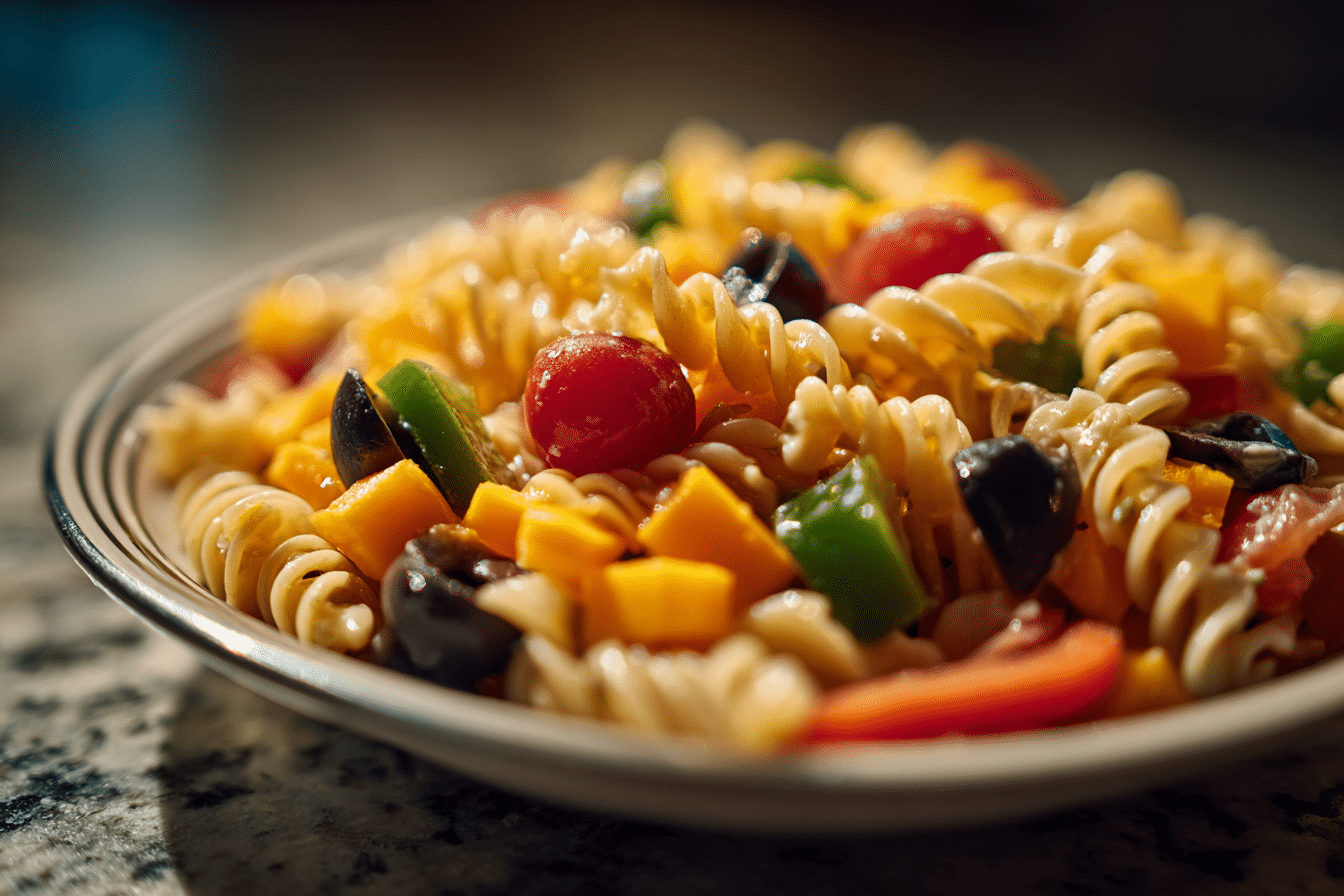
Classic Pasta Salad (for a Crowd) is a reliable dish for large gatherings, offering a balanced combination of tender pasta, crisp vegetables, and a tangy dressing that brings everything together. It works especially well for parties, picnics, and buffet-style meals where food needs to hold up over time without losing appeal. The structure of this dish makes it easy to prepare ahead, which is helpful when serving many people at once.
The appeal of this pasta salad comes from its mix of textures and flavors. Soft pasta serves as the base, while fresh vegetables add crunch and brightness. A light dressing ties the ingredients together, coating each piece without making the dish heavy. Because it can be served chilled or at room temperature, it fits a wide range of occasions and serving styles.
This version is designed for a crowd, meaning the quantities are generous and the preparation is practical. Each component plays a specific role in building a balanced bowl that stays consistent even after sitting for a while. It is a dependable choice when feeding a group and needing a dish that travels well and holds its structure.
Ingredients Overview
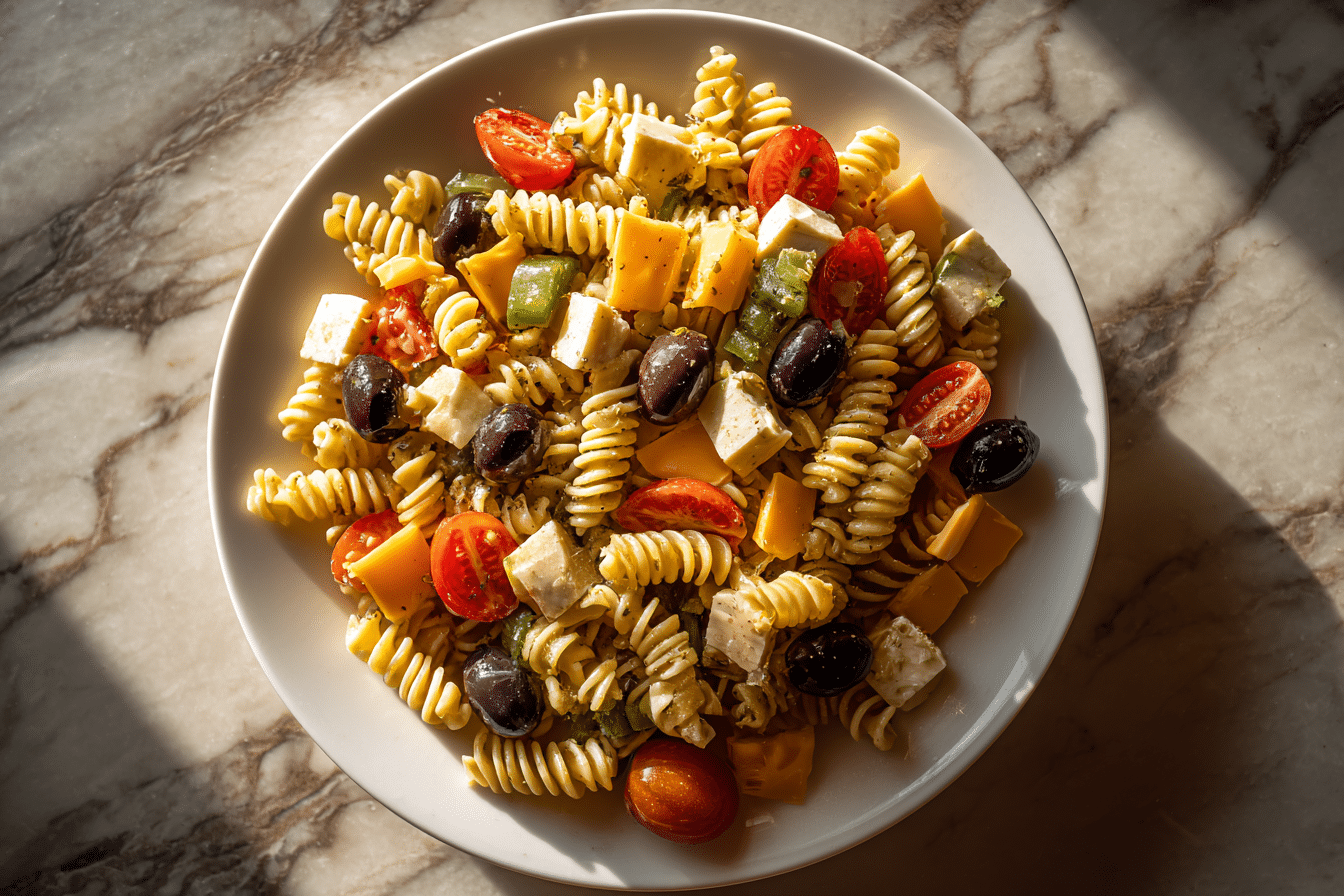
Short pasta shapes form the foundation of this dish. Rotini, penne, or fusilli work especially well because their ridges and curves hold onto dressing and small bits of vegetables. Cooking the pasta to a firm texture is important so it maintains structure after cooling and mixing.
Vegetables bring color and freshness. Cherry tomatoes add juicy sweetness, cucumbers provide crisp texture, and bell peppers contribute a mild natural sweetness with a slight crunch. Red onions give a sharper edge that balances the softer ingredients. Each vegetable should be cut into small, even pieces so every bite contains a mix of flavors.
Cheese adds richness and a soft contrast to the vegetables. Cubed cheddar or mozzarella works well because both hold shape and blend smoothly with the other ingredients. Black olives add a salty, briny note that enhances the overall flavor profile and prevents the dish from tasting flat.
The dressing is a key part of the recipe. A mixture of olive oil and red wine vinegar forms the base, while garlic powder, Italian herbs, salt, and black pepper add depth. Dijon mustard and lemon juice bring light acidity and help the dressing coat the pasta evenly. The goal is a balanced mixture that seasons without overpowering the other ingredients.
Fresh herbs like parsley add a finishing touch that brightens the overall flavor. The recipe can also be adjusted with additions such as chickpeas or cooked chicken for extra protein, making it flexible for different meal needs.
Ingredients
1 pound rotini pasta
1 1/2 cups cherry tomatoes, halved
1 cup cucumber, diced
1 cup bell pepper, diced
1/2 cup red onion, thinly sliced
1 cup cheddar cheese, cubed
1/2 cup black olives, sliced
1/4 cup olive oil
3 tablespoons red wine vinegar
1 teaspoon garlic powder
1 teaspoon dried Italian seasoning
1/2 teaspoon salt
1/2 teaspoon black pepper
1 tablespoon Dijon mustard
1 tablespoon lemon juice
2 tablespoons chopped parsley
Step-by-Step Instructions
Begin by cooking the pasta in a large pot of salted boiling water. Stir occasionally so the pieces do not stick together. Cook until the pasta is firm but cooked through. Once ready, drain it and rinse under cool water to stop the cooking process and bring the temperature down quickly. Allow it to drain fully so excess water does not dilute the dressing.
Place the cooled pasta into a large mixing bowl. Add cherry tomatoes, cucumber, bell pepper, red onion, cheese cubes, and sliced olives. Distribute the ingredients evenly so that each portion contains a balanced variety of colors and textures.
In a separate bowl, combine olive oil, red wine vinegar, garlic powder, Italian seasoning, salt, black pepper, Dijon mustard, and lemon juice. Whisk until the mixture becomes smooth and slightly thickened. This step helps the dressing coat the pasta more evenly.
Pour the dressing over the pasta mixture. Use a large spoon or spatula to gently toss everything together. Lift from the bottom of the bowl so the dressing spreads evenly without crushing the ingredients. Take care to keep the vegetables and cheese intact while mixing.
Once combined, taste a small portion and adjust seasoning if needed. Cover the bowl and place it in the refrigerator for at least one hour. This resting time allows the flavors to settle and blend together more fully.
Before serving, give the salad another gentle toss. If it appears dry after chilling, add a small splash of olive oil or vinegar and mix again. Serve chilled or slightly cool for the best texture.
Tips, Variations & Substitutions
Choosing high-quality pasta improves the final texture since it holds its shape better after chilling. Avoid overcooking, as softer pasta can break down when mixed with dressing.
Vegetables can be adjusted based on preference or availability. Zucchini, roasted red peppers, or corn kernels can be added for variety. Each one brings its own texture and flavor, allowing the dish to shift slightly while keeping its core structure.
For added protein, chickpeas, grilled chicken, or tuna can be included. These additions make the dish more filling without changing the overall balance. They also pair well with the tangy dressing and fresh vegetables.
Herbs can also be changed to adjust flavor direction. Basil, dill, or chives can replace parsley for a different finish. The dressing can be adjusted by adding more lemon juice for brightness or slightly more olive oil for a softer finish.
Serving Ideas & Occasions
This pasta salad fits well alongside grilled meats such as chicken, steak, or sausages. It also pairs nicely with sandwiches and wraps, making it suitable for lunch spreads or casual gatherings. Its cool temperature and balanced flavor make it a good match for richer main dishes.
It is often served at outdoor events, family gatherings, and potlucks because it can be made ahead and transported easily. Since it holds up well over time, it can sit on a table for extended periods without losing structure or appeal.
It also works as a light meal on its own, especially when protein is added. Because it is served cold or at room temperature, it is convenient for warm-weather meals or busy schedules.
Nutritional & Health Notes
This dish provides a combination of carbohydrates from pasta, fiber from vegetables, and fats from olive oil and cheese. The balance of ingredients creates a filling yet moderate meal option depending on portion size.
Vegetables contribute natural nutrients and fiber, while pasta provides energy. Olive oil adds richness and supports flavor absorption across the ingredients. Cheese adds protein and calcium but also increases richness, so portion balance can be considered when serving larger groups.
For a lighter variation, whole grain pasta can be used, and the amount of cheese or oil can be reduced slightly. Increasing the vegetable portion also helps improve overall balance while keeping the dish satisfying.
FAQs
What type of pasta works best for this salad?
Short pasta shapes such as rotini, penne, or fusilli work best because they hold dressing and small pieces of vegetables effectively. Their shape allows flavors to cling to every bite, creating consistency throughout the dish. Cooking the pasta to a firm texture is important so it does not become soft after chilling and mixing. Overcooked pasta can lose structure, so careful timing during boiling is important for best results.
Can this pasta salad be prepared ahead of time?
Yes, this dish is well suited for preparation in advance. Making it a few hours or even a day ahead allows the ingredients to absorb the dressing and develop fuller flavor. It should be stored in a covered container in the refrigerator. Before serving, it may need a light toss and a small amount of added dressing if the pasta has absorbed moisture during storage.
How long does it stay fresh in the refrigerator?
When stored properly in an airtight container, this pasta salad can stay fresh for about three to four days. Over time, vegetables may soften slightly and the dressing may be absorbed into the pasta. Stirring before serving helps restore consistency. If it appears dry, a small amount of olive oil or vinegar can be added to refresh the texture.
Can cheese be left out of the recipe?
Yes, cheese is optional in this dish. Leaving it out creates a lighter version while still keeping good flavor from the vegetables and dressing. To maintain texture, additional vegetables or plant-based protein like chickpeas can be added. The dressing provides enough seasoning to keep the dish balanced even without cheese.
What dressing works best for this pasta salad?
A vinaigrette style dressing works best. A blend of olive oil and red wine vinegar creates a balanced base, while garlic, herbs, and mustard add depth. Lemon juice adds brightness and helps lift the flavor of the vegetables. The dressing should be light enough to coat the pasta evenly without weighing it down.
Can this dish be served warm?
Although it is typically served chilled, it can be enjoyed slightly warm or at room temperature. Freshly mixed pasta offers a softer texture and stronger aroma, but chilling improves structure and flavor blending. For gatherings, it is usually kept cool for consistency and food quality over time.
How can dryness be avoided when storing?
Pasta tends to absorb dressing as it sits, which can lead to dryness. To prevent this, slightly underdress the salad initially and reserve a small amount of dressing for later use. Before serving, toss the salad again and add extra dressing if needed. A light drizzle of olive oil can also help restore moisture and improve texture.