
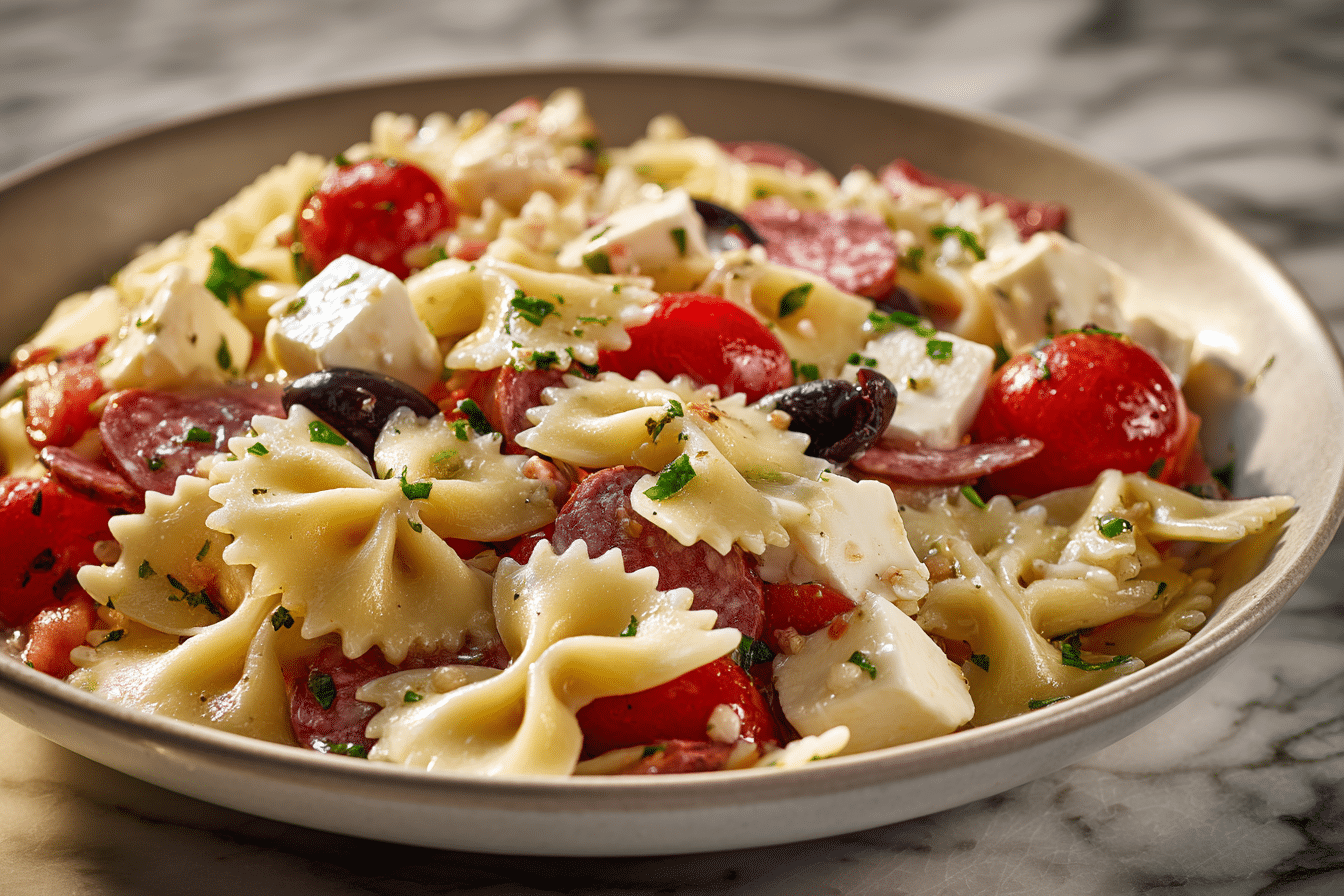
Italian Bow Tie Pasta Salad is a chilled pasta dish built around tender farfalle, crisp vegetables, creamy cheese, and a light herb dressing. Each bite carries a mix of textures, from soft pasta folds to crunchy vegetables and smooth mozzarella, creating a balanced cold dish that works well for gatherings, lunch prep, or shared meals.
This style of pasta salad is known for its flexibility and ease of preparation. It can be prepared ahead of time and stored in the refrigerator, allowing the flavors to settle together. The dressing lightly coats every ingredient, giving the salad a consistent taste without overwhelming the natural freshness of the vegetables.
Bow tie pasta is especially suited for cold salads because its shape holds small pieces of ingredients and dressing in its folds. When combined with olives, cheese, and vegetables, it creates a colorful and satisfying dish that pairs well with many main meals or stands alone as a light option.
Ingredients Overview
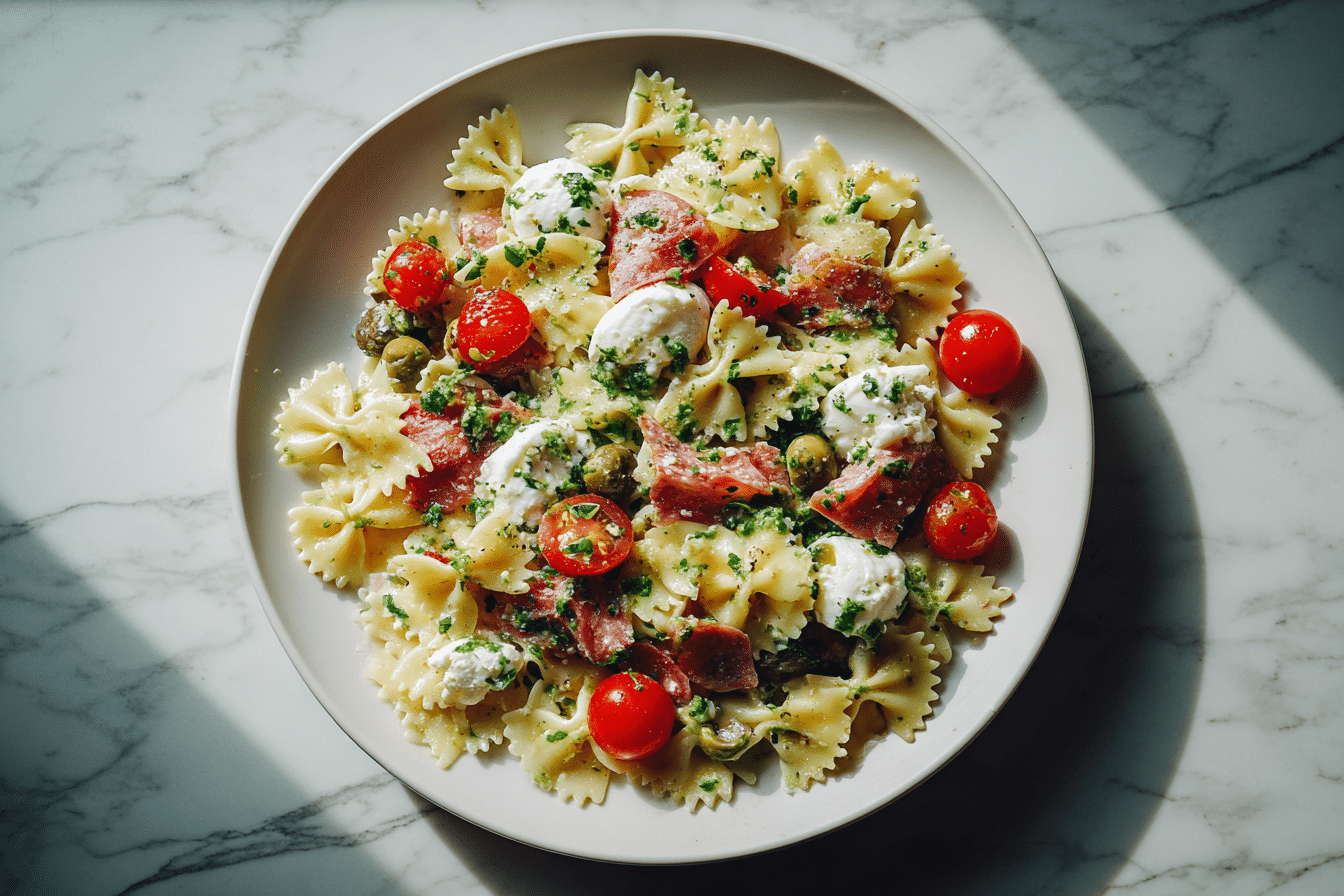
Farfalle pasta forms the foundation of this dish. Its pinched center and flat edges help trap dressing and small bits of vegetables, making every forkful balanced. Cooking it until just firm is important so it maintains structure after chilling.
Fresh vegetables bring brightness and contrast. Cherry tomatoes add mild sweetness and juiciness, while cucumbers provide a clean, crisp bite. Bell peppers introduce subtle natural sweetness and a firm texture, and red onion adds sharpness that balances the richer elements of the salad.
Black olives contribute a salty, briny note that deepens the overall flavor profile. They help cut through the mildness of the pasta and cheese. Mozzarella cubes add a soft, creamy texture that blends smoothly with the other ingredients without overpowering them.
The dressing is a light blend of olive oil, red wine vinegar, garlic, oregano, and basil. These ingredients combine to coat the pasta evenly while keeping the salad light. The oil provides smoothness, the vinegar adds gentle acidity, and the herbs bring a fragrant layer that ties everything together.
Optional additions such as salami or chickpeas can increase protein content and make the salad more filling. Salami adds a savory, seasoned bite, while chickpeas offer a plant-based option that blends easily with the existing ingredients. The recipe can be adjusted depending on preference, making it suitable for many different eating styles.
Ingredients
12 ounces bow tie pasta (farfalle)
1 cup cherry tomatoes, halved
1 cup cucumber, diced
1/2 cup red bell pepper, chopped
1/3 cup red onion, thinly sliced
1/2 cup black olives, sliced
1 cup mozzarella cheese, cubed
1/4 cup olive oil
3 tablespoons red wine vinegar
1 garlic clove, finely minced
1 teaspoon dried oregano
1 teaspoon dried basil
1/2 teaspoon salt
1/4 teaspoon black pepper
1/2 cup salami, sliced (optional)
Step-by-Step Instructions
Start by bringing a large pot of water to a rolling boil. Add salt to season the water, then cook the bow tie pasta until it reaches a firm texture. The pasta should be tender but still hold its shape when bitten. Once ready, drain it and rinse under cool water to stop the cooking process and remove excess starch. Set aside to cool completely.
While the pasta cools, prepare the vegetables. Slice the cherry tomatoes in half, cut the cucumber into small cubes, chop the bell pepper into bite-sized pieces, and thinly slice the red onion. Place all prepared vegetables into a large mixing bowl. Add the sliced olives and cubed mozzarella, gently mixing to distribute them evenly.
In a small bowl, prepare the dressing. Combine olive oil, red wine vinegar, minced garlic, oregano, basil, salt, and black pepper. Whisk until the mixture comes together into a smooth, lightly thickened dressing. This step helps the flavors distribute evenly throughout the salad.
Add the cooled pasta into the bowl with the vegetables and cheese. Pour the dressing over the mixture gradually while tossing gently. Make sure every piece is lightly coated without crushing the ingredients. The goal is even distribution rather than heavy saturation.
If using salami, fold it in at this stage. Stir gently to keep the pasta and vegetables intact. Once everything is combined, cover the bowl and place it in the refrigerator for at least 30 minutes. This resting time allows the flavors to settle and blend naturally.
Before serving, stir the salad again to refresh the texture. Taste and adjust seasoning if needed. The pasta should remain firm, the vegetables crisp, and the dressing evenly distributed throughout the bowl. Serve chilled for the best texture and consistency.
Avoid common issues such as overcooking the pasta or skipping the cooling step, which can lead to a soft or sticky texture. Adding too much dressing at once can also weigh down the salad, so gradual mixing is preferred for balance.
Tips, Variations & Substitutions
For best results, cook the pasta just until firm. Rinsing it under cool water helps maintain structure and prevents sticking. A light drizzle of olive oil after rinsing can also help keep the pasta separated before mixing.
Vegetable choices can be adjusted based on preference or availability. Zucchini, spinach, or artichoke hearts work well as additions or replacements. Each brings its own texture and mild flavor while maintaining the overall balance of the dish.
For a lighter variation, reduce the amount of cheese or replace it with a dairy-free alternative. Salami can be swapped with grilled chicken or chickpeas, depending on dietary needs. These changes allow the salad to fit different meal plans without altering its core character.
Fresh herbs such as parsley or basil can be added just before serving to bring a brighter aroma. Adding herbs too early may soften their texture, so final mixing works best for maintaining freshness.
Serving Ideas & Occasions
Italian Bow Tie Pasta Salad fits well alongside grilled meats, roasted vegetables, or baked seafood. It also works as a standalone meal for lunch or light dinners due to its mix of carbohydrates, vegetables, and optional protein.
This dish is commonly served at outdoor meals, gatherings, and shared tables because it holds its texture well after chilling. It travels easily, making it suitable for packed meals or events where food needs to stay fresh over time.
It pairs well with light beverages such as iced tea or sparkling water. The mild acidity of the dressing also complements richer main dishes, helping balance heavier flavors on the plate.
Nutritional & Health Notes
This pasta salad contains a balanced mix of carbohydrates from pasta, fats from olive oil, and protein from cheese and optional meats. Vegetables add fiber, vitamins, and natural freshness to the dish.
Adjusting ingredients allows control over nutritional content. Increasing vegetables boosts fiber and volume while reducing calorie density. Using whole grain pasta can add additional nutrients and a firmer bite.
Protein content can be adjusted based on additions like chicken, salami, or chickpeas. This makes the dish adaptable for different dietary preferences without changing its structure.
FAQs
Can this pasta salad be made ahead of time?
Yes, this dish is well suited for preparation in advance. In fact, allowing it to rest in the refrigerator helps the flavors settle together more evenly. After mixing, store it in a sealed container to keep it fresh. Before serving, stir gently to redistribute the dressing. If it seems slightly dry, a small amount of olive oil can restore moisture. Preparing it several hours before serving often results in a more balanced texture and flavor throughout the bowl.
Which pasta shape works best for this recipe?
Farfalle is commonly used because its shape holds dressing and small ingredients effectively. However, other short pasta types such as penne, fusilli, or rotini also work well. The key is choosing a pasta that maintains its structure after cooking and chilling. Long pasta shapes are not ideal because they do not hold ingredients evenly and can become tangled when mixed with vegetables and dressing.
How long does this salad stay fresh?
When stored properly in a sealed container in the refrigerator, the salad typically stays fresh for up to three days. Over time, vegetables may release moisture, slightly changing the texture. To maintain quality, some prefer storing the dressing separately and mixing it just before serving. If needed, a small drizzle of olive oil can refresh the salad after storage.
Is it possible to make this recipe without cheese?
Yes, cheese can be left out completely. The salad will still maintain structure and flavor thanks to the vegetables and dressing. For added creaminess without dairy, avocado pieces or plant-based cheese alternatives can be used. Removing cheese creates a lighter version while still keeping the dish satisfying and balanced.
What protein options work well in this salad?
Several proteins pair well with this recipe. Grilled chicken offers a mild, lean option, while salami adds a more seasoned flavor. Chickpeas provide a plant-based alternative that blends smoothly with the other ingredients. Tuna can also be used for a more savory variation. Each option adds substance and helps turn the salad into a fuller meal.
Can the dressing be adjusted?
Yes, the dressing can be modified based on taste preference. Red wine vinegar can be replaced with lemon juice or balsamic vinegar for a different acidity level. A small amount of mustard can add slight thickness and depth. Herbs can also be adjusted, with options like parsley or thyme changing the aroma profile.
Should this salad be served cold?
This pasta salad is best served chilled. Cooling allows the ingredients to settle and absorb the dressing evenly. However, it can also be enjoyed at room temperature shortly after refrigeration. For outdoor serving, keeping it chilled until serving time helps maintain texture and freshness.