
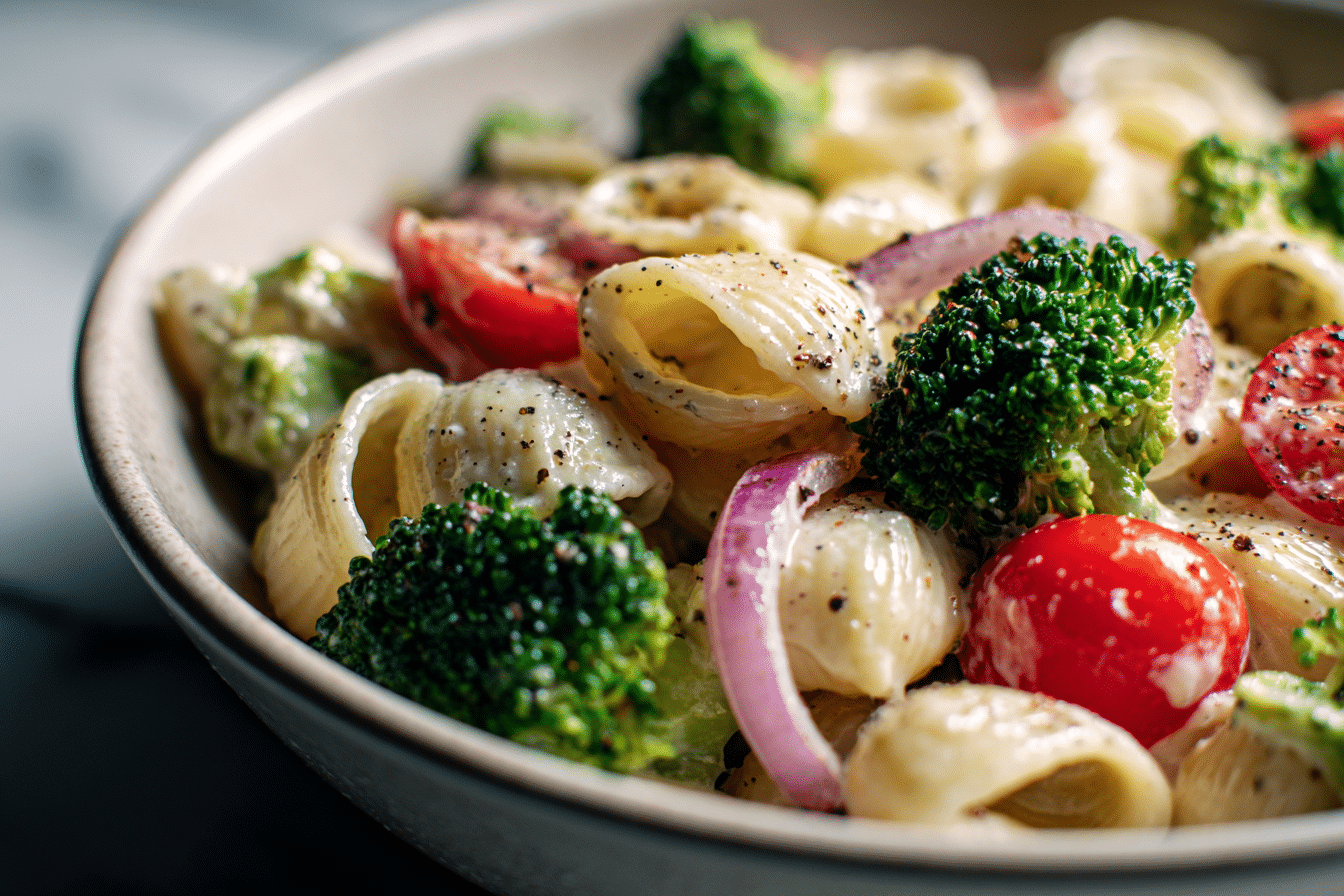
Fresh Broccoli Pasta Salad brings together tender pasta, crisp broccoli, and a creamy dressing that coats every bite with balanced flavor. This fresh broccoli pasta salad is ideal for lunches, shared meals, and make-ahead dishes that hold their texture and taste well after chilling.
Each forkful combines soft pasta with crunchy vegetables and a smooth, tangy dressing. The contrast between textures gives this fresh broccoli pasta salad its appeal, making it a versatile dish that fits casual meals and gatherings alike.
It can be prepared ahead of time and served cold, which makes it especially practical for busy schedules and warm-weather meals.
Ingredients Overview
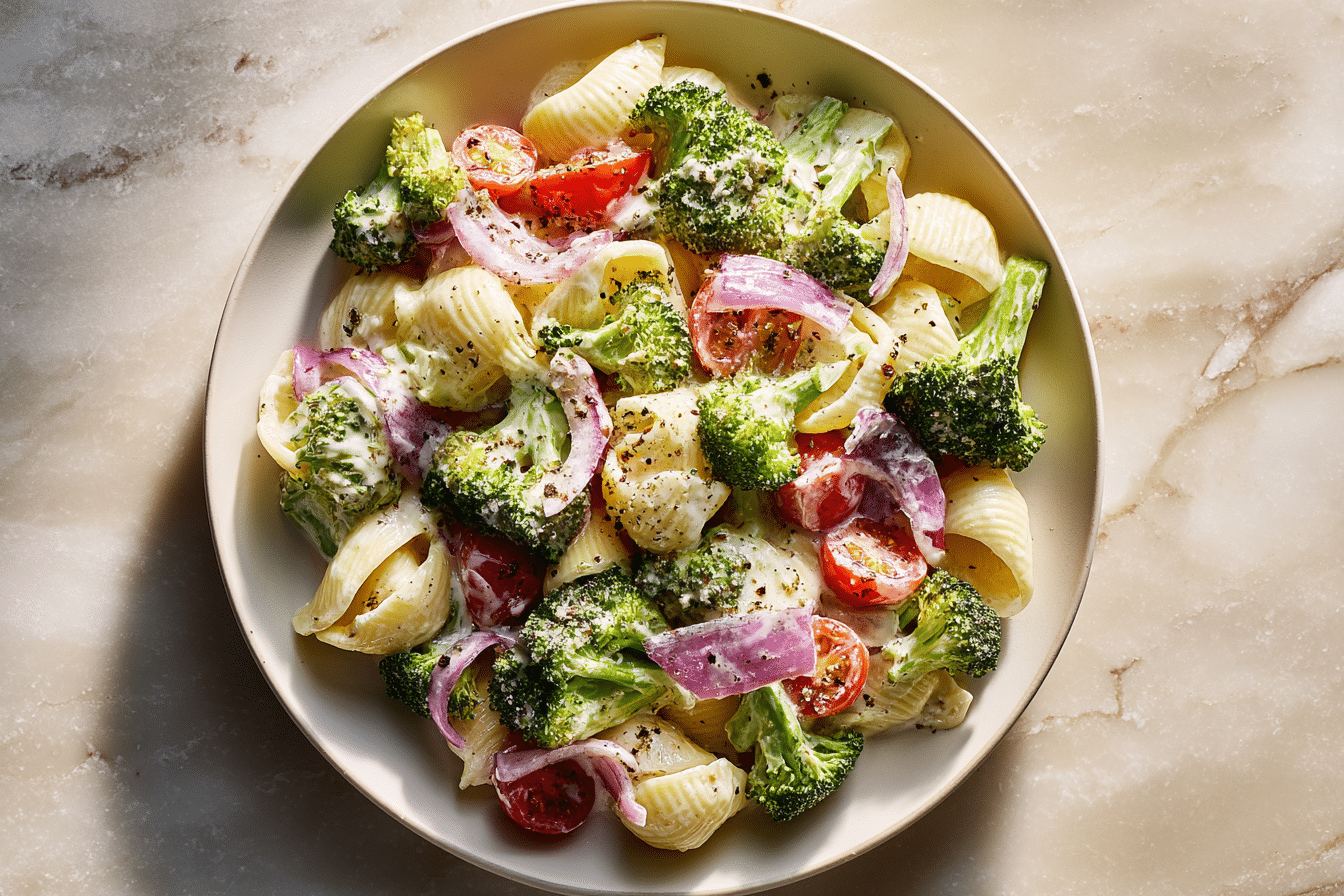
Fresh broccoli pasta salad is built from a short list of familiar ingredients that come together in a balanced and satisfying way. The pasta acts as the base, providing a soft structure that carries the dressing throughout the dish. Short shapes such as rotini, penne, or bow ties work especially well because they hold onto the creamy coating and mix evenly with vegetables.
Broccoli plays a central role in this recipe. Light blanching softens the florets slightly while keeping their firm bite and bright color. This step also helps reduce raw sharpness while maintaining texture, which is important for contrast against the pasta.
The dressing blends mayonnaise with Greek yogurt to create a creamy foundation. Apple cider vinegar adds a mild tang, while Dijon mustard brings depth and a slight edge. Garlic powder, salt, and black pepper round out the flavor, giving the dressing a balanced profile that coats every ingredient without overpowering them.
Additional components bring variety in taste and texture. Red onion adds sharpness and crunch, shredded carrots contribute natural sweetness, and cheddar cheese adds richness. Bacon bits introduce a savory note, while sunflower seeds give a subtle nutty crunch.
There is room for adjustments based on preference or dietary needs. Whole wheat or gluten-free pasta can replace standard pasta. Greek yogurt can be used in a higher ratio for a lighter dressing. Broccoli can be swapped with cauliflower for a similar texture. Plant-based cheese and dairy-free yogurt can replace dairy ingredients when needed.
Each element has a clear role, and together they create a dish that balances creaminess, freshness, and texture in every serving.
Ingredients
12 ounces rotini pasta
3 cups broccoli florets, cut into small pieces
1/2 cup mayonnaise
1/3 cup plain Greek yogurt
1 tablespoon apple cider vinegar
1 teaspoon Dijon mustard
1/2 teaspoon garlic powder
1/2 teaspoon salt
1/4 teaspoon black pepper
1/2 cup shredded cheddar cheese
1/3 cup red onion, finely chopped
1/3 cup shredded carrots
1/4 cup cooked bacon bits
2 tablespoons sunflower seeds
Step-by-Step Instructions
Begin by filling a large pot with water and adding a generous amount of salt. Bring it to a boil, then add the rotini pasta. Cook until the pasta reaches a firm yet tender texture. This stage is important because overly soft pasta can break apart when mixed with the dressing. Once cooked, drain and rinse under cold water to stop the cooking process and bring the temperature down for salad preparation.
While the pasta cooks, prepare the broccoli. Place a separate pot of water on the stove and bring it to a light boil. Add the broccoli florets and allow them to cook for about one minute. The goal is to slightly soften the surface while keeping a firm interior. After this brief cooking time, transfer the broccoli into a bowl of ice water. This step helps preserve color and texture. Drain thoroughly before adding to the salad.
In a large mixing bowl, prepare the dressing by combining mayonnaise, Greek yogurt, apple cider vinegar, Dijon mustard, garlic powder, salt, and black pepper. Stir until the mixture becomes smooth and consistent. The dressing should be thick enough to coat pasta while still mixing easily.
Add the cooled pasta into the bowl with the dressing. Stir until each piece is evenly covered. This step allows the pasta to absorb flavor before the remaining ingredients are added.
Next, add the broccoli, red onion, shredded carrots, cheddar cheese, bacon bits, and sunflower seeds. Fold everything together gently so the broccoli maintains its shape and the ingredients remain evenly distributed.
Taste the mixture and adjust seasoning if needed. Once satisfied, cover the bowl and place it in the refrigerator for at least half an hour. This resting time allows the flavors to blend and settle.
Before serving, stir the salad lightly to refresh the texture. If the mixture appears dry after chilling, a small spoon of yogurt or mayonnaise can be mixed in to restore creaminess.
Tips, Variations & Substitutions
Fresh broccoli pasta salad can be adjusted in many ways depending on taste and ingredient availability. For a lighter texture, increase the amount of Greek yogurt while reducing mayonnaise. This creates a tangier profile while maintaining creaminess.
Protein can be added to turn the salad into a more filling meal. Cooked chicken, chickpeas, tuna, or boiled eggs all blend well with the existing ingredients. Each option brings its own texture and flavor while keeping the base intact.
Vegetable additions can shift the flavor balance. Cherry tomatoes add juiciness, bell peppers bring a mild sweetness, and cucumbers add a crisp, refreshing bite. These additions work well without changing the structure of the dish.
Cheese choices can also be changed. Cheddar provides a rich flavor, while parmesan or smoked cheese adds a deeper savory tone. For a dairy-free version, plant-based cheese alternatives can be used.
For crunch variations, sunflower seeds can be replaced with almonds, pecans, or pumpkin seeds. Each option brings a slightly different texture while maintaining contrast in the salad.
Serving Ideas & Occasions
Fresh broccoli pasta salad fits into many meal settings. It pairs well with grilled chicken, steak, or fish, making it a strong side dish for outdoor meals or family-style dinners. It also works as a standalone dish for lunch due to its combination of carbohydrates, vegetables, and fats.
This salad is often served cold, which makes it suitable for warm-weather meals, outdoor gatherings, and packed lunches. It travels well in sealed containers, making it practical for shared meals or prepared portions during the week.
It also pairs nicely with soups or sandwiches, offering a creamy and textured contrast to lighter or brothy dishes. Its flexible nature allows it to fit into casual or more structured meal plans.
Nutritional & Health Notes
Fresh broccoli pasta salad contains a balance of carbohydrates, fats, and plant-based nutrients. Pasta provides energy, while broccoli adds fiber and plant compounds. The dressing contributes fats that help create a satisfying texture and flavor.
Greek yogurt adds protein and supports a creamy consistency without relying solely on heavier ingredients. Cheese contributes calcium and richness, while vegetables bring variety in both texture and nutrients.
Portion size plays an important role in balancing intake. A moderate serving can fit into a varied eating pattern that includes lean proteins and additional vegetables throughout the day. Adjusting the dressing or cheese quantity can shift the overall richness of the dish.
Because the salad holds its structure after chilling, it works well for prepared meals over several days, making it practical for structured meal planning.
FAQs
Can fresh broccoli pasta salad be prepared ahead of time?
Yes, this salad can be prepared several hours in advance or even a day ahead. Storing it in a sealed container inside a refrigerator allows the flavors to blend together. The pasta absorbs some of the dressing during this time, which deepens the overall flavor. Before serving, a gentle stir helps redistribute the dressing. If the texture feels slightly dry, a small spoon of yogurt or mayonnaise can be added to restore creaminess.
Is cooking broccoli necessary for pasta salad?
Light cooking is recommended for broccoli in this salad. A brief blanching process softens the surface while keeping a firm bite inside. It also helps maintain a bright color and reduces raw sharpness. Fully raw broccoli may remain too firm, while overcooked broccoli can lose structure. A short boil followed by cooling in ice water gives the best texture balance.
Which pasta shape works for broccoli pasta salad?
Short pasta shapes are ideal for this recipe. Rotini, penne, and bow ties work especially well because they hold dressing and mix easily with chopped vegetables. These shapes help distribute flavor evenly throughout the salad. Long pasta is less suitable since it does not combine as smoothly with chunky ingredients.
How long does broccoli pasta salad keep in the refrigerator?
When stored in a sealed container inside a refrigerator, this salad can remain in usable condition for about three to four days. Over time, the pasta may absorb more dressing, which can slightly change texture. Stirring before serving helps refresh consistency. A small amount of yogurt or mayonnaise can be added if needed.
Can this salad be made without dairy?
Yes, dairy-free adjustments can be made without changing the structure of the recipe. Plant-based yogurt and mayonnaise can replace traditional versions. Cheese can be omitted or replaced with dairy-free alternatives. These changes maintain a creamy texture while adapting the dish for dietary needs.
What proteins fit with this salad?
Several protein options work well with this dish. Chicken breast, tuna, shrimp, chickpeas, or boiled eggs can be added. Each option blends well with the creamy dressing and vegetable mix. These additions turn the salad into a more filling meal while keeping its balanced texture.
Why does the flavor improve after chilling?
Chilling allows the dressing to absorb into the pasta and vegetables. This resting time helps the ingredients combine more fully, creating a more unified taste. The broccoli stays firm, while the pasta softens slightly from absorbing flavor. This balance develops during refrigeration, which is why the salad is often more cohesive after resting.