
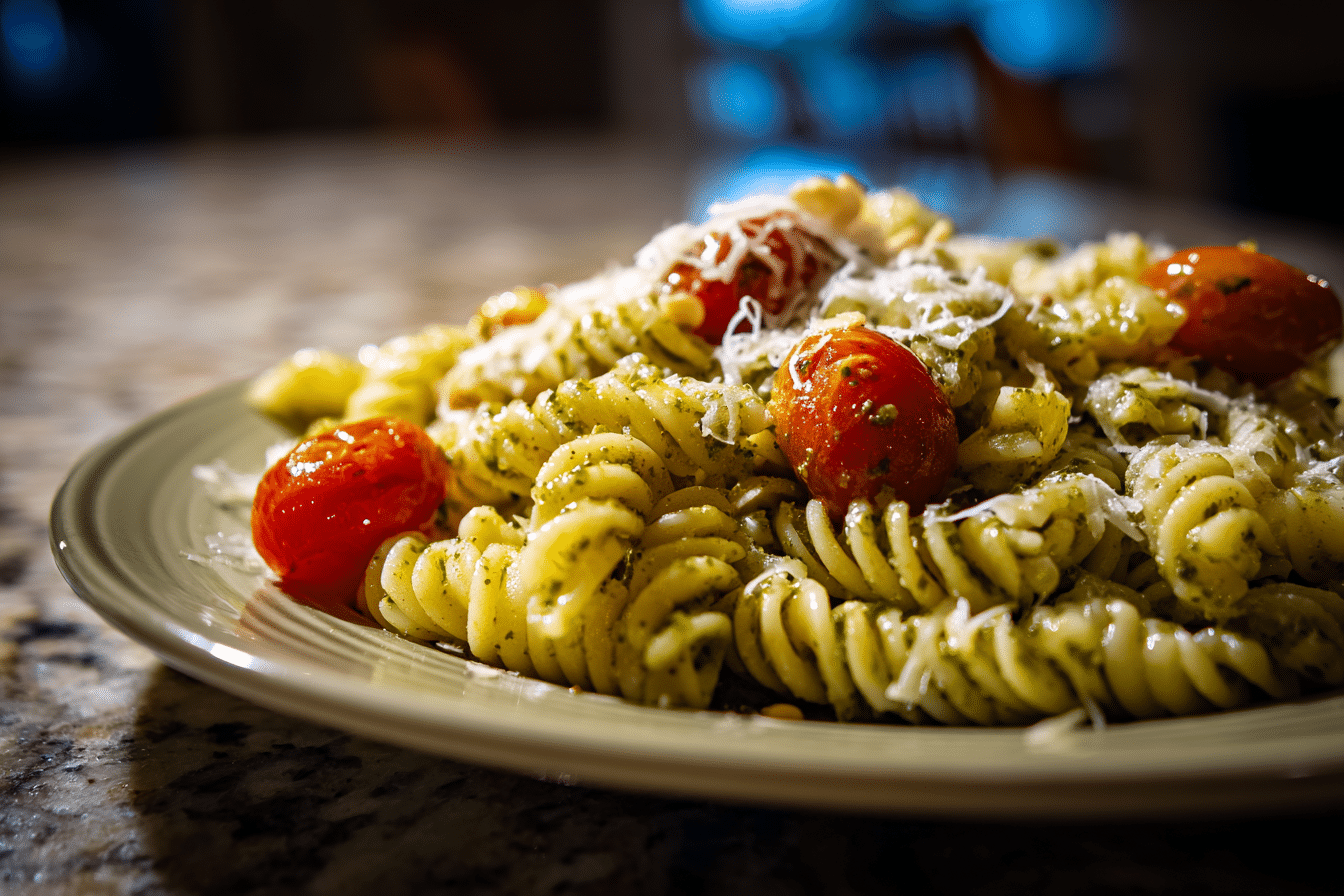
Pesto Pasta Salad brings together tender pasta, basil-rich pesto, and a mix of crisp vegetables and creamy cheese for a dish that fits well into warm-weather meals and relaxed gatherings. Each forkful combines herb-forward sauce with soft pasta and bright produce, creating a balanced bowl that feels both light and satisfying.
This style of pasta salad is known for its versatility and quick preparation. It works as a main dish for lunch, a side for grilled meals, or a chilled option for picnics and potlucks. The pesto coats every piece of pasta, creating a glossy texture that holds flavor well even after refrigeration.
The combination of ingredients allows room for adjustment based on preference or availability. Some versions lean more toward vegetables, while others include extra protein for a fuller meal. The structure remains consistent: pasta as the base, pesto as the binding sauce, and fresh additions for texture contrast.
Because it can be served slightly chilled or at room temperature, Pesto Pasta Salad fits into many serving situations without losing its appeal. It also holds its texture well over time, making it a practical choice for make-ahead meals.
Ingredients Overview
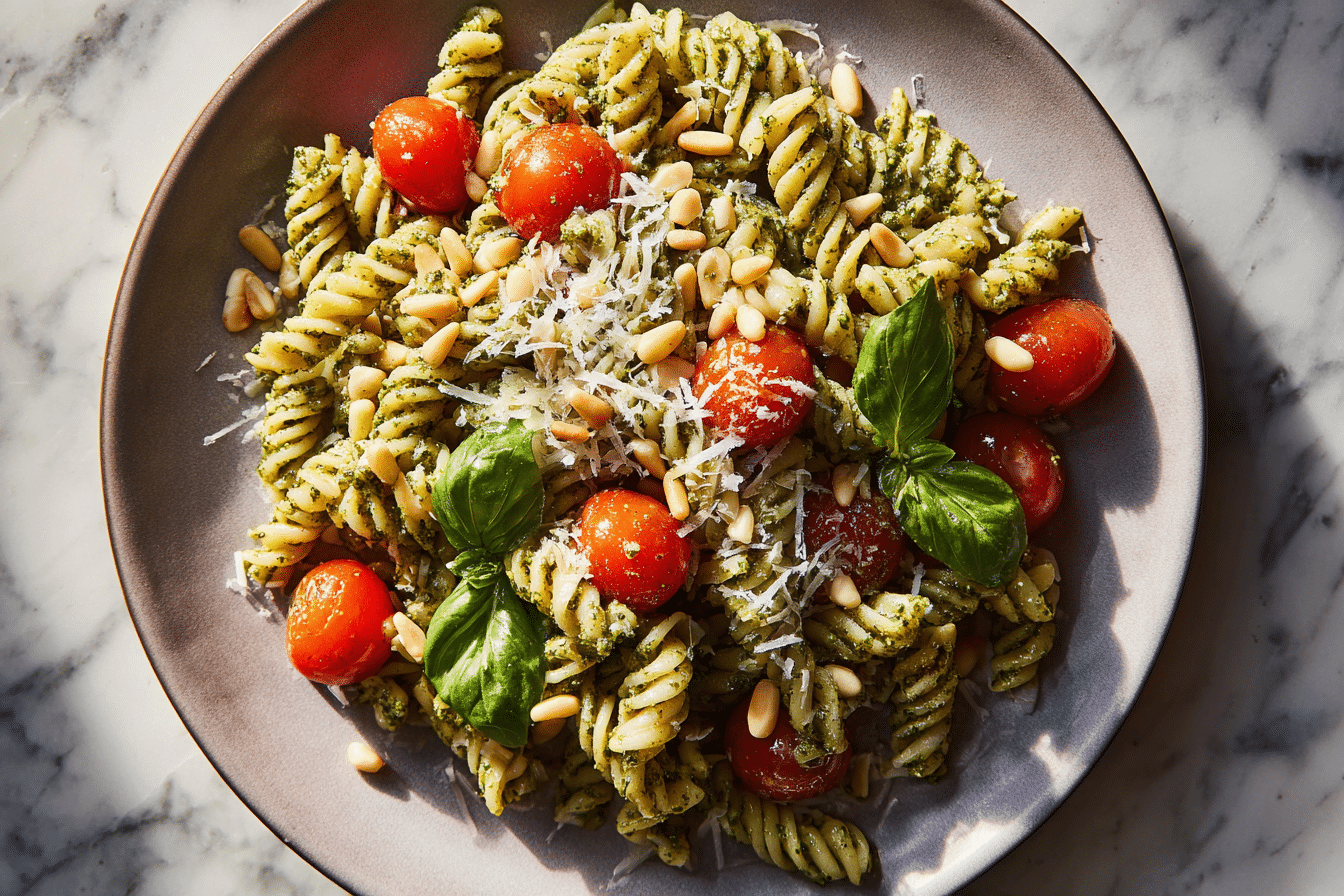
The foundation of Pesto Pasta Salad starts with pasta shapes that can hold sauce effectively. Short pasta such as rotini, fusilli, or penne works especially well because their curves and ridges help capture pesto in every bite. The pasta provides structure and a neutral base that carries all other flavors.
Basil pesto is the defining element of the dish. It is made from basil leaves blended with olive oil, garlic, pine nuts, and hard cheese. This mixture brings a rich herbal profile and a smooth consistency that clings to the pasta. The oil in the pesto helps distribute flavor evenly throughout the salad.
Cherry tomatoes introduce a juicy contrast that cuts through the richness of the pesto. Their natural sweetness and mild acidity add brightness and balance. Fresh mozzarella contributes a soft, creamy texture that blends smoothly with the pasta while adding gentle richness.
Black olives provide a slightly salty, earthy note that deepens the overall flavor. Baby spinach adds a tender green element that wilts slightly when mixed with warm pasta, blending into the dish without overpowering it. Parmesan cheese enhances the savory profile and strengthens the pesto base.
Olive oil and lemon juice are used in small amounts to adjust texture and add light acidity. Pine nuts offer a subtle crunch and nutty finish when sprinkled on top.
For substitutions, gluten-free pasta can replace wheat-based options without changing the structure of the dish. Dairy-free pesto and plant-based cheese alternatives can be used for a dairy-free version while maintaining a similar flavor balance. Additional vegetables like roasted peppers or cucumbers can also be included depending on preference.
Each ingredient works together to form a balanced pasta salad that combines softness, freshness, and richness in every serving.
Ingredients
12 ounces rotini pasta
1 cup basil pesto
1 1/2 cups cherry tomatoes, halved
1 cup fresh mozzarella balls
1/3 cup grated Parmesan cheese
2 tablespoons olive oil
1 tablespoon lemon juice
1/2 teaspoon salt
1/4 teaspoon black pepper
1/2 cup black olives, sliced
1 cup baby spinach leaves
2 tablespoons toasted pine nuts
Step-by-Step Instructions
Start by cooking the pasta in a large pot of salted boiling water. Stir occasionally to prevent sticking and cook until the pasta reaches a firm yet tender texture. Once done, drain the pasta and rinse it under cool water. This stops the cooking process and helps the pasta hold its shape for the salad.
Place the cooled pasta into a large mixing bowl. Add the basil pesto while the pasta is still slightly damp. The moisture helps the sauce spread evenly and cling to the pasta. Stir gently until every piece is coated with a consistent layer of pesto.
Add cherry tomatoes, mozzarella balls, sliced olives, and baby spinach to the bowl. Mix carefully to avoid breaking the softer ingredients. The warmth from the pasta will slightly soften the spinach, blending it into the mixture.
Drizzle olive oil and lemon juice over the salad. These ingredients help balance the richness of the pesto and cheese while adding a light, bright edge to the overall flavor. Sprinkle in salt, black pepper, and grated Parmesan cheese, then mix again until evenly combined.
Taste the salad and adjust seasoning if needed. More pesto can be added for a stronger herb flavor, while a small amount of olive oil can loosen the texture if it feels too thick.
Allow the salad to rest for a short period before serving. This resting time helps the flavors settle and blend more evenly throughout the dish. It can be served at room temperature or chilled based on preference.
Avoid overcooking the pasta, as softer pasta may lose structure when mixed. It also helps to add delicate greens like spinach near the end to keep their texture more defined if a fresher bite is preferred.
Tips, Variations & Substitutions
Pesto Pasta Salad adapts well to different ingredient combinations. Homemade pesto made with fresh basil can provide a stronger herbal flavor, while store-bought versions offer convenience and consistency.
For added protein, grilled chicken, shrimp, tofu, or chickpeas can be mixed in. These additions turn the salad into a more filling meal without changing its base structure. Roasted vegetables such as zucchini, eggplant, or bell peppers can also be included for a deeper roasted flavor.
If a lighter texture is preferred, reduce the amount of pesto slightly and add a small splash of reserved pasta water or extra olive oil. This helps spread the sauce more evenly across the pasta.
Gluten-free pasta options work well for those avoiding wheat, and plant-based cheese alternatives can replace dairy ingredients without major changes to flavor balance. Fresh herbs like basil or parsley sprinkled before serving add an aromatic finish.
Serving Ideas & Occasions
Pesto Pasta Salad fits easily into a wide range of meals and events. It is often served at outdoor gatherings such as picnics, barbecues, and potlucks due to its ability to hold texture outside refrigeration for a short time.
It pairs well with grilled dishes such as chicken, steak, or fish. For vegetarian meals, it complements roasted vegetables, flatbreads, or light soups.
As a standalone dish, it works well for lunch or a light evening meal. It also fits into meal preparation routines since it keeps well in the refrigerator for a couple of days without losing its overall structure.
Beverage pairings such as iced herbal tea or sparkling water with citrus fit well alongside its herbal and savory profile.
Nutritional & Health Notes
Pesto Pasta Salad provides a mix of carbohydrates, fats, and protein depending on ingredient choices. Pasta delivers energy from carbohydrates, while olive oil and pesto contribute fats that support satiety.
Cheese adds protein and calcium, while vegetables like tomatoes and spinach bring fiber and micronutrients. These components create a varied nutritional profile within a single dish.
Adjusting portion size helps manage overall intake, especially when serving as a side dish. Increasing vegetable content can add volume without significantly changing calorie levels. Whole grain or legume-based pasta can also raise fiber content for a more balanced option.
Plant-based versions can be made by replacing dairy ingredients with suitable alternatives, keeping the structure and flavor profile intact.
FAQs
What type of pasta works best for this dish?
Short pasta shapes such as rotini, fusilli, or penne work best for Pesto Pasta Salad. These shapes hold pesto well and help distribute flavor evenly. Their structure allows the sauce to cling to the surface and settle into grooves, creating a consistent taste throughout the dish. Long pasta types are less suitable because they do not mix as evenly in cold salads.
Can store-bought pesto be used?
Store-bought pesto works very well in this recipe and offers convenience without sacrificing flavor. Many store options contain basil, olive oil, and cheese, which provide a solid base for the salad. Choosing a pesto with a short ingredient list often results in a fresher taste. Homemade pesto can also be used for a stronger herbal profile.
How long can this salad be stored?
Pesto Pasta Salad can be stored in an airtight container in the refrigerator for up to three days. Over time, the pasta may absorb some of the sauce, causing a thicker texture. Adding a small amount of olive oil before serving helps restore its original consistency. Stirring well before serving also helps redistribute the ingredients evenly.
Is it possible to prepare this ahead of time?
Yes, this salad is well suited for advance preparation. It often develops deeper flavor after resting in the refrigerator for a few hours. Preparing it ahead also allows the ingredients to blend together more fully. Keeping delicate greens slightly separate until serving can help maintain their texture if a fresher bite is preferred.
Can extra vegetables be added?
Additional vegetables work well in this salad. Options like roasted bell peppers, cucumbers, or zucchini can be added depending on preference. These ingredients bring different textures and flavors while blending well with the pesto base. Roasted vegetables add depth, while fresh vegetables add crunch and brightness.
What protein options fit this salad?
Grilled chicken, shrimp, tofu, or chickpeas are all good additions to increase protein content. These options blend easily with pesto and pasta without overpowering the dish. They also help turn the salad into a complete meal suitable for lunch or dinner.
Should it be served cold or at room temperature?
Pesto Pasta Salad can be enjoyed either slightly chilled or at room temperature. Chilling it gives a firmer texture and a more refreshing feel, while room temperature serving allows the pesto to feel softer and more aromatic. Both options work depending on preference and setting.