
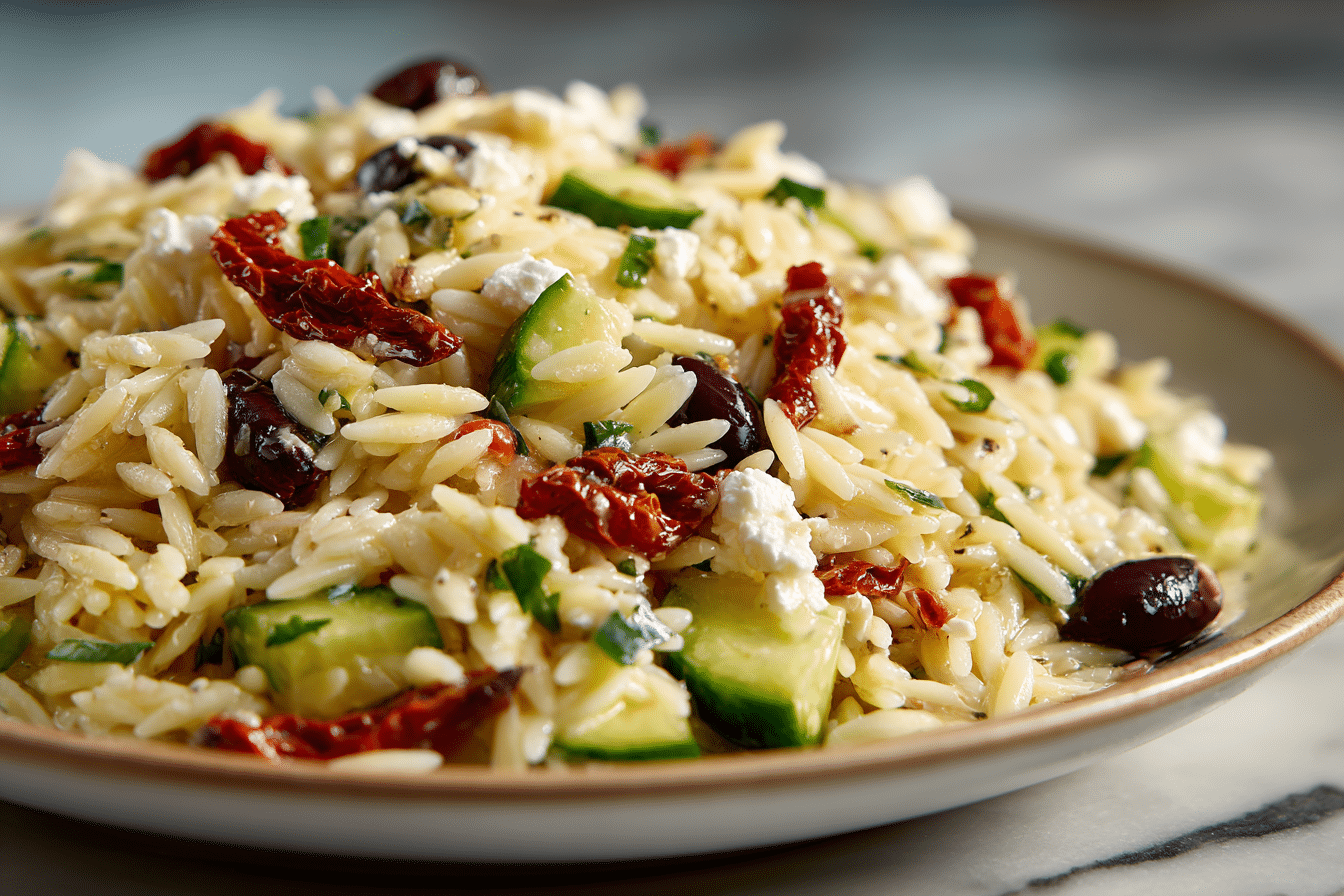
Perfect Orzo Pasta Salad With Feta And Sun Dried Tomatoes brings together tender pasta, tangy cheese, and rich, chewy tomatoes in a balanced chilled dish that fits well into many meal settings. It is a practical recipe that works for make-ahead lunches, shared platters, or quick dinners when something satisfying is needed without heavy preparation.
This style of pasta salad is built on contrast. The soft orzo forms the base, feta adds saltiness and creaminess, and sun dried tomatoes contribute deep, concentrated tomato notes. A light lemon and olive oil dressing ties everything together so each bite carries a steady mix of flavor and texture.
Because it holds its structure after resting, this dish is often prepared in advance. The flavors settle into the pasta over time, creating a cohesive taste profile that becomes more rounded after chilling. It is served cold or at room temperature depending on preference and occasion.
Ingredients Overview
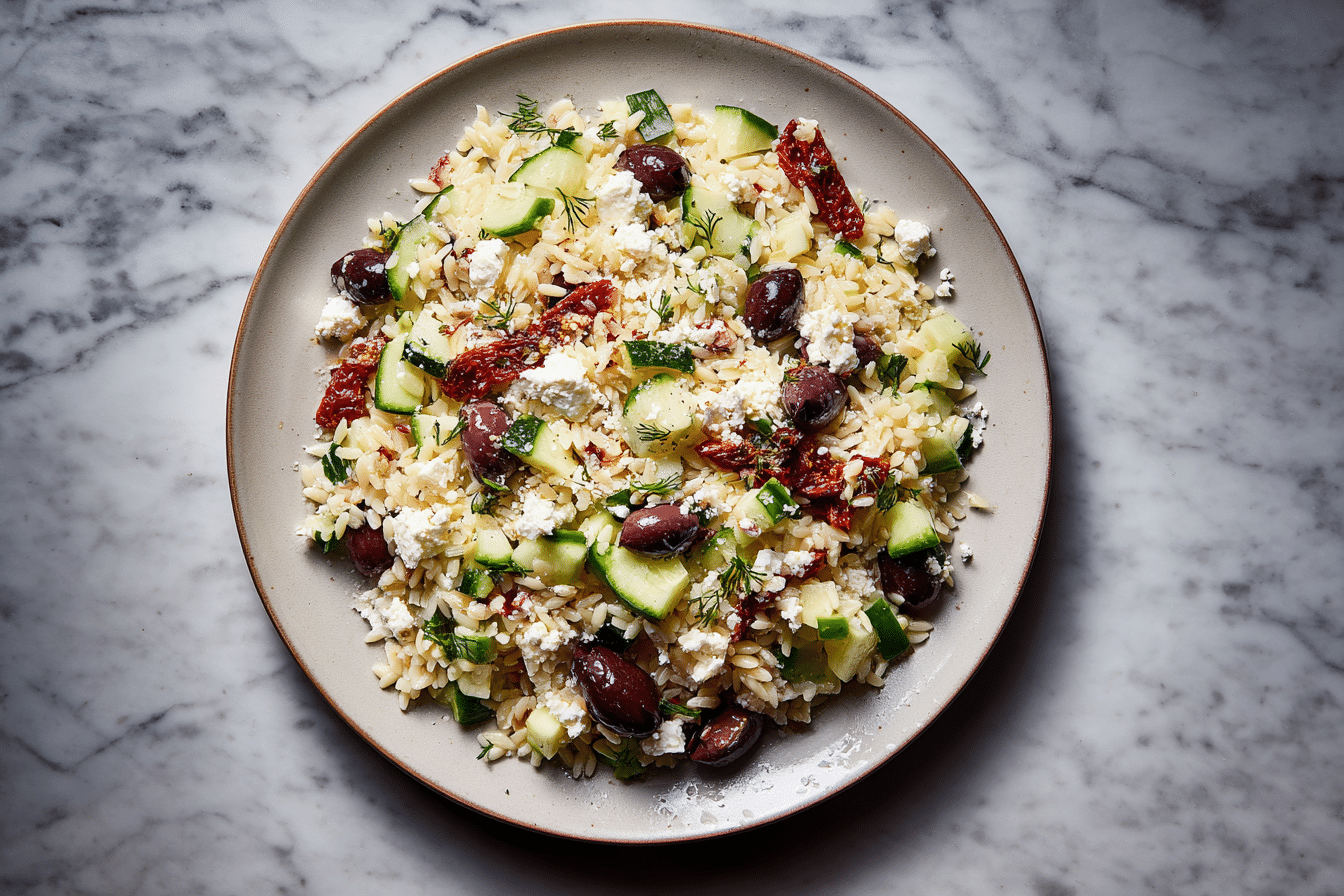
Orzo pasta is the foundation of this dish, chosen for its small rice-like shape that absorbs dressing and blends well with finely chopped ingredients. When cooked properly, it remains tender while still keeping a slight bite, which helps maintain structure in the salad.
Feta cheese plays an important role by introducing a salty and creamy contrast. It breaks into small pieces that spread throughout the salad, giving bursts of flavor in different bites. Its texture also softens slightly when mixed with warm pasta, helping it integrate into the dish.
Sun dried tomatoes add depth through their concentrated flavor. They are slightly chewy and rich, offering a strong tomato presence that balances the creaminess of feta. Oil-packed versions add extra richness, while dry-packed ones deliver a firmer texture and more intense chew.
The dressing is built from olive oil and lemon juice. Olive oil coats the pasta lightly, helping carry flavor across all ingredients. Lemon juice adds brightness and keeps the dish from feeling too heavy. Garlic and dried oregano provide subtle seasoning that supports the main components.
Fresh herbs such as parsley bring a light herbal note that lifts the overall profile. They add color and freshness without overpowering the core ingredients. Basil or dill can also be used depending on preference and availability.
Optional additions like cucumber or red onion introduce crunch and sharpness. These ingredients are not required but can shift the texture balance, making the salad feel more layered and varied in each serving.
Ingredients
1 ½ cups dry orzo pasta
¾ cup feta cheese, crumbled
¾ cup sun dried tomatoes, chopped
2 tablespoons olive oil
1 tablespoon lemon juice
1 teaspoon dried oregano
1 garlic clove, finely minced
½ teaspoon salt
¼ teaspoon black pepper
½ cup cucumber, diced (optional)
¼ cup red onion, finely chopped (optional)
2 tablespoons fresh parsley, chopped
Step-by-Step Instructions
Begin by bringing a large pot of salted water to a boil. Add the orzo and cook until it reaches a tender texture with a slight bite. Stir occasionally during cooking to prevent the small pasta pieces from sticking together.
Once the orzo is cooked, drain it and rinse briefly under cool water. This stops the cooking process and helps maintain the correct texture. Allow it to drain fully so excess moisture does not dilute the dressing later. Transfer the pasta to a large mixing bowl.
In a small bowl, combine olive oil, lemon juice, minced garlic, dried oregano, salt, and black pepper. Whisk until the mixture is evenly blended. This forms a light dressing that will coat the pasta and carry seasoning throughout the dish.
Pour the dressing over the slightly cooled orzo. Toss gently until the pasta is evenly coated. Doing this while the pasta is still slightly warm helps it absorb the flavors more effectively.
Add crumbled feta and chopped sun dried tomatoes to the bowl. Fold them in carefully so the feta remains in small pieces rather than fully breaking down. The goal is to keep visible texture throughout the salad.
If using cucumber or red onion, mix them in at this stage. These ingredients add crunch and a sharper contrast that balances the softer pasta and cheese. They also introduce freshness that lifts the overall profile of the dish.
Sprinkle chopped parsley over the mixture and gently combine everything once more. Taste and adjust seasoning if needed, adding a small amount of salt, lemon juice, or olive oil depending on preference.
Allow the salad to rest for at least 20 to 30 minutes before serving. This resting period allows the dressing to settle into the pasta and brings all components into better balance. Stir once before serving to redistribute any dressing collected at the bottom.
Avoid overcooking the orzo, as it can become too soft and lose its structure. It is also important not to overdress the salad at the start, since the pasta continues to absorb liquid as it rests.
Tips, Variations & Substitutions
A slightly richer texture can be achieved by adding a small drizzle of olive oil just before serving. This refreshes the salad if it has been stored in the refrigerator and helps revive its coating.
For a lighter version, reduce the amount of feta and increase the vegetable content such as cucumber or even cherry tomatoes. This shifts the balance toward a fresher profile while keeping the pasta as the base.
Protein additions like grilled chicken, shrimp, or chickpeas work well in this dish. They blend into the existing flavors without changing the core structure and turn the salad into a more filling main meal.
Herb variations can also change the character of the dish. Basil gives a softer aromatic tone, while dill introduces a slightly sharper herbal note. Parsley remains the most neutral option.
If sun dried tomatoes are too strong in flavor, roasted fresh tomatoes can be used instead. They bring a softer texture and a milder tomato presence while still contributing depth.
Whole grain orzo can be substituted for a firmer bite and a slightly earthier taste. Cooking time may vary slightly, so it should be checked during preparation for the right texture.
Serving Ideas & Occasions
This pasta salad fits well into casual meals, shared tables, and packed lunches. It holds its texture after chilling, which makes it practical for preparing ahead of time.
It pairs well with grilled vegetables, roasted meats, or simple sandwiches. It can also be served alongside soups for a more complete meal combination.
For outdoor meals or gatherings, it works well as a side dish because it does not require reheating and maintains flavor over time. It can be served in small portions or as part of a larger spread.
Light beverages such as sparkling water with citrus or herbal iced drinks pair well with the savory profile of the salad.
Nutritional & Health Notes
This dish contains a balance of carbohydrates from orzo, fats from olive oil and feta, and small amounts of protein from cheese and optional add-ins. It can be adjusted based on dietary needs and portion sizes.
Reducing feta lowers sodium levels while still keeping flavor through herbs and lemon juice. Increasing vegetables raises fiber content and adds volume without significantly changing the overall structure.
Olive oil contributes heart-friendly fats and helps carry flavor across the dish. Portion control can be adjusted depending on whether it is served as a main meal or side dish.
FAQs
Can this pasta salad be served warm?
Yes, it can be enjoyed slightly warm or at room temperature. When warm, the feta softens slightly and blends more into the dressing. If chilled, the texture becomes firmer and more structured, which some prefer for make-ahead servings.
What type of feta works best for this recipe?
Block feta stored in brine is often preferred because it has a creamier texture and richer taste. It crumbles well and distributes evenly throughout the salad. Pre-crumbled feta can also be used but may have a drier texture.
Can this dish be prepared in advance?
Yes, it is well suited for preparation ahead of time. The flavors settle as it rests, which often improves the overall balance. It can be stored in a sealed container and stirred before serving to refresh the texture.
What can replace sun dried tomatoes?
Roasted cherry tomatoes or slow-roasted fresh tomatoes are good substitutes. They offer a softer bite and a gentler tomato flavor while still contributing depth to the dish.
How do I keep the orzo from clumping together?
Rinsing the cooked orzo briefly under cool water helps stop sticking. Tossing it with olive oil while slightly warm also helps keep the grains separate and easier to mix.
Is it possible to make this without cheese?
Yes, feta can be left out for a dairy-free version. To maintain richness, extra olive oil or additions like olives or avocado can be used as substitutes.
What proteins pair well with this salad?
Grilled chicken, shrimp, or chickpeas fit well with the existing flavors. They blend smoothly into the dish and make it more filling without changing its overall character.