
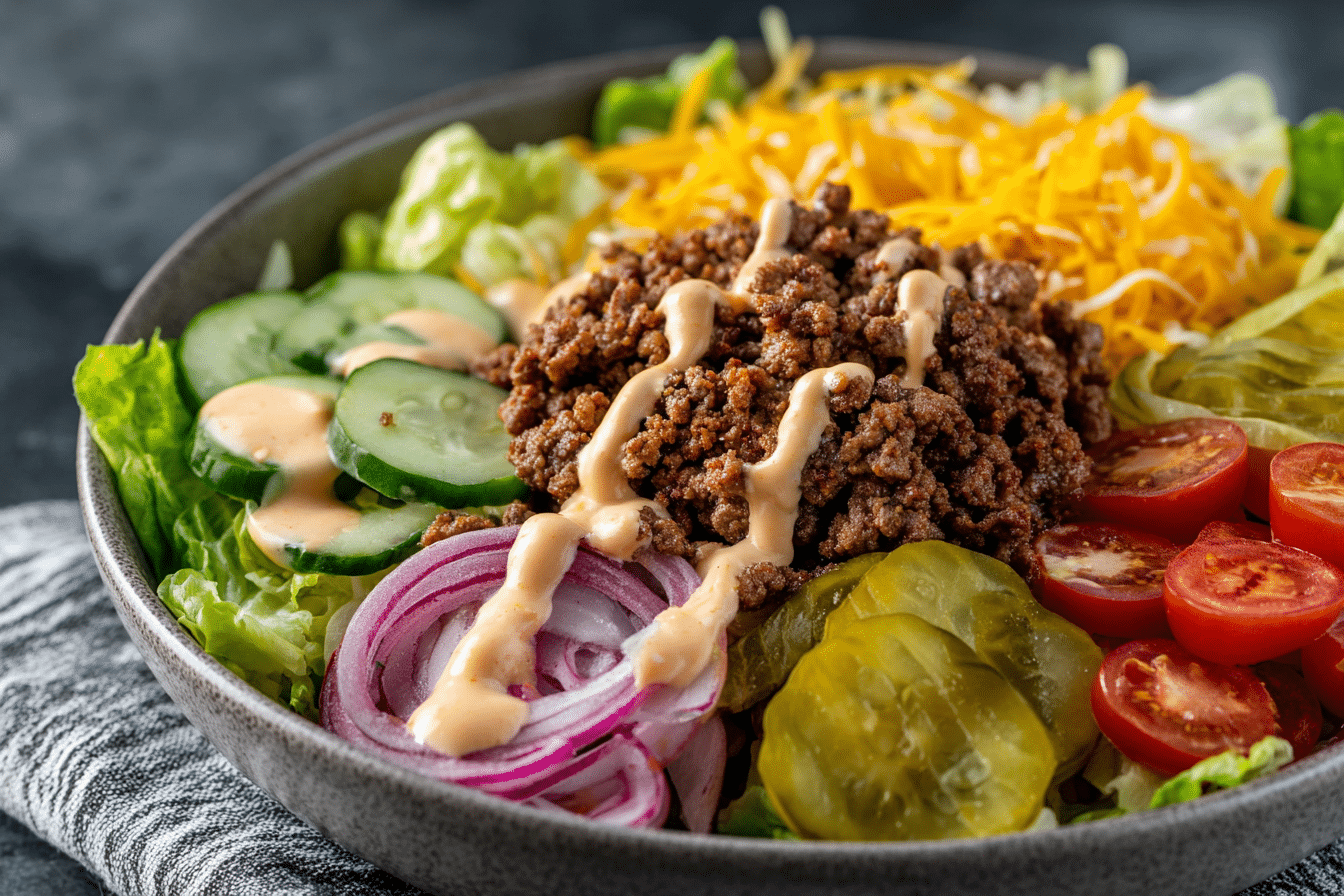
Burger Bowls bring the classic comfort of a burger into a fresh, fork-friendly meal that feels hearty yet balanced. Instead of a traditional bun, all the familiar burger elements rest over crisp vegetables, creating a layered dish full of savory flavor and varied texture.
The appeal of Burger Bowls comes from the contrast between warm seasoned beef and cool, crunchy toppings. Juicy ground beef pairs with lettuce, tomatoes, pickles, and creamy sauces that echo the taste of a classic diner burger. Each bite delivers a combination of richness, freshness, and satisfying depth.
This dish fits easily into busy evenings when a quick dinner still needs to feel filling and flavorful. With simple ingredients and a short cooking process, Burger Bowls come together quickly while still tasting like a full comfort meal.
Another reason these bowls stand out is their flexibility. They adapt to different dietary needs, from low-carb lifestyles to gluten-free eating plans. With the bun removed, attention shifts to bold seasoning, fresh toppings, and a well-balanced sauce that ties everything together.
Burger Bowls capture everything people enjoy about burgers while adding freshness and variety in every bowl.
Ingredients Overview
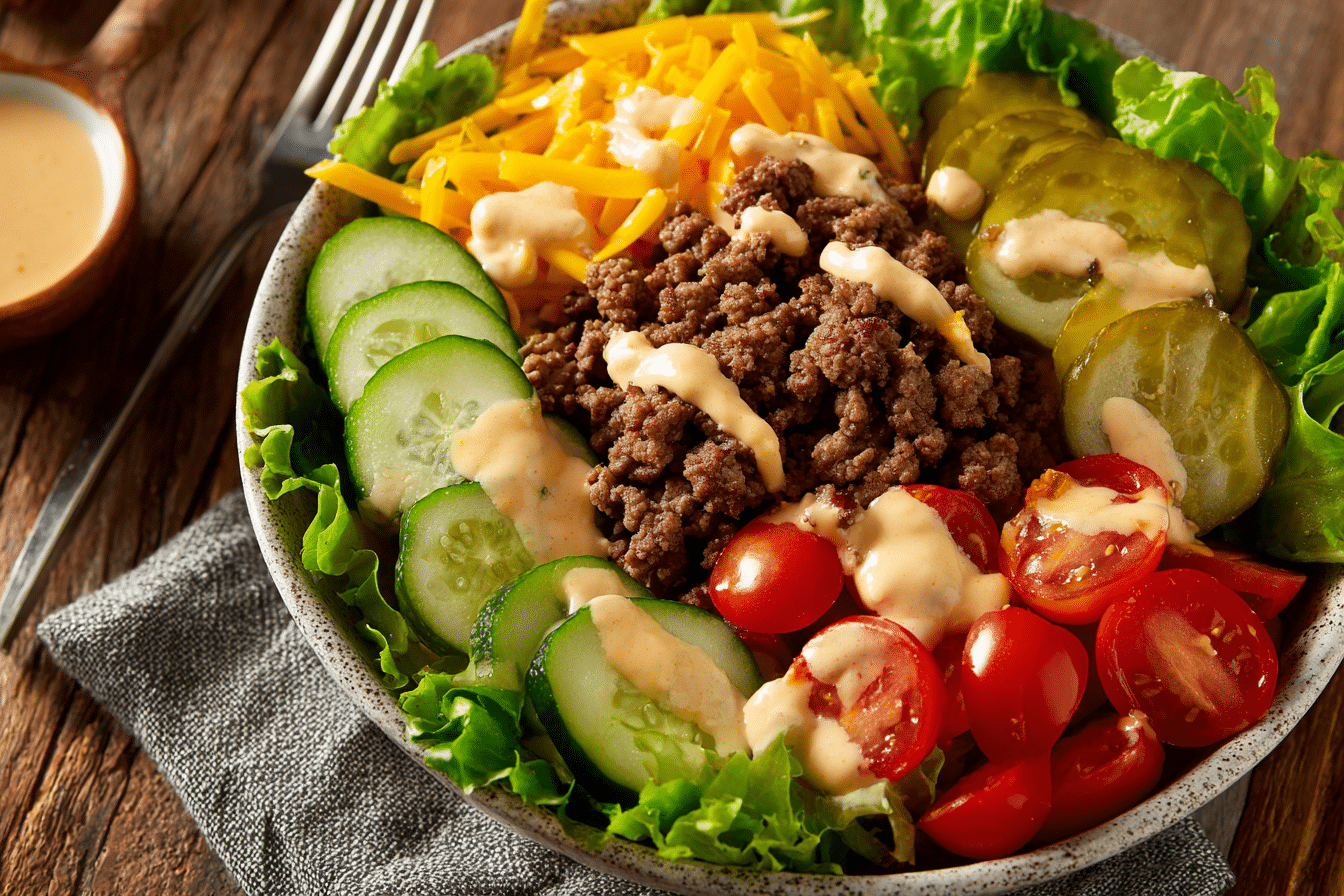
The heart of Burger Bowls starts with ground beef. An 80/20 blend works especially well because the fat brings rich flavor while still browning beautifully in a skillet. Leaner beef can also work, though adding a small splash of olive oil helps maintain moisture during cooking.
Salt, black pepper, garlic powder, and onion powder create the familiar burger seasoning profile. These pantry spices give the beef depth without overpowering the other ingredients. Smoked paprika can add gentle warmth if a deeper flavor profile is preferred.
Crisp lettuce forms the base of the bowl. Romaine lettuce offers crunch and structure, while iceberg lettuce provides a light, refreshing bite. Chopped lettuce spreads evenly across the bowl and supports the toppings without wilting under warm beef.
Cherry tomatoes bring acidity and juiciness. Their bright flavor balances the richness of the beef and dressing. Grape tomatoes or diced roma tomatoes can work just as well.
Pickles are a signature burger element. Dill pickle slices or chopped pickle spears introduce sharp tang and a satisfying snap. This small ingredient plays a major role in recreating that classic burger taste.
Red onion adds gentle sharpness and color. Thin slices blend easily with the other toppings while adding a little bite.
Shredded cheddar cheese melts slightly when placed near the warm beef. Its creamy, slightly sharp flavor complements the meat beautifully. Monterey Jack or Colby cheese also works nicely.
The final component is the burger sauce. A mixture of mayonnaise, ketchup, mustard, and finely chopped pickles creates a creamy topping reminiscent of classic burger sauces found in many diners.
Each ingredient contributes either richness, crunch, freshness, or acidity, creating a balanced bowl that feels complete without a bun.
Step-by-Step Instructions
Begin by preparing the vegetables. Wash and dry the lettuce thoroughly so it stays crisp. Chop it into bite-size pieces and divide it between serving bowls. Halve the cherry tomatoes, slice the red onion thinly, and cut the pickles into small pieces if needed.
Next, prepare the burger sauce. In a small bowl, stir together mayonnaise, ketchup, yellow mustard, and finely chopped pickles. A pinch of garlic powder and a dash of paprika can deepen the flavor. Place the sauce in the refrigerator while the beef cooks so the flavors blend.
Heat a large skillet over medium-high heat. Add the ground beef and break it apart using a wooden spoon or spatula. Spread the meat evenly across the pan to allow proper browning.
Season the beef with salt, black pepper, garlic powder, and onion powder. Stir occasionally as it cooks, allowing some pieces to develop a rich brown crust. This step builds flavor and gives the dish a classic burger taste.
Cook the beef for about 6 to 8 minutes, or until fully browned and cooked through. Drain excess grease if necessary, though leaving a small amount can add flavor.
While the beef rests for a minute, begin assembling the bowls. Over the lettuce base, scatter the tomatoes, pickles, and red onion. Sprinkle shredded cheddar cheese across the vegetables so the warm beef slightly softens the cheese.
Spoon a generous portion of the hot seasoned beef into the center of each bowl. The heat gently warms the surrounding toppings without wilting the lettuce completely.
Finish each bowl with a drizzle of burger sauce. Some people prefer mixing the sauce lightly through the bowl, while others keep it concentrated on the beef.
For extra texture, optional toppings such as diced avocado, crispy bacon pieces, or sesame seeds can be added. These additions introduce additional richness and crunch.
Serve the Burger Bowls immediately while the beef is warm and the vegetables remain crisp.
Tips, Variations & Substitutions
Ground beef can easily be replaced with other proteins. Ground turkey or ground chicken offers a lighter option while still holding burger seasoning well. When cooking poultry, a small amount of olive oil helps maintain moisture.
For a plant-based variation, seasoned lentils or plant-based ground alternatives work nicely. Browning them with the same spices keeps the burger flavor profile intact.
Cheese choices can vary depending on preference. Sharp cheddar adds bold flavor, while pepper jack introduces a mild spicy element. Crumbled blue cheese can create a richer, steakhouse-style bowl.
The vegetable base also allows flexibility. Romaine lettuce gives structure, but shredded cabbage or mixed salad greens can add variety. Some people enjoy adding roasted potatoes for a heartier bowl.
Sauce variations change the overall personality of the dish. A smoky chipotle mayonnaise creates a deeper flavor, while a yogurt-based dressing offers a lighter option.
Texture plays a major role in Burger Bowls. Crisp vegetables should remain fresh, while the beef should stay juicy and well seasoned. Avoid overcooking the beef, as dryness can reduce the overall balance of the bowl.
Preparing toppings ahead of dinner also shortens the cooking process. With vegetables chopped and sauce prepared in advance, the entire meal can come together very quickly.
These small adjustments allow Burger Bowls to fit different tastes without losing the core burger flavor.
Serving Ideas & Occasions
Burger Bowls work well for casual family dinners because each person can customize their bowl with preferred toppings. Setting up a small topping station with cheese, sauces, and vegetables allows everyone to build a bowl according to taste.
They also suit relaxed gatherings where lighter meals feel welcome. Since the dish avoids heavy bread, it pairs well with summer meals and outdoor dining.
For side dishes, roasted sweet potato wedges or baked potato cubes complement the savory beef. A simple cucumber salad also pairs nicely with the richness of the bowl.
Drinks such as iced tea, sparkling water with lemon, or light beer balance the savory elements of the meal.
Burger Bowls can also work as meal-prep lunches. Storing the beef separately from the vegetables keeps the ingredients fresh until ready to eat.
Whether served during a busy weekday evening or a relaxed weekend meal, these bowls bring familiar comfort in a lighter, refreshing format.
Nutritional & Health Notes
Burger Bowls offer a balanced mix of protein, vegetables, and healthy fats. Ground beef supplies protein and iron, both important nutrients for energy and muscle function.
The absence of a bun reduces refined carbohydrates, which can appeal to people following lower-carb eating plans. Replacing bread with vegetables increases fiber and micronutrient intake.
Lettuce, tomatoes, and onions provide vitamin C, potassium, and antioxidants that contribute to overall nutritional balance. These vegetables also add volume to the meal without excessive calories.
Cheese and sauce contribute fat and flavor, helping the meal feel satisfying. Using moderate portions keeps the dish balanced.
Those seeking lighter options can choose lean ground meat and reduce the sauce portion slightly. Yogurt-based sauces can also provide a lighter alternative.
Overall, Burger Bowls offer a hearty yet balanced meal that combines protein, fresh vegetables, and bold flavor in a simple format.
FAQs
What are Burger Bowls?
Burger Bowls are a deconstructed burger served in a bowl instead of a bun. Traditional burger ingredients such as seasoned ground beef, lettuce, tomatoes, cheese, pickles, and sauce are layered together over a bed of vegetables.
This approach keeps the flavor profile of a classic burger while adding freshness from raw vegetables. Each component remains visible and easy to adjust, which makes the dish highly customizable.
Because the bun is removed, Burger Bowls often appeal to people following low-carb or gluten-free eating patterns. Despite this change, the dish still delivers the savory taste associated with burgers thanks to well-seasoned beef and creamy burger sauce.
Can Burger Bowls be prepared ahead of dinner?
Yes, many parts of Burger Bowls can be prepared earlier in the day. Vegetables such as lettuce, tomatoes, onions, and pickles can be chopped and stored in airtight containers in the refrigerator.
The burger sauce can also be mixed in advance. Allowing it to rest for several hours can actually deepen the flavor as the ingredients blend together.
Ground beef tastes best when cooked shortly before serving, though it can also be cooked earlier and reheated gently in a skillet.
Keeping warm ingredients separate from the vegetables prevents wilting and helps the bowl maintain fresh texture when served.
What sauce works best for Burger Bowls?
A classic burger sauce usually combines mayonnaise, ketchup, mustard, and chopped pickles. This mixture creates a creamy, tangy topping similar to sauces found in many diner burgers.
Other sauces can also complement Burger Bowls. Thousand Island dressing provides sweetness and tang, while chipotle mayonnaise introduces a smoky element.
Some people prefer a lighter option made with Greek yogurt, mustard, and lemon juice. The key is maintaining a balance between creamy richness and slight acidity so the sauce complements the beef and vegetables.
Can Burger Bowls work for meal preparation?
Burger Bowls fit well into weekly meal preparation routines. Cooked ground beef can be stored in the refrigerator for several days and reheated when needed.
Vegetables should remain separate until serving to keep them crisp. Placing lettuce and toppings in individual containers allows quick assembly later.
The sauce can also be portioned into small containers so it stays fresh. When ready to eat, simply reheat the beef and combine all components in a bowl.
This method allows a flavorful lunch or dinner without lengthy preparation during busy days.
What vegetables work well in Burger Bowls?
Classic burger vegetables such as lettuce, tomatoes, onions, and pickles provide the most familiar flavor combination.
Additional vegetables can add variety and texture. Sliced cucumbers bring cool freshness, shredded carrots add gentle sweetness, and roasted mushrooms provide deeper savory notes.
Avocado slices introduce creamy texture that pairs nicely with seasoned beef. Bell peppers can also add color and crunch.
Choosing vegetables with different textures helps the bowl remain interesting from the first bite to the last.
How can Burger Bowls be made dairy-free?
Creating a dairy-free Burger Bowl is simple. The easiest adjustment is removing the shredded cheese or replacing it with a dairy-free cheese alternative.
The burger sauce can remain dairy-free if it uses standard mayonnaise, ketchup, and mustard. Many store-bought mayonnaise options already contain no dairy ingredients.
Adding avocado can replace some of the creaminess normally provided by cheese. It contributes a smooth texture that balances the savory beef and crisp vegetables.
With these small adjustments, Burger Bowls remain flavorful and satisfying without dairy.
What type of beef works best for Burger Bowls?
Ground beef with moderate fat content generally delivers the richest flavor. An 80/20 ratio provides a balance between tenderness and savory taste.
Lean beef such as 90/10 can also work but may benefit from a small amount of olive oil during cooking to prevent dryness.
Proper browning in a hot skillet helps develop deep flavor. Allowing the meat to cook undisturbed for short periods encourages caramelization, which contributes to the classic burger taste.
Seasoning the beef well with salt, pepper, garlic powder, and onion powder completes the familiar burger profile.
Print
Burger Bowls combine seasoned ground beef, crisp vegetables, cheese, pickles, and creamy burger sauce in a hearty bowl that delivers the flavor of a classic burger without a bun.
Ingredients
1 pound ground beef
1 teaspoon salt
1/2 teaspoon black pepper
1 teaspoon garlic powder
1 teaspoon onion powder
4 cups chopped romaine lettuce
1 cup cherry tomatoes, halved
1/2 cup dill pickles, sliced
1/4 cup red onion, thinly sliced
1 cup shredded cheddar cheese
Burger Sauce
1/2 cup mayonnaise
2 tablespoons ketchup
1 tablespoon yellow mustard
2 tablespoons finely chopped pickles
1/4 teaspoon garlic powder
Instructions
-
Wash and chop the lettuce, then divide it evenly among serving bowls.
-
Prepare the sauce by mixing mayonnaise, ketchup, mustard, chopped pickles, and garlic powder in a small bowl. Chill until ready to serve.
-
Heat a skillet over medium-high heat and add the ground beef.
-
Break the beef apart with a spoon and season with salt, pepper, garlic powder, and onion powder.
-
Cook for 6–8 minutes until the beef is browned and fully cooked.
-
Add tomatoes, pickles, onion, and cheese over the lettuce in each bowl.
-
Spoon warm beef over the vegetables.
-
Drizzle burger sauce across the top and serve immediately.