
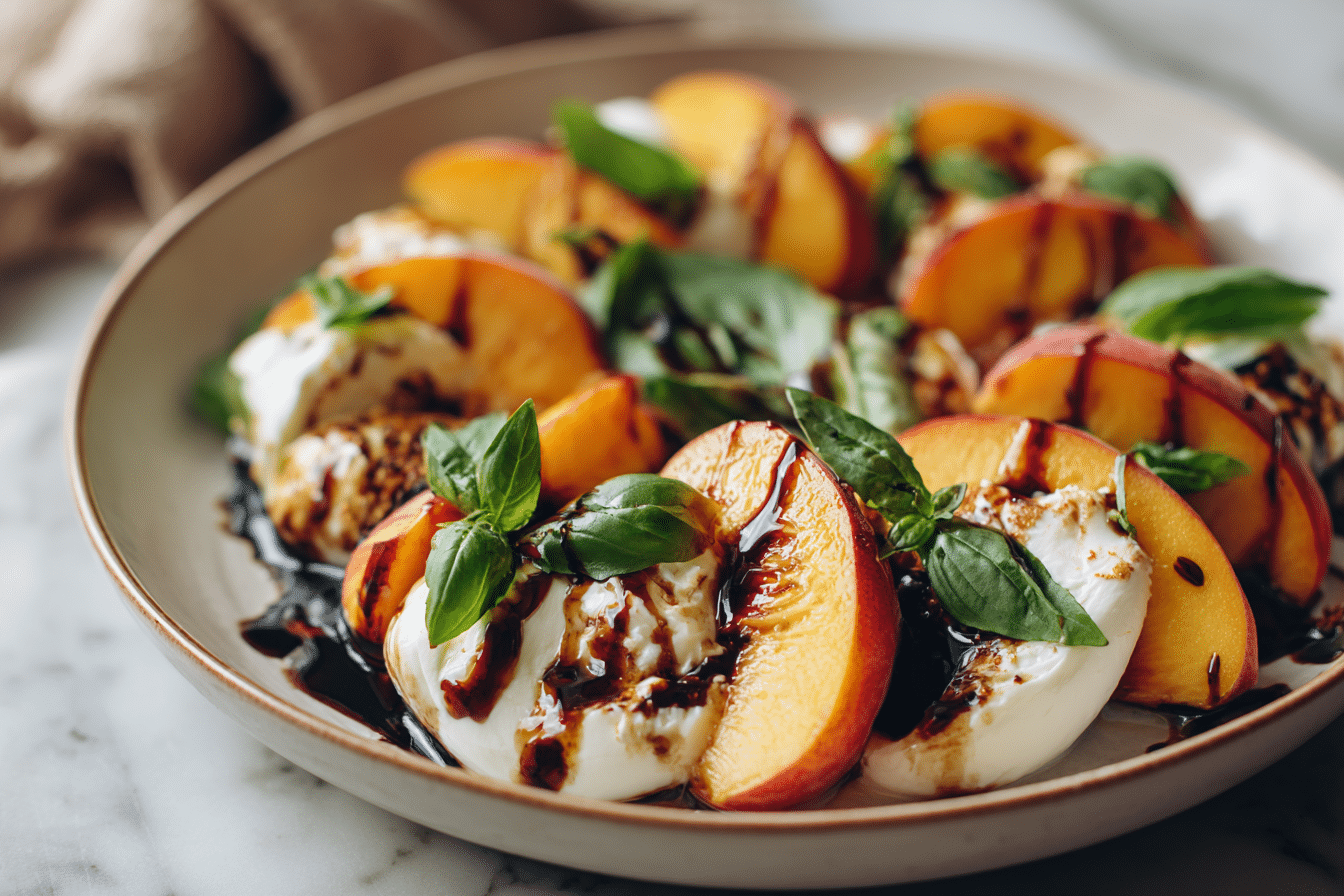
Peach Burrata Salad with Balsamic Drizzle brings together ripe stone fruit, soft dairy richness, and a dark sweet reduction in a way that feels light on the plate yet layered in flavor. The combination rests on contrast: juicy peaches, creamy burrata, and a sharp-sweet glaze that ties everything together.
This dish works well for warm-weather dining and relaxed gatherings where minimal preparation is preferred. The ingredients do most of the work, requiring only careful slicing and thoughtful arrangement. Peach Burrata Salad with Balsamic Drizzle fits naturally as a starter or a light main when paired with simple sides.
Each component contributes a distinct character. The fruit brings natural sweetness, the cheese adds richness, and the greens provide structure. The finishing drizzle adds depth and a glossy finish that enhances both taste and appearance.
Ingredients Overview
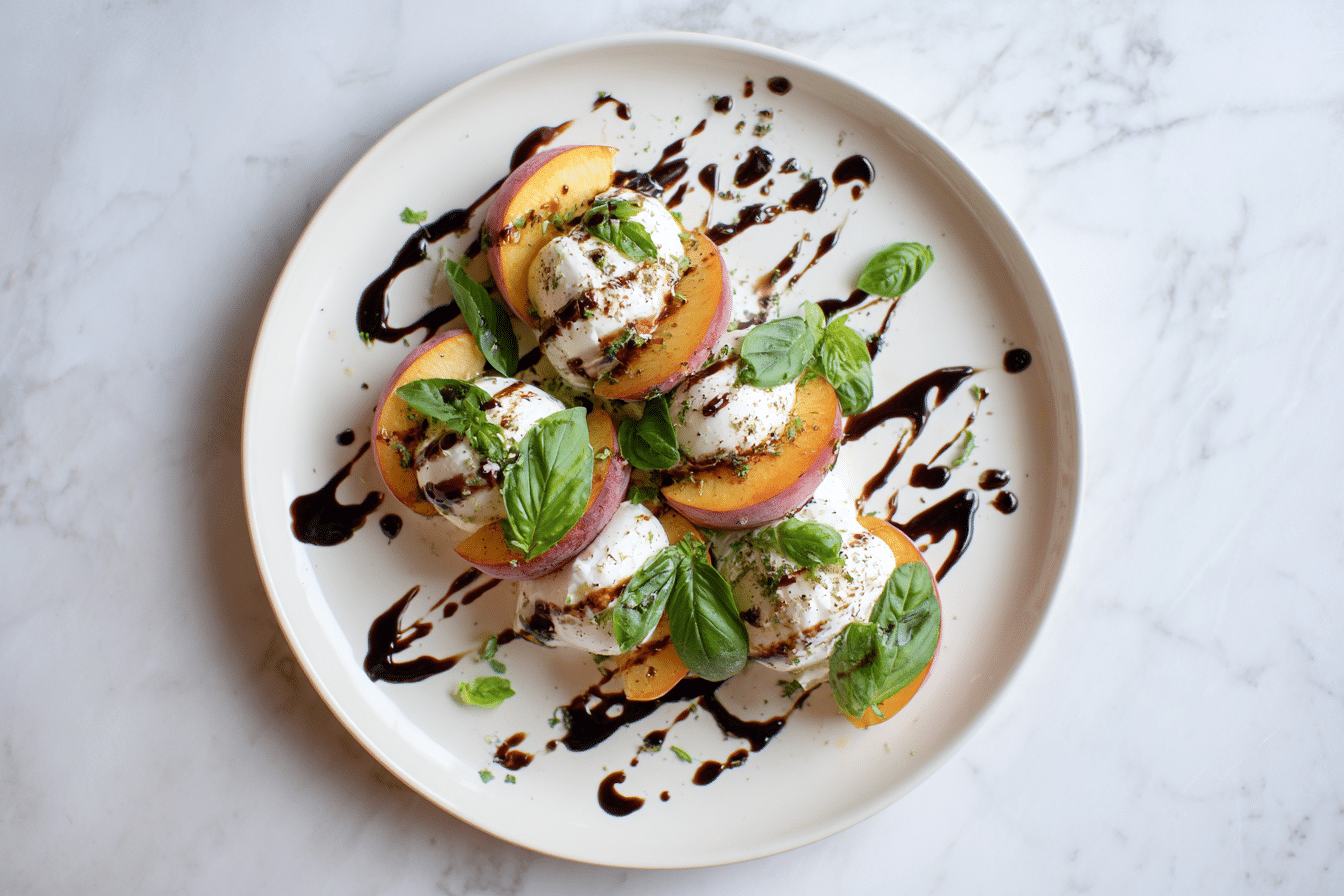
Peaches are the central fruit in Peach Burrata Salad with Balsamic Drizzle. Their juicy flesh and gentle sweetness form the backbone of the dish. Choosing peaches that are ripe yet still slightly firm helps them hold shape when sliced, preventing them from breaking down once plated. Their flavor balances well against both creamy and acidic elements.
Burrata cheese adds a rich, milky interior wrapped in a delicate outer shell. When opened, the center flows slightly, coating nearby ingredients. This texture contrast is important because it softens the sharper notes of the balsamic while complementing the fruit’s natural sugars.
Leafy greens such as arugula or mixed baby leaves provide a light foundation. Arugula contributes a mild pepper tone, while softer greens offer a neutral base. These greens help distribute flavor and prevent the dish from feeling too heavy.
Balsamic reduction brings a concentrated sweet-acid profile. It should be thick enough to sit on the surface of the salad rather than running through it. This element adds depth and visual contrast, especially against the pale cheese and golden fruit.
Olive oil is used in a light drizzle to round out the flavor profile. It helps carry seasoning and adds a smooth mouthfeel. Sea salt sharpens the natural fruit notes, while black pepper introduces a gentle warmth that balances the creamy texture of burrata.
Optional additions include toasted nuts and fresh basil. Nuts introduce crunch and an earthy tone, while basil adds aromatic lift. Almonds, pistachios, or walnuts all work depending on preference.
Substitutions are flexible. Nectarines can replace peaches without changing the structure of the dish. Mozzarella can stand in for burrata, though the texture becomes firmer and less creamy. A reduced vinegar can replace prepared glaze if needed.
Ingredients
3 ripe peaches, cut into wedges
2 burrata balls (about 8 ounces total)
4 cups arugula or mixed salad greens
2 tablespoons extra virgin olive oil
2 tablespoons balsamic reduction
1/2 teaspoon flaky sea salt
1/4 teaspoon ground black pepper
1/4 cup toasted almonds or pistachios (optional)
1/4 cup fresh basil leaves, torn
Step-by-Step Instructions
Start by washing the peaches thoroughly under cool water. Slice them into even wedges, keeping the pieces uniform so they layer neatly on the plate. If the peaches are very soft, use a gentle hand to avoid crushing their structure during cutting.
Place the greens on a wide serving platter or shallow bowl. Spread them evenly to form a light base layer. Avoid packing them too tightly, as spacing helps maintain a balanced texture and allows the other components to sit naturally.
Arrange the peach slices across the greens. Distribute them so each portion of the salad receives a similar amount of fruit. Overlapping slightly is fine, but avoid stacking too heavily, which can cause uneven flavor distribution.
Add the burrata next. Place the balls whole for a clean presentation or gently tear them open to expose the creamy interior. Allow the soft center to rest across the peaches and greens so it naturally blends into the salad.
Drizzle olive oil evenly across the surface. Follow with balsamic reduction in thin lines, allowing it to settle over the fruit and cheese. The goal is light coverage rather than saturation, preserving balance between components.
Sprinkle salt and black pepper evenly. These seasonings bring structure to the creamy and sweet elements, helping each ingredient stand out without overpowering the others.
If using nuts, scatter them over the top for added crunch. Finish with torn basil leaves placed loosely across the surface to introduce a light aromatic layer.
Serve immediately after assembly. This dish performs best when freshly prepared, as the textures remain distinct and the burrata retains its soft center.
Common issues include using overly soft fruit, which can collapse during assembly, or applying too much dressing, which can overwhelm the lighter ingredients. Careful balance keeps the structure intact.
Tips, Variations & Substitutions
Selecting fruit at the right stage of ripeness has a strong impact on flavor. Peaches should be fragrant and slightly yielding without becoming overly soft. This allows them to hold shape while still offering natural sweetness.
For added depth, peach slices can be briefly placed on a grill pan. Light searing introduces caramel notes and a subtle smoky edge that works well with balsamic reduction.
Burrata can be served slightly chilled for firmer structure or closer to room temperature for a softer, more spreadable texture. Each option changes how the cheese interacts with the fruit.
To introduce a savory layer, thin slices of cured ham can be added. The saltiness contrasts with the fruit and enhances the creamy elements.
For a dairy-free version, avocado provides a similar creamy texture. While the flavor shifts, it still supports the structure of the dish and pairs well with balsamic glaze.
Different nuts can change the texture profile. Pistachios add a light crunch, walnuts bring a deeper tone, and pine nuts offer a mild buttery note. Light toasting improves aroma and texture in all cases.
Serving Ideas & Occasions
Peach Burrata Salad with Balsamic Drizzle fits well into relaxed dining settings and shared meals. It can be served as an opening course or as a light main alongside other simple dishes.
It pairs well with grilled chicken, roasted vegetables, or lightly seasoned fish. The salad provides contrast to richer or warmer dishes without competing for attention.
For drinks, lightly chilled sparkling water with citrus or a crisp white wine pairs naturally with the salad’s balance of sweet and tangy notes.
Presentation works well on large platters, making it suitable for group dining. The layered colors of fruit, greens, and cheese create visual interest without additional decoration.
Nutritional & Health Notes
This dish includes a mix of carbohydrates, fats, and protein in moderate balance. Peaches supply natural sugars along with vitamins A and C, contributing to overall dietary variety.
Burrata adds protein and fat, helping create a more filling dish. Its richness is balanced by the lighter elements in the salad, keeping portions satisfying without heaviness.
Olive oil contributes monounsaturated fats, which are commonly included in balanced eating patterns. Greens add fiber and plant-based nutrients that support general dietary intake.
Nuts, if included, provide additional protein and healthy fats along with texture variation. The overall composition supports a light meal structure suitable for warm conditions.
FAQs
Can this salad be prepared ahead of time?
Preparation can be done in stages, but full assembly works best right before serving. Peaches release juice after slicing, and burrata softens further once exposed to air and other ingredients. To prepare ahead, slice the fruit and store it in a covered container. Keep greens dry and chilled. Assemble all components just before serving to maintain texture and separation between elements.
What type of peaches should be used?
Freestone peaches are often easier to work with because the pit separates cleanly from the flesh. Look for fruit that is fragrant and slightly soft when gently pressed. If the peaches are too firm, the flavor may be underdeveloped. If too soft, they may break apart during plating. A balanced texture works best for structure and taste.
Can balsamic glaze be replaced with vinegar?
Yes, but it should be reduced first. Heating balsamic vinegar slowly concentrates its natural sugars and thickens the consistency. This creates a syrup-like texture that adheres well to fruit and cheese. Unreduced vinegar is too thin and can spread unevenly across the salad, affecting both flavor distribution and presentation.
Which greens work most effectively?
Arugula is commonly used due to its light peppery tone, which contrasts with the sweetness of peaches. Mixed baby greens offer a milder foundation with varied textures. Spinach provides a softer base with minimal bitterness. Each option changes the overall flavor profile slightly while maintaining structure.
Can the salad be made without dairy?
Yes, avocado can replace burrata for a dairy-free version. Its creamy texture pairs well with peaches and balsamic reduction. While the flavor is more neutral compared to burrata, it still provides richness and helps balance the acidity and sweetness in the dish.
What nuts pair well with this salad?
Almonds, pistachios, and walnuts all work well depending on texture preference. Almonds provide a firm crunch, pistachios offer a lighter bite, and walnuts add a deeper earthy note. Light toasting improves both aroma and texture, making the nuts more pronounced in the salad.
How should leftovers be stored?
Leftovers should be placed in a sealed container and refrigerated promptly. The texture will change as moisture releases from both fruit and cheese. For better results, store components separately and assemble only the portion intended for immediate consumption. This helps preserve structure and flavor balance.