
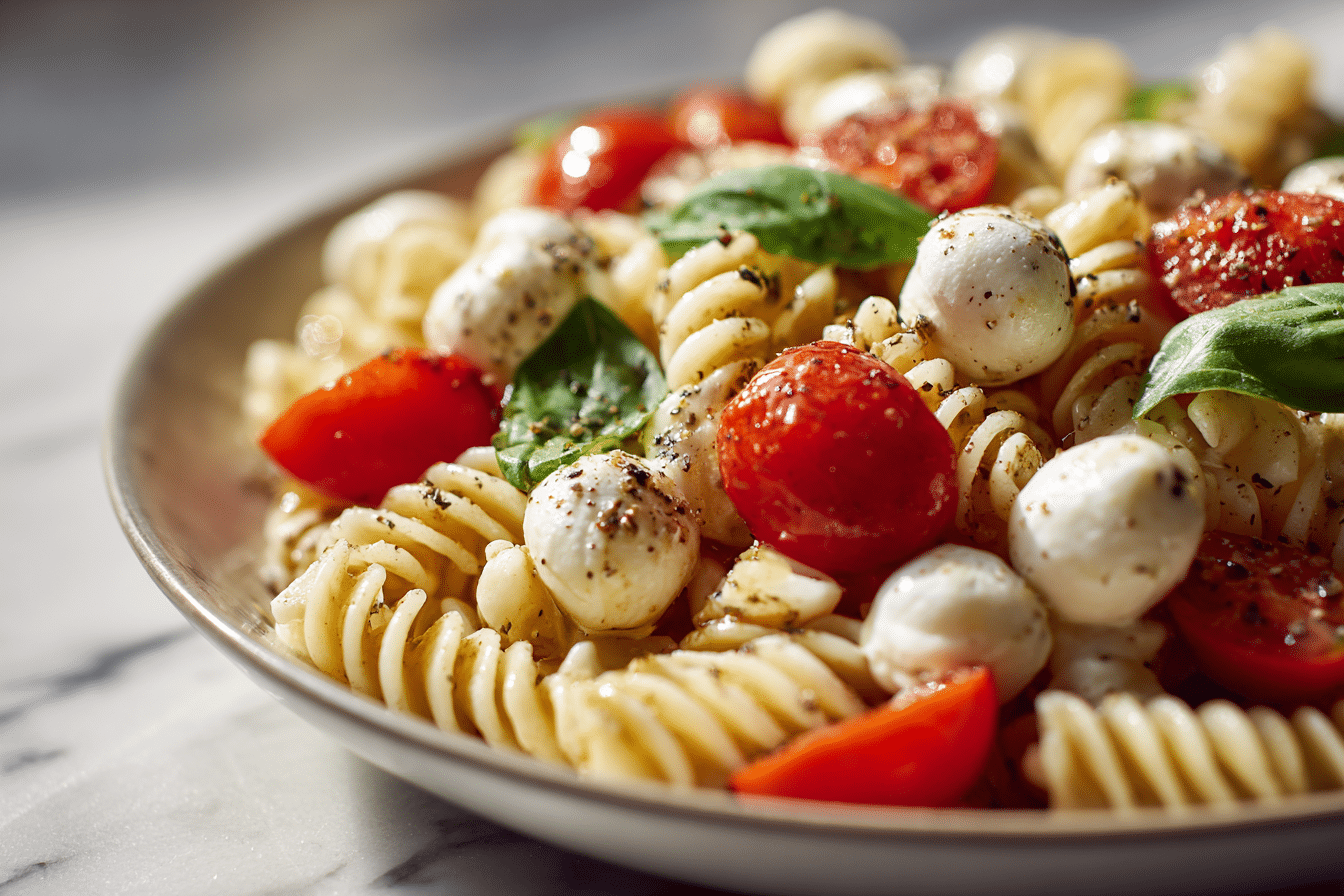
Easy Caprese Pasta Salad brings together tender pasta, juicy tomatoes, creamy mozzarella, and aromatic basil in a chilled dish that fits a wide range of occasions. Inspired by the traditional Italian Caprese combination, this version transforms those familiar flavors into a more filling pasta-based meal while keeping the same refreshing character.
Each bite offers a balance of soft pasta, milky cheese, and naturally sweet tomatoes, all tied together with a light olive oil and balsamic-style dressing. The simplicity of the ingredients allows each element to stand out while blending harmoniously in every forkful.
This dish works especially well for warm-weather meals, quick lunches, and shared tables where make-ahead dishes are preferred. Since it holds its structure after chilling, it is a practical choice for preparation earlier in the day or even the day before serving.
Easy Caprese Pasta Salad can also be adjusted in many directions without losing its identity. Whether served as a side dish or a standalone meal, it delivers a colorful and satisfying experience that feels light while still being filling.
Ingredients Overview
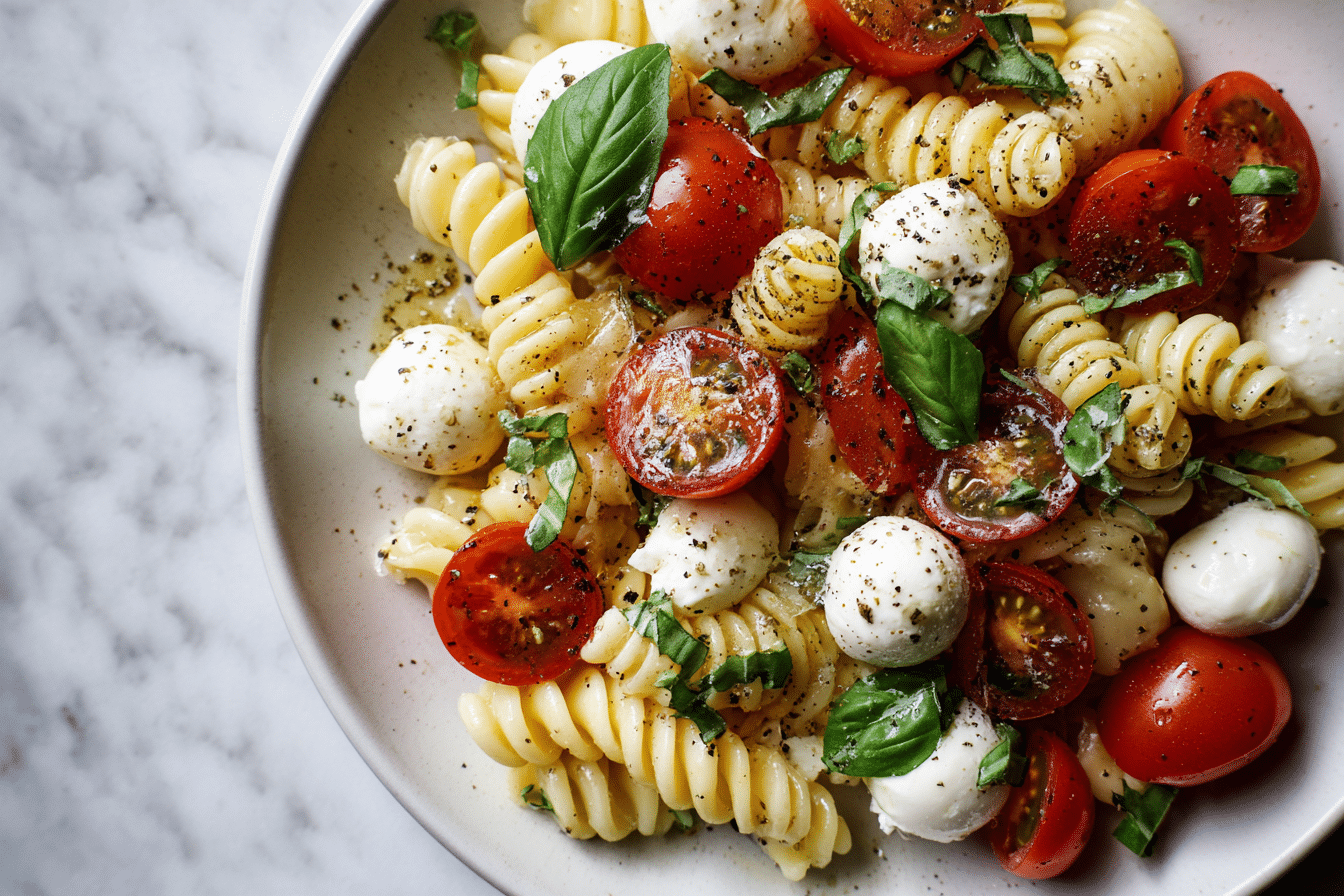
The base of this pasta salad is short-cut pasta, chosen for its ability to hold dressing and small mix-ins effectively. Shapes like rotini, penne, or fusilli are especially suitable because their curves and ridges capture flavor in every bite. Cooking the pasta to a firm texture is important so it maintains structure after chilling.
Tomatoes bring brightness and natural sweetness to the dish. Cherry or grape varieties are ideal because they are naturally juicy and have a balanced flavor profile. When sliced in half, they blend into the salad while still maintaining their shape and texture. If these are not available, diced Roma tomatoes can be used as an alternative.
Mozzarella adds a creamy, soft contrast to the acidity of the tomatoes. Small mozzarella balls are convenient since they require minimal preparation and distribute evenly throughout the salad. If using a block of fresh mozzarella, cutting it into small cubes helps maintain consistency in each bite.
Fresh basil contributes a fragrant, slightly peppery aroma that defines the overall flavor profile. It is added at the final stage to preserve its color and scent. Olive oil forms the base of the dressing, offering smooth richness that coats each ingredient evenly.
Balsamic vinegar introduces gentle acidity that balances the richness of the cheese and oil. A small amount of garlic can be included to deepen the flavor profile without overpowering the dish. Salt and black pepper provide final seasoning, bringing all components together in a cohesive blend.
A touch of honey can optionally be added to soften the acidity of the dressing, creating a slightly rounded flavor. Each ingredient plays a specific role, and together they create a balanced pasta salad with a refreshing and satisfying profile.
Ingredients
12 ounces rotini pasta
1 1/2 cups cherry tomatoes, halved
8 ounces fresh mozzarella balls
1/2 cup fresh basil leaves, torn
1/4 cup extra virgin olive oil
2 tablespoons balsamic vinegar
1 clove garlic, finely minced
1/2 teaspoon salt
1/4 teaspoon black pepper
1/2 teaspoon dried oregano
1 teaspoon honey (optional)
Step-by-Step Instructions
Begin by filling a large pot with water and adding a generous amount of salt. Bring it to a rolling boil, then add the pasta. Cook until it reaches a firm yet tender texture, following package timing as a guide. Stir occasionally to prevent sticking and promote even cooking.
Once the pasta is ready, drain it immediately and rinse under cold water. This step stops the cooking process and helps cool the pasta for salad preparation. Allow it to drain thoroughly so excess moisture does not dilute the dressing later.
While the pasta cools, prepare the remaining components. Slice the cherry tomatoes in half and set them aside. Drain the mozzarella if needed and cut larger pieces into bite-sized portions. Tear basil leaves gently to release their aroma without bruising them excessively.
In a small bowl, whisk together olive oil, balsamic vinegar, minced garlic, salt, black pepper, dried oregano, and honey if using. Stir until the mixture becomes smooth and slightly thickened. Taste and adjust seasoning carefully if needed.
Place the cooled pasta into a large mixing bowl. Add the tomatoes and mozzarella, distributing them evenly throughout the pasta. Pour the dressing over the mixture and toss gently to coat every piece without breaking the cheese or crushing the tomatoes.
Add basil at the end and fold it through the salad lightly. This helps preserve its fragrance and keeps the leaves visually appealing. Overmixing at this stage should be avoided to maintain texture and appearance.
Allow the salad to rest for at least 20 minutes before serving. This resting period helps the flavors blend into the pasta and enhances overall consistency. It may be served chilled or at room temperature depending on preference.
To maintain ideal texture, avoid overcooking the pasta at the beginning. A firm bite ensures the salad remains pleasant even after absorbing dressing during resting time.
Tips, Variations & Substitutions
Roasted tomatoes can be used instead of fresh ones for a deeper, slightly caramelized flavor. This variation adds richness and works especially well when fresh tomatoes are not at peak ripeness. Roasting also reduces moisture, giving a more concentrated taste.
Different pasta shapes can change the texture experience. Shells or bow ties work well alongside rotini because they also hold dressing effectively. Whole grain or gluten-free pasta options can be used while keeping the structure intact.
For added protein, grilled chicken, shrimp, or chickpeas can be mixed into the salad. These additions turn the dish into a more filling meal without changing its core flavor profile. They should be cooled before combining to maintain freshness.
Leafy greens such as arugula or baby spinach can be folded in just before serving. These greens add a mild peppery layer and increase volume. A small amount of grated aged cheese can also be added for a deeper savory note.
For a stronger dressing, a small amount of Dijon-style mustard can be whisked into the vinaigrette. This adds slight sharpness and helps emulsify the mixture more thoroughly.
Serving Ideas & Occasions
Easy Caprese Pasta Salad pairs well with grilled proteins such as chicken or fish. It also complements roasted vegetables and baked dishes, making it suitable for shared meals with multiple components.
It is often served at outdoor meals, casual gatherings, and prepared meal spreads because it holds its texture over time and travels well. Its chilled nature makes it especially suitable for warm conditions.
For lighter meals, it can be served on its own with crusty bread on the side. Sparkling water, iced herbal drinks, or citrus-based beverages pair well with its balanced flavor profile.
Nutritional & Health Notes
This pasta salad contains a mix of carbohydrates from pasta, fats from olive oil, and protein from mozzarella. The balance of macronutrients makes it satisfying while still maintaining a light feel when portioned appropriately.
Tomatoes contribute natural plant compounds and hydration, while basil adds aromatic compounds that enhance flavor without adding heaviness. Olive oil provides a source of heart-friendly fats when used in moderation.
Mozzarella adds calcium and protein, contributing to the overall nutritional balance. Adjusting portion size and ingredient ratios allows flexibility depending on dietary goals or preferences.
FAQs
Can Easy Caprese Pasta Salad be prepared ahead of time?
Yes, it is well suited for preparation in advance. Making it earlier in the day or the day before serving allows the ingredients to absorb the dressing and develop a more blended flavor profile. It should be stored in a sealed container in a cool environment. Before serving, a light toss helps redistribute the dressing and refresh the texture. Basil is often added closer to serving time to maintain aroma and appearance.
Which pasta shapes work most effectively in this dish?
Short pasta shapes such as rotini, penne, and fusilli are especially effective because they hold dressing and small ingredients in their ridges and curves. These shapes also provide a pleasant bite and distribute cheese and tomatoes evenly throughout the salad. Long pasta is not recommended because it does not mix as efficiently and can make serving less convenient.
What can be used instead of mozzarella?
Mozzarella is traditional, but other mild cheeses can be used depending on preference. Small cubes of soft cheese work well for texture consistency. Feta can be used for a saltier profile, though it changes the overall flavor direction. Soft goat cheese can also be added in small amounts for a tangier finish.
How can dryness be prevented after refrigeration?
If the pasta absorbs dressing while resting, the texture may appear slightly dry. A small drizzle of olive oil or a splash of vinegar can restore moisture. Gently tossing the salad helps redistribute ingredients evenly. Starting with properly cooked firm pasta also reduces excessive absorption.
Can protein be added to make it a full meal?
Yes, grilled chicken, shrimp, or legumes such as chickpeas can be added. These options integrate well without overpowering the existing flavor balance. They should be cooled before mixing to maintain freshness and prevent wilting of basil or cheese.
Is a dairy-free version possible?
A dairy-free version can be created by removing mozzarella or using plant-based cheese alternatives. Increasing vegetables such as olives, roasted peppers, or cucumbers can help maintain texture variety. The dressing and pasta base remain naturally dairy-free.
How long does this pasta salad stay fresh?
When stored in a sealed container in a cool environment, it typically remains in suitable condition for up to three days. Texture is at its peak within the first two days. Stirring before serving helps restore consistency after storage.