
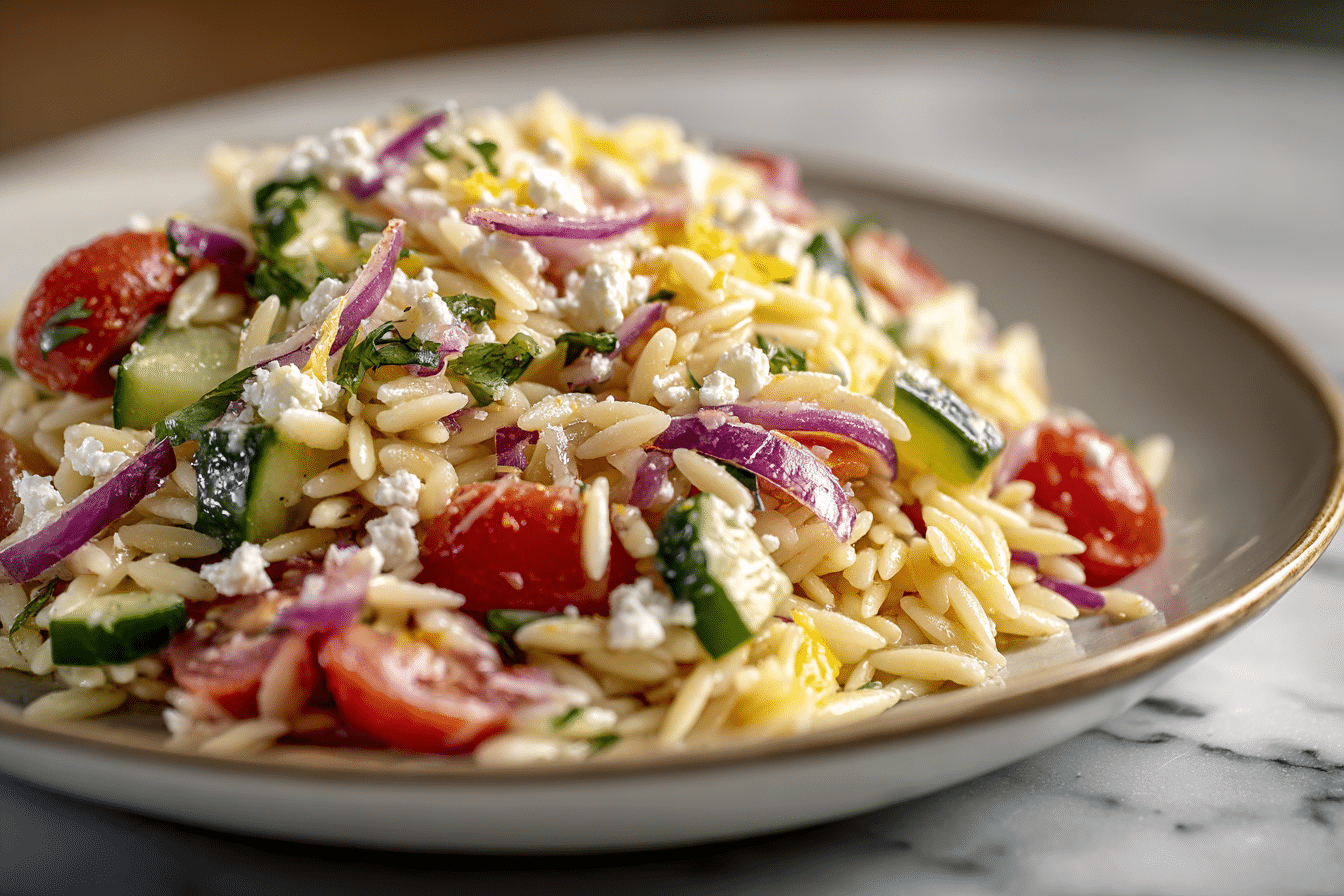
Orzo pasta salad brings together tender small pasta, crisp vegetables, and a light citrus dressing in a dish that works for many occasions. This Orzo Pasta Salad recipe is designed for quick meals, shared gatherings, or prepared lunches kept in the refrigerator for later use. The rice-shaped pasta blends easily with chopped ingredients, allowing every bite to carry a mix of textures and balanced flavor.
This dish stands out because it stays light while still feeling satisfying. The orzo holds onto the dressing, the vegetables add crunch and color, and the herbs bring a fragrant note that lifts the entire bowl. It can be served cold or at room temperature, which makes it practical for warm weather meals or busy schedules.
Orzo pasta salad also adapts well to different ingredient combinations. It works with a variety of vegetables, cheeses, and proteins, giving flexibility based on what is available in the kitchen. The result is a dish that feels balanced, easy to prepare, and consistently enjoyable across different settings.
Ingredients Overview
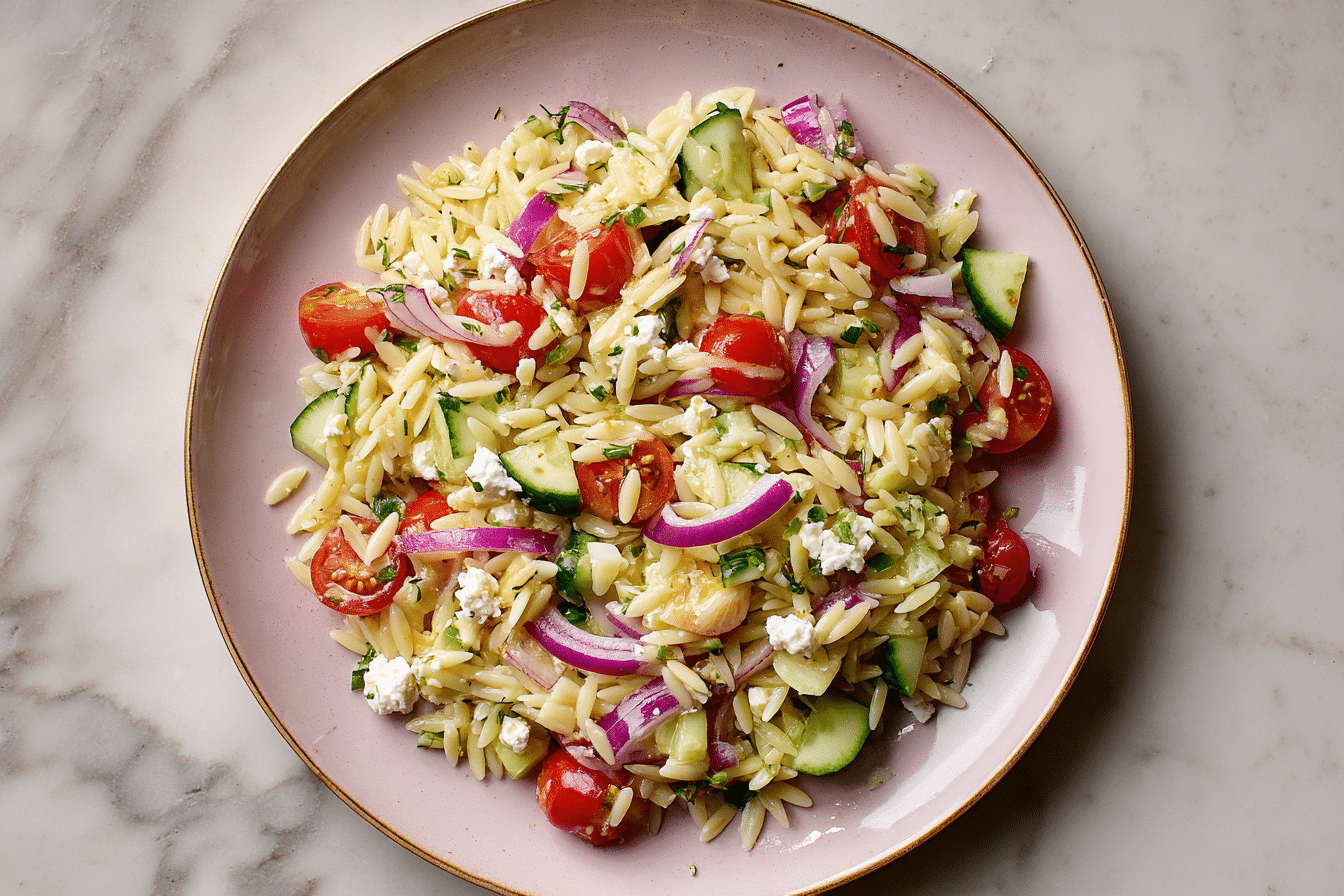
Orzo pasta forms the base of this dish and plays a key role in texture. Its small size allows it to mix evenly with chopped vegetables and absorb the dressing without becoming heavy. Cooking it until tender but still firm helps maintain structure after mixing and chilling.
Vegetables bring both color and crunch. Cherry tomatoes add juiciness and a slight sweetness. Cucumbers contribute a crisp bite that keeps the salad refreshing. Red onion adds a sharp contrast that balances the softer elements. These vegetables work together to create variety in every forkful.
Feta cheese introduces a creamy, slightly tangy element that blends with the vegetables and pasta. It softens the overall profile while adding richness. For a different approach, it can be replaced with olives or omitted entirely for a lighter version.
The dressing is made with olive oil, lemon juice, garlic, salt, black pepper, and dried oregano. Lemon juice provides brightness and acidity, while olive oil smooths the mixture and coats the ingredients evenly. Garlic adds depth, and oregano introduces a subtle herbal note that ties the components together.
Fresh herbs such as parsley and basil add aroma and color. They contribute a clean herbal finish that keeps the salad feeling lively. These herbs can be adjusted depending on preference or availability, and dried herbs can be used if necessary.
Together, these ingredients create a balanced combination of soft pasta, crisp vegetables, creamy cheese, and a citrus-based dressing that works well in both casual meals and shared platters.
Ingredients
1 1/2 cups dry orzo pasta
1 cup cherry tomatoes, halved
1 medium cucumber, diced
1/3 cup red onion, finely chopped
1/2 cup feta cheese, crumbled
1/4 cup fresh parsley, chopped
2 tablespoons fresh basil, chopped
1/3 cup olive oil
3 tablespoons lemon juice
1 clove garlic, minced
1/2 teaspoon salt
1/4 teaspoon black pepper
1/2 teaspoon dried oregano
1/4 cup sliced olives (optional)
Step-by-Step Instructions
Start by bringing a large pot of salted water to a boil. Add the orzo and cook until it becomes tender while still holding a slight firmness. Stir occasionally during cooking to prevent sticking. Once ready, drain the pasta and rinse it under cool water to stop the cooking process. Allow it to drain fully so excess moisture does not affect the final texture.
While the pasta cools, prepare the vegetables. Cut the cherry tomatoes in half, dice the cucumber into small uniform pieces, and finely chop the red onion. Place everything into a large mixing bowl. If olives are being used, add them at this stage. Chop the parsley and basil and mix them in with the vegetables so their aroma begins to release.
In a separate bowl, whisk together olive oil, lemon juice, minced garlic, salt, black pepper, and oregano. Stir until the mixture becomes smooth and evenly blended. This dressing should appear slightly thick and well combined so it coats the salad evenly.
Add the cooled orzo to the bowl with vegetables. Pour the dressing over the mixture and gently toss until all ingredients are evenly coated. Take care to mix thoroughly so the dressing reaches the pasta and vegetables without breaking them apart.
Fold in the crumbled feta cheese last. This helps maintain its texture and prevents it from dissolving into the salad. Taste and adjust seasoning if needed by adding a small amount of salt, pepper, or lemon juice depending on preference.
Place the finished salad in the refrigerator for a short resting period. This allows the flavors to settle into the pasta and vegetables. Before serving, give it a gentle stir to redistribute the dressing and ingredients evenly.
Tips, Variations & Substitutions
Cooking the orzo until just tender plays an important role in the final texture. Overcooking can cause it to become soft and lose structure once mixed with the dressing. Rinsing after cooking helps cool the pasta quickly and prevents clumping.
This recipe can be adjusted based on ingredient availability or preference. Grilled chicken, chickpeas, or tuna can be added for extra protein, turning the salad into a more complete meal. Roasted vegetables such as zucchini, bell peppers, or eggplant also bring a deeper roasted flavor.
Different cheeses can be used in place of feta. Goat cheese provides a creamier texture, while a dairy-free alternative can be used for those avoiding dairy. Olives can also be increased for a saltier profile or removed entirely for a milder taste.
Herbs can be changed depending on preference. Dill or mint can replace basil or parsley for a different aromatic direction. A small amount of red pepper flakes can also be added for gentle heat if desired.
Serving Ideas & Occasions
Orzo pasta salad fits well into many types of meals. It can be served as a main dish for a light lunch or as a side dish alongside grilled meats, fish, or roasted vegetables. It also works well in shared settings such as gatherings or outdoor meals.
It pairs nicely with simple beverages like sparkling water, iced herbal tea, or citrus-based drinks. These choices complement the citrus notes in the dressing and keep the meal balanced.
Because it holds its texture after chilling, it is a practical option for preparing ahead of time. The ingredients settle together as it rests, creating a more blended flavor profile over time. It can be served straight from the refrigerator or allowed to sit briefly at room temperature.
Nutritional & Health Notes
This dish contains a balance of carbohydrates, fats, and plant-based ingredients. Orzo provides energy through complex carbohydrates, while olive oil contributes unsaturated fats. Vegetables add fiber, hydration, and essential vitamins.
Feta cheese introduces protein and calcium, though the amount can be adjusted depending on dietary preferences. Reducing cheese or oil can make the dish lighter, while adding protein sources increases its overall nutritional density.
The variety of vegetables supports a balanced eating pattern without making the dish feel heavy. It offers a combination of textures and nutrients that fit well into everyday meals.
FAQs
Can Orzo Pasta Salad be prepared ahead of time?
Yes, it can be prepared in advance and stored in a sealed container in the refrigerator. The flavors continue to blend as it sits, which often improves the overall taste. Before serving, a small amount of olive oil or lemon juice can be added if the salad appears slightly dry. Stirring gently helps refresh the texture and distribute the dressing again.
Is it possible to serve this dish warm?
This salad can be enjoyed warm, at room temperature, or chilled. When served warm, the dressing absorbs into the pasta more quickly, creating a softer texture. If serving warm, mix the ingredients shortly after cooking the pasta so the flavors combine while everything is still slightly heated.
Which vegetables work well in this recipe?
Common vegetables include cucumbers, cherry tomatoes, and red onions. Bell peppers, zucchini, spinach, or roasted vegetables also work well. The goal is to combine crisp and soft textures so the salad maintains variety in each bite.
Can protein be added to this salad?
Yes, grilled chicken, shrimp, tuna, or chickpeas can be added to increase protein content. These ingredients blend well with the dressing and vegetables without changing the structure of the dish. They also make the salad more filling for a full meal.
How long does it stay fresh in the refrigerator?
When stored properly in an airtight container, it remains suitable for consumption for up to three days. The texture may soften slightly over time, but the flavor continues to develop. Stirring before serving helps restore consistency.
What pasta alternatives can be used instead of orzo?
Small pasta shapes such as ditalini, small shells, or couscous can be used if orzo is not available. Each option changes the texture slightly, but the overall flavor profile remains consistent when paired with the same dressing and vegetables.
How can dryness be adjusted after refrigeration?
If the salad becomes dry after sitting, adding a small amount of olive oil and lemon juice helps restore moisture. Mixing gently allows the dressing to coat the ingredients evenly again without changing the overall balance of flavors.