
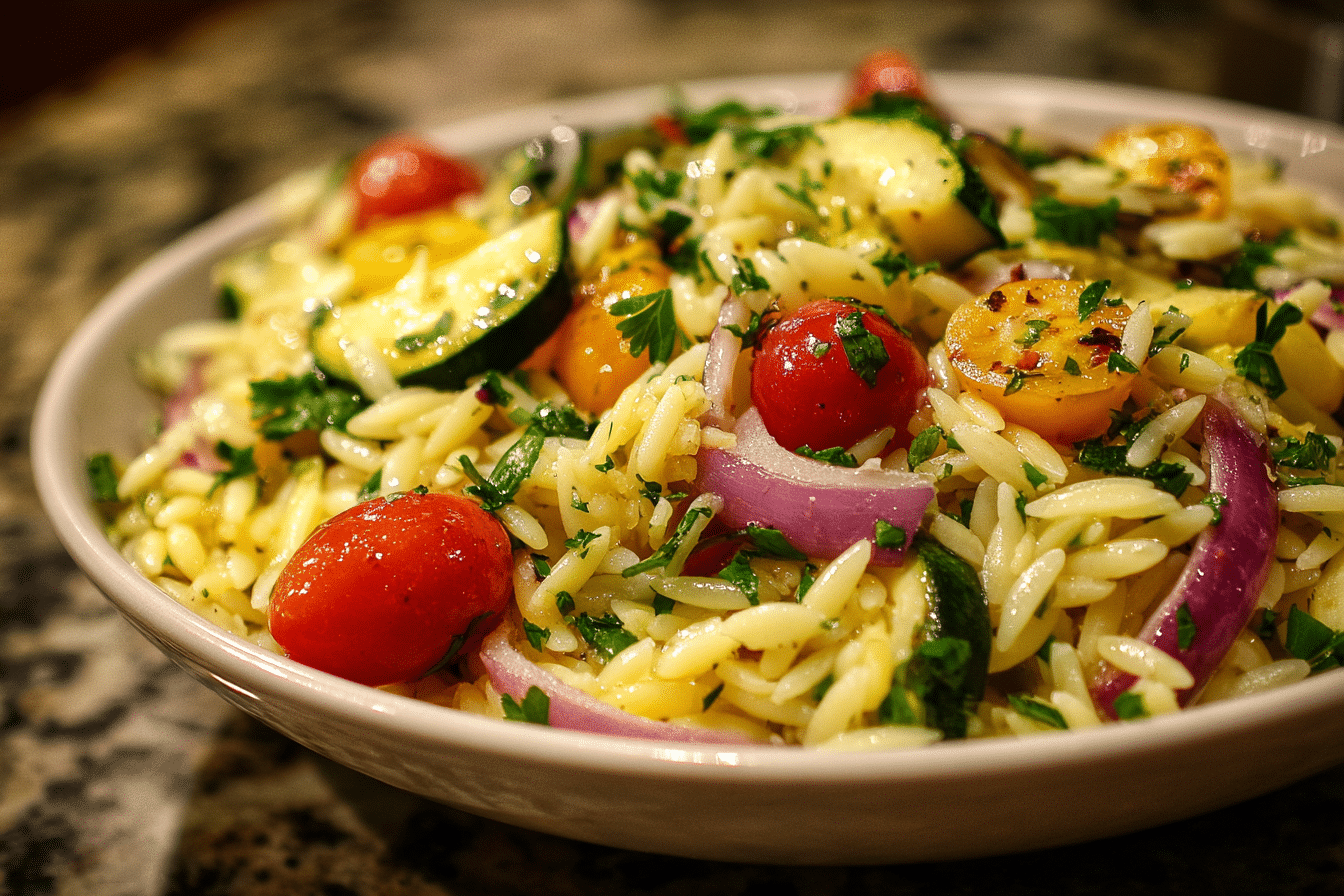
Orzo Salad Recipe is a light, colorful dish that combines tender pasta with crisp vegetables and a bright citrus dressing. This orzo salad recipe is often enjoyed during warmer months, but it works just as well any time a fresh, easy meal is needed.
Small orzo pasta shapes blend smoothly with chopped vegetables, soaking up the dressing while still holding their texture. Each bite offers a mix of softness from the pasta and crunch from fresh produce, creating a balanced bowl that feels satisfying without being heavy.
This orzo salad recipe also works well for gatherings, packed lunches, or quick dinners. It can be served cold or at room temperature, making it a flexible option for different occasions and preferences.
Ingredients Overview
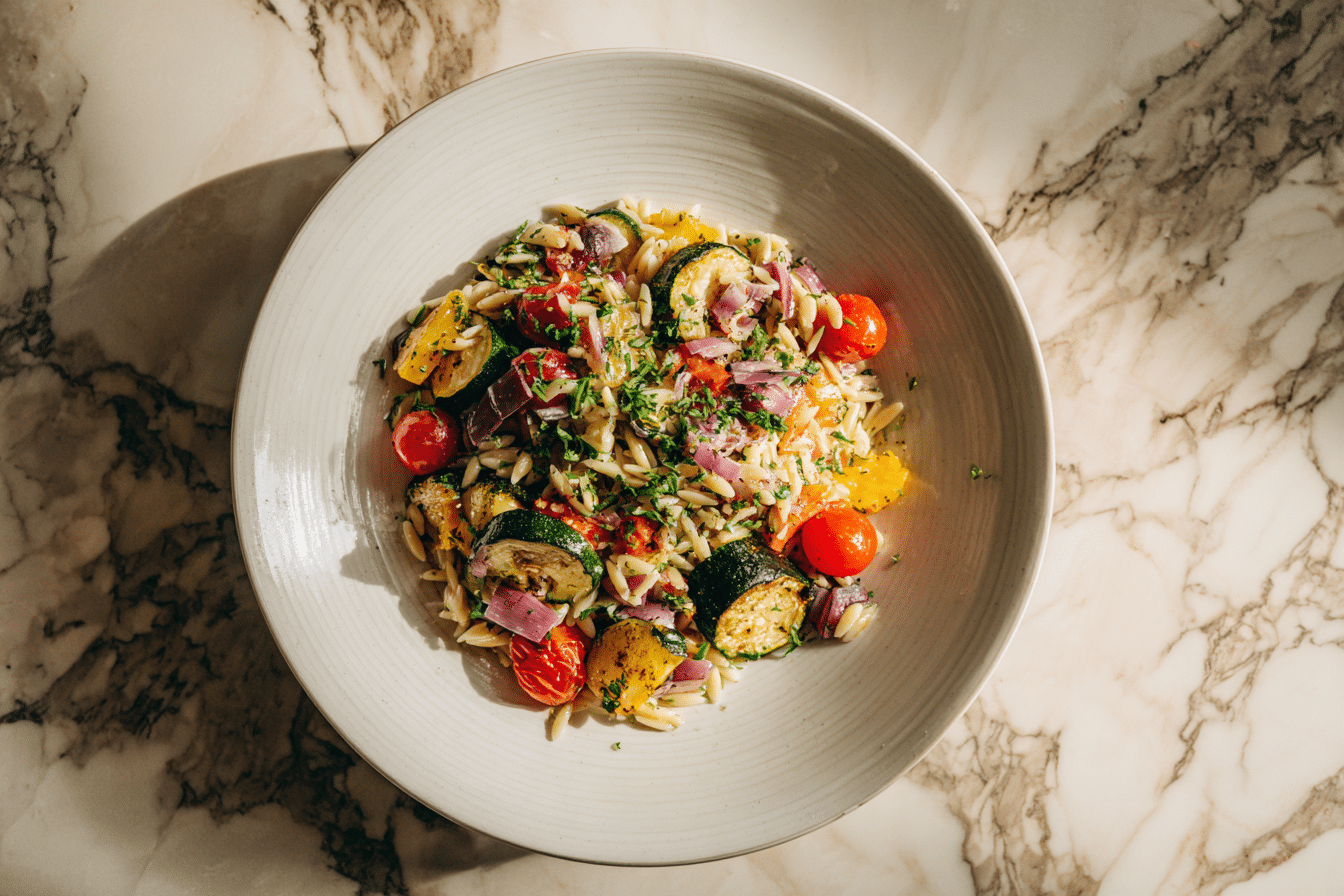
Orzo pasta forms the base of this dish. When cooked properly, it becomes tender yet slightly firm, similar to rice. This texture allows it to carry dressing well without turning mushy. A brief rinse after cooking helps cool it down and keeps the grains separate.
Fresh vegetables bring color, texture, and natural flavor. Cherry tomatoes add juiciness and mild sweetness, while cucumbers offer a crisp, refreshing bite. Red onion adds a sharp note that balances the softer ingredients, and bell peppers contribute mild earthy tones along with vibrant color.
A simple dressing made from olive oil, lemon juice, and zest ties everything together. The olive oil smooths out the acidity of the lemon, while the citrus adds brightness that lifts the entire dish. Salt and black pepper round out the flavor profile.
Feta cheese adds a creamy, salty contrast that blends well with the vegetables and pasta. It can be replaced with goat cheese for a softer texture or left out entirely for a dairy-free version. Fresh herbs like parsley and dill add aroma and a garden-like freshness.
Optional ingredients like chickpeas or olives can be included for added substance and depth. Chickpeas bring plant-based protein, while olives add a briny note that complements the citrus dressing. These additions allow the dish to shift from a side salad to a more filling meal.
Ingredients
1 1/2 cups dry orzo pasta
2 cups cherry tomatoes, halved
1 cup cucumber, diced
1/2 cup red bell pepper, diced
1/4 cup red onion, finely chopped
1/2 cup feta cheese, crumbled
1/3 cup extra virgin olive oil
3 tablespoons fresh lemon juice
1 teaspoon lemon zest
2 tablespoons fresh parsley, chopped
1 tablespoon fresh dill, chopped
1 teaspoon salt
1/2 teaspoon black pepper
1 cup chickpeas, cooked (optional)
1/3 cup olives, sliced (optional)
Step-by-Step Instructions
Start by bringing a large pot of salted water to a boil. Add the orzo and cook until it becomes tender with a slight bite. Stir occasionally to prevent sticking. Once cooked, drain the pasta and rinse briefly under cool water to stop the cooking process and remove excess starch.
Transfer the cooled orzo into a large mixing bowl. Add a small drizzle of olive oil and toss gently so the grains stay separated while preparing the rest of the ingredients.
Wash and prepare the vegetables. Slice cherry tomatoes in half, dice cucumbers and bell peppers into small even pieces, and finely chop the red onion. Add all prepared vegetables into the bowl with the orzo.
If using chickpeas or olives, fold them in at this stage. Chickpeas add a hearty texture and extra substance, while olives bring a bold, salty flavor that blends well with the citrus dressing.
In a separate small bowl, whisk together olive oil, lemon juice, lemon zest, salt, and black pepper. Pour this mixture over the salad. Toss gently so the dressing coats every piece without crushing the vegetables or breaking the pasta.
Add crumbled feta cheese and chopped herbs last. This keeps the cheese intact and helps the herbs stay aromatic. Mix lightly until everything is evenly distributed.
Let the salad rest briefly before serving. This short resting time allows the flavors to settle into the pasta and vegetables, creating a more cohesive taste.
Avoid overcooking the orzo, as it can become too soft and lose structure. Also be mindful of adding too much dressing at once, as it can weigh down the salad and reduce its light texture.
Tips, Variations & Substitutions
For a lighter version, reduce the amount of olive oil slightly and add a bit more lemon juice. This keeps the salad bright while maintaining a balanced flavor.
To turn this into a more filling meal, add grilled chicken, shrimp, or extra chickpeas. These ingredients blend well with the dressing and make the dish suitable as a main course.
Feta cheese can be swapped with goat cheese for a creamier bite. For a dairy-free option, simply leave out the cheese or replace it with avocado for a smooth texture.
Herbs can be adjusted based on preference. Basil adds a soft aromatic note, while mint gives a cool, fresh taste that pairs well with cucumber and lemon.
If preparing ahead, store the dressing separately and mix it in just before serving. This keeps the vegetables crisp and prevents the pasta from absorbing too much liquid.
Serving Ideas & Occasions
This orzo salad recipe fits well alongside grilled meats, roasted vegetables, or seafood dishes. It also works on its own as a light lunch or simple dinner.
It pairs nicely with sparkling water infused with citrus, iced herbal tea, or a light white beverage for outdoor meals and casual gatherings.
Because it holds up well over time, it is commonly prepared for picnics, potlucks, and meal prep. It travels easily and can be enjoyed cold or at room temperature without losing its appeal.
Nutritional & Health Notes
This dish contains a balanced mix of carbohydrates, healthy fats, and fiber. Orzo provides energy, while olive oil adds heart-friendly fats.
Fresh vegetables contribute vitamins, minerals, and fiber, supporting a more nutrient-rich meal. Chickpeas, when included, add plant-based protein and help increase fullness.
Portion sizes can be adjusted depending on dietary needs. Increasing vegetables while slightly reducing pasta creates a lighter bowl, while adding protein makes it more filling for a main meal.
This recipe adapts easily to different eating styles, including vegetarian and dairy-free approaches, depending on ingredient choices.
FAQs
Can this orzo salad be prepared in advance?
Yes, it works well for advance preparation. The flavors develop as it rests, making it taste even better after a few hours. For best texture, store the dressing separately if making it a day ahead. Combine everything shortly before serving so the vegetables stay crisp and the pasta remains light.
How long does it last in the refrigerator?
When stored in an airtight container, it keeps well for about three to four days. Over time, the pasta may absorb more of the dressing, so adding a small splash of olive oil or lemon juice before serving helps refresh the texture.
Can it be served warm instead of cold?
Yes, it can be enjoyed warm, at room temperature, or chilled. Warm serving gives a softer texture and a more comforting feel, especially right after cooking. Room temperature is often preferred for gatherings.
What vegetables work best in this salad?
Cucumbers, cherry tomatoes, bell peppers, zucchini, spinach, and red onion all work well. Roasted vegetables like eggplant or squash can also be added for a deeper, richer flavor.
Can this recipe be made without dairy?
Yes, simply leave out the feta cheese. Avocado or extra olives can be used instead to add creaminess and depth. The dressing alone provides plenty of flavor without dairy.
Is this a good meal prep option?
It is well suited for meal prep because it holds its structure over several days. Store portions in separate containers and keep dressing on the side if possible for best texture.
What protein can be added?
Grilled chicken, shrimp, tuna, chickpeas, or lentils all pair well with this dish. Each option blends smoothly with the lemon-olive oil dressing and turns the salad into a more filling meal.