
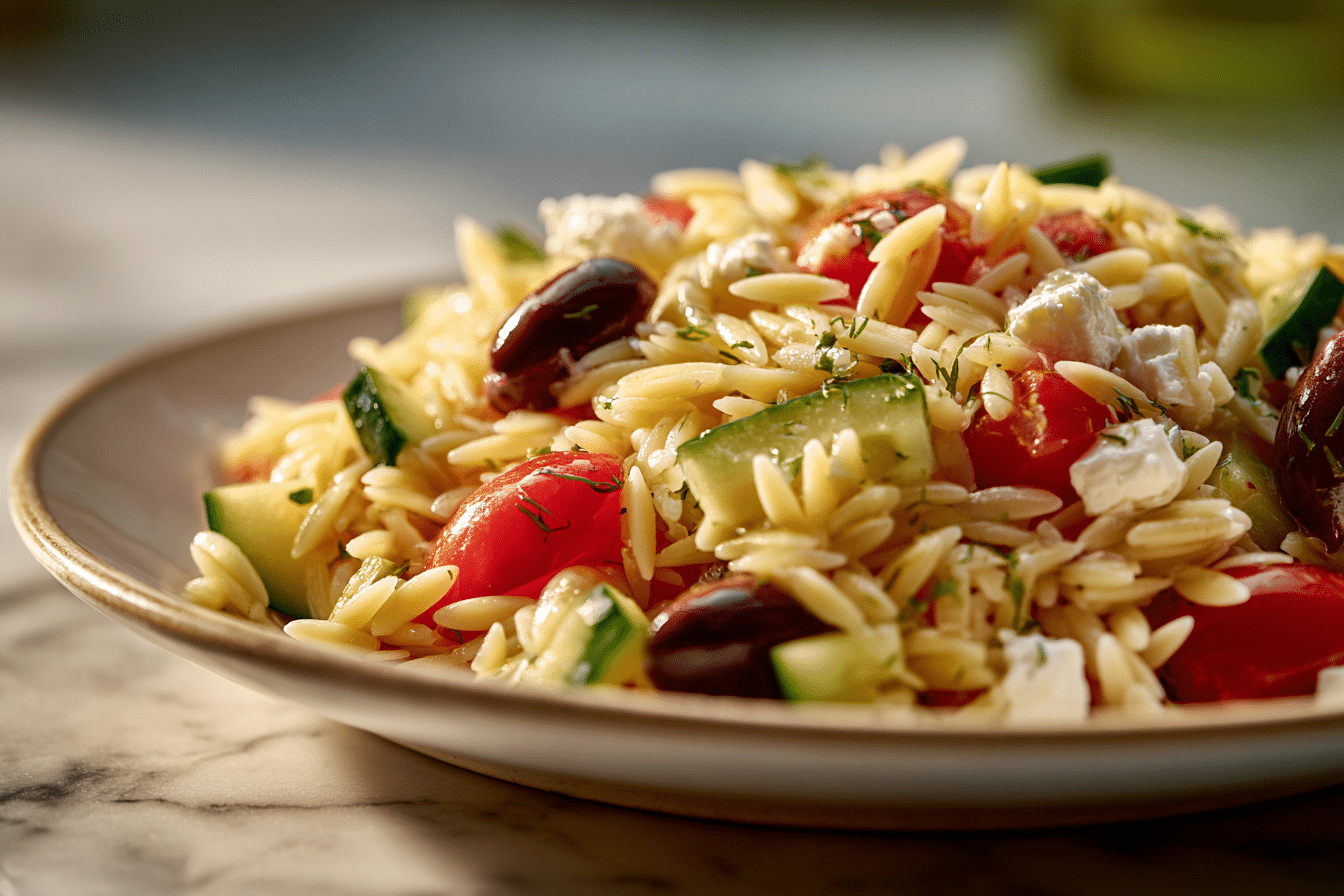
Greek Orzo Pasta Salad is a light, Mediterranean-inspired dish built around tender pasta, crisp vegetables, and a bright citrus dressing. It is the kind of recipe that works well for quick lunches, shared meals, or make-ahead planning when a cool, flavorful dish is needed.
Orzo pasta forms the base and brings a soft yet slightly firm bite that blends easily with other ingredients. Its small shape allows it to pick up dressing evenly, so every spoonful carries balanced flavor.
Fresh vegetables such as cucumber, tomatoes, and red onion add crunch and natural sweetness. Briny olives and creamy feta cheese introduce deeper savory notes that round out the dish.
A simple mixture of olive oil, lemon juice, garlic, and oregano ties everything together. The result is a refreshing pasta salad that holds its texture well and tastes even better after a short resting period.
This dish is flexible, easy to prepare in larger portions, and suitable for storing, making it a reliable option for weekly meals or casual gatherings.
Ingredients Overview
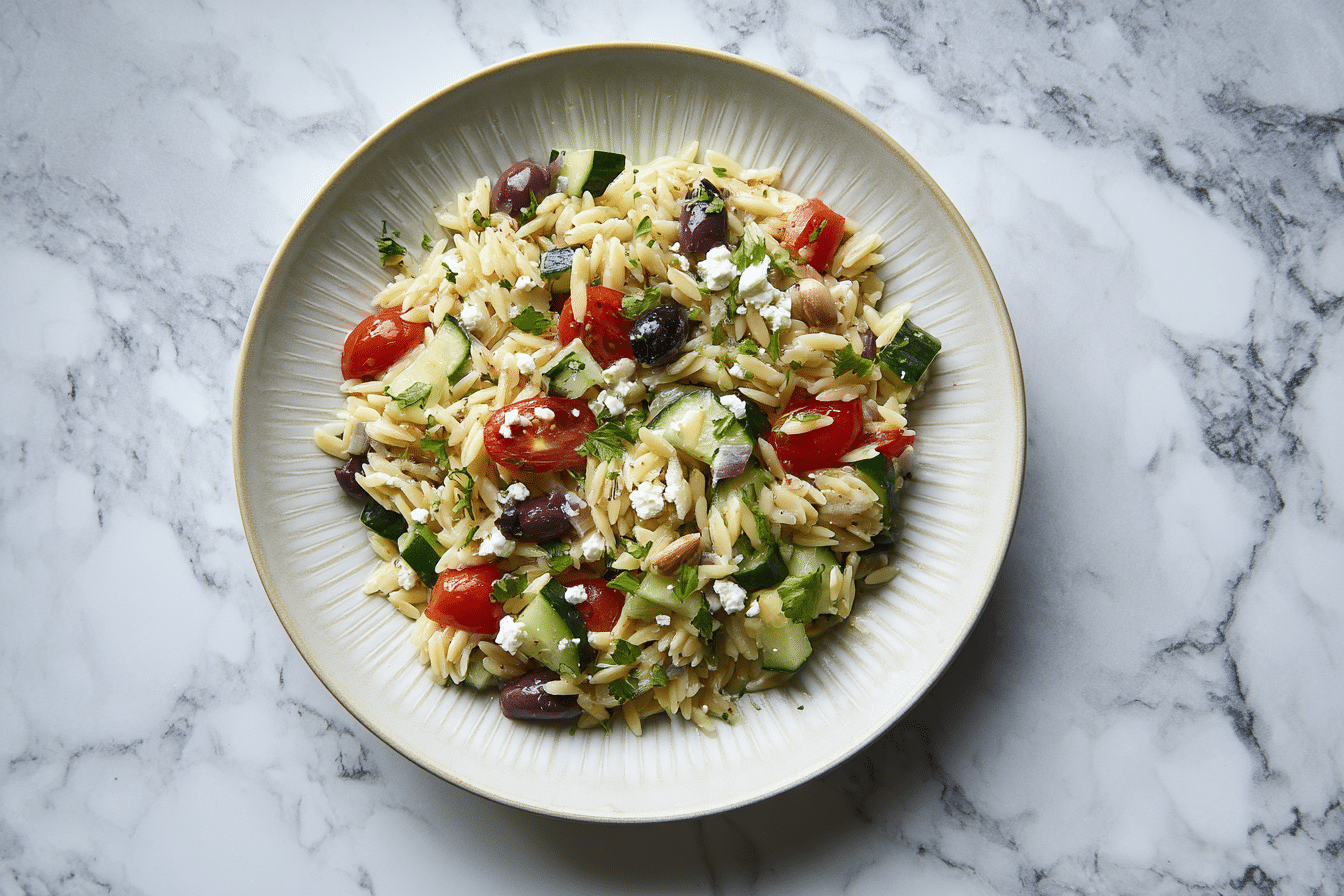
Orzo pasta is the foundation of this dish. Although shaped like rice, it is a small pasta that cooks quickly and has a tender bite when prepared correctly. Its mild flavor allows it to absorb dressing without becoming heavy or sticky.
Cucumber adds a cool crunch that balances the softness of the pasta. It also brings moisture and a clean taste that keeps the salad from feeling dense. Cherry tomatoes provide juiciness and a slight sweetness that contrasts with the salty elements.
Red onion adds sharpness and depth. When sliced thin, it distributes flavor without overpowering the salad. Kalamata olives contribute a rich, salty profile that is common in Mediterranean-style dishes.
Feta cheese adds a creamy, crumbly texture along with a tangy finish. It blends into the salad without melting, helping create contrast between soft and crisp components.
The dressing is built from olive oil, fresh lemon juice, dried oregano, minced garlic, salt, and black pepper. Olive oil provides body, lemon juice adds brightness, and oregano introduces an earthy herbal note. Garlic adds subtle intensity that ties everything together.
Optional additions like chickpeas or bell peppers can be included depending on preference. Chickpeas increase substance and protein, while peppers add extra crunch and color variation.
Ingredients
1 1/2 cups dry orzo pasta
1 cup cherry tomatoes, halved
1 cup cucumber, diced
1/3 cup red onion, thinly sliced
1/2 cup Kalamata olives, pitted and halved
3/4 cup feta cheese, crumbled
1/4 cup olive oil
3 tablespoons lemon juice, freshly squeezed
1 teaspoon dried oregano
1 small garlic clove, finely minced
1/2 teaspoon salt
1/4 teaspoon black pepper
2 tablespoons fresh parsley, chopped
Step-by-Step Instructions
Start by cooking the orzo in a large pot of boiling salted water. Stir occasionally so the pasta does not stick together. Cook until it reaches a tender texture with a slight bite in the center. Drain the pasta and rinse it under cool water to stop the cooking process and bring down the temperature. Allow it to drain fully so excess moisture does not dilute the dressing.
While the pasta cools, prepare the vegetables. Slice the cherry tomatoes in half so they release a bit of juice into the salad. Cut the cucumber into small, even pieces for consistent texture in each bite. Slice the red onion very thin so its sharpness is distributed evenly throughout the dish.
In a small bowl, combine olive oil, lemon juice, oregano, minced garlic, salt, and black pepper. Whisk until the mixture looks smooth and slightly blended. This step helps the flavors spread evenly once added to the salad.
Place the cooled orzo in a large mixing bowl. Add the tomatoes, cucumber, red onion, olives, and feta cheese. Pour the dressing over the top and gently mix everything together using a soft folding motion. This helps keep the feta intact while coating all ingredients evenly.
Taste the salad and adjust seasoning if needed. A small splash of lemon juice can brighten the flavor, while a pinch of salt can deepen overall taste. Add chopped parsley at the end for a light herbal finish.
Let the salad rest for about 15 minutes before serving. This short resting time allows the pasta to absorb the dressing and improves the overall balance of flavor. Serve chilled or at room temperature depending on preference.
Tips, Variations & Substitutions
For added protein, grilled chicken or chickpeas can be mixed in. These options make the dish more filling while still keeping its light character. Shrimp also works well for a seafood variation.
If a slightly firmer texture is preferred, whole wheat orzo can be used. It adds a mild earthy taste and holds its shape well after cooking.
Vegetable variations are easy to incorporate. Bell peppers bring sweetness and crunch, while spinach adds a softer green element. Roasted zucchini can add depth for a richer flavor profile.
The dressing can be adjusted based on taste preference. More lemon juice will create a brighter profile, while a bit more olive oil will soften acidity. Garlic can be increased for stronger savory notes.
For best results when preparing ahead, store the dressing separately and combine it just before serving. This helps maintain texture and prevents the pasta from absorbing too much liquid.
Serving Ideas & Occasions
This pasta salad pairs well with grilled meats such as chicken, lamb, or fish. It also works as part of a larger spread with dips like hummus or tzatziki.
It is often served at outdoor meals, casual family gatherings, or simple weekday lunches. Its chilled nature makes it suitable for warmer days when lighter dishes are preferred.
It can also be served as a standalone meal when paired with bread or added protein. The mix of pasta, vegetables, and cheese creates a balanced plate that feels complete without additional sides.
Nutritional & Health Notes
Greek Orzo Pasta Salad provides a balanced combination of carbohydrates, fats, and protein. Orzo supplies energy from grains, while olive oil adds healthy fats that support satiety.
Vegetables contribute fiber, hydration, and natural plant nutrients. Tomatoes and cucumbers especially add freshness and lightness to the dish.
Feta cheese provides protein and calcium but also adds sodium, so portion control can be adjusted depending on dietary needs. Reducing cheese slightly can create a lighter version without changing the overall structure.
This recipe can fit into many eating styles with small adjustments, such as increasing vegetables or adding lean protein for a more balanced meal.
FAQs
Can this pasta salad be prepared in advance?
Yes, it can be prepared ahead of time. Cooking the pasta and chopping the vegetables earlier in the day is often helpful for meal planning. For best texture, keep the dressing separate until closer to serving time. This prevents the pasta from absorbing too much liquid and becoming soft. If already mixed, it still holds well for a short period when refrigerated in a sealed container.
How long does it last in the refrigerator?
This dish generally stays fresh for about two to three days when stored properly in a covered container. Over time, the pasta will absorb more dressing, which may soften the texture slightly. Stirring before serving helps redistribute the ingredients. If needed, a small drizzle of olive oil or lemon juice can refresh the mixture before eating.
What pasta can be used instead of orzo?
If orzo is not available, small pasta shapes such as ditalini, small shells, or even couscous-style pasta can be used. These alternatives hold dressing well and mix easily with chopped vegetables. Cooking times may differ slightly, so it is important to check for a tender but firm texture before draining.
What proteins pair well with this salad?
Grilled chicken is a popular choice because it adds lean protein without overpowering the flavors. Chickpeas are another good option for a plant-based addition. Shrimp also works well and adds a lighter seafood element. All proteins should be cooled before mixing into the salad for best results.
Can the dressing be adjusted?
Yes, the dressing can be modified depending on preference. More lemon juice increases brightness, while extra oregano adds herbal depth. Additional garlic can give a stronger savory flavor. Olive oil should remain the base to keep the dressing smooth and balanced.
Is this suitable for outdoor meals?
Yes, it works well for outdoor settings such as picnics or casual gatherings. It holds its structure for a reasonable time when kept cool. For longer periods outdoors, it is best stored in a shaded area or insulated container to maintain freshness.
What vegetables can be added?
Bell peppers, shredded carrots, spinach, or roasted zucchini can be added for variety. These ingredients bring different textures and colors to the dish. It is best to keep vegetable pieces similar in size so the salad remains easy to mix and serve.