
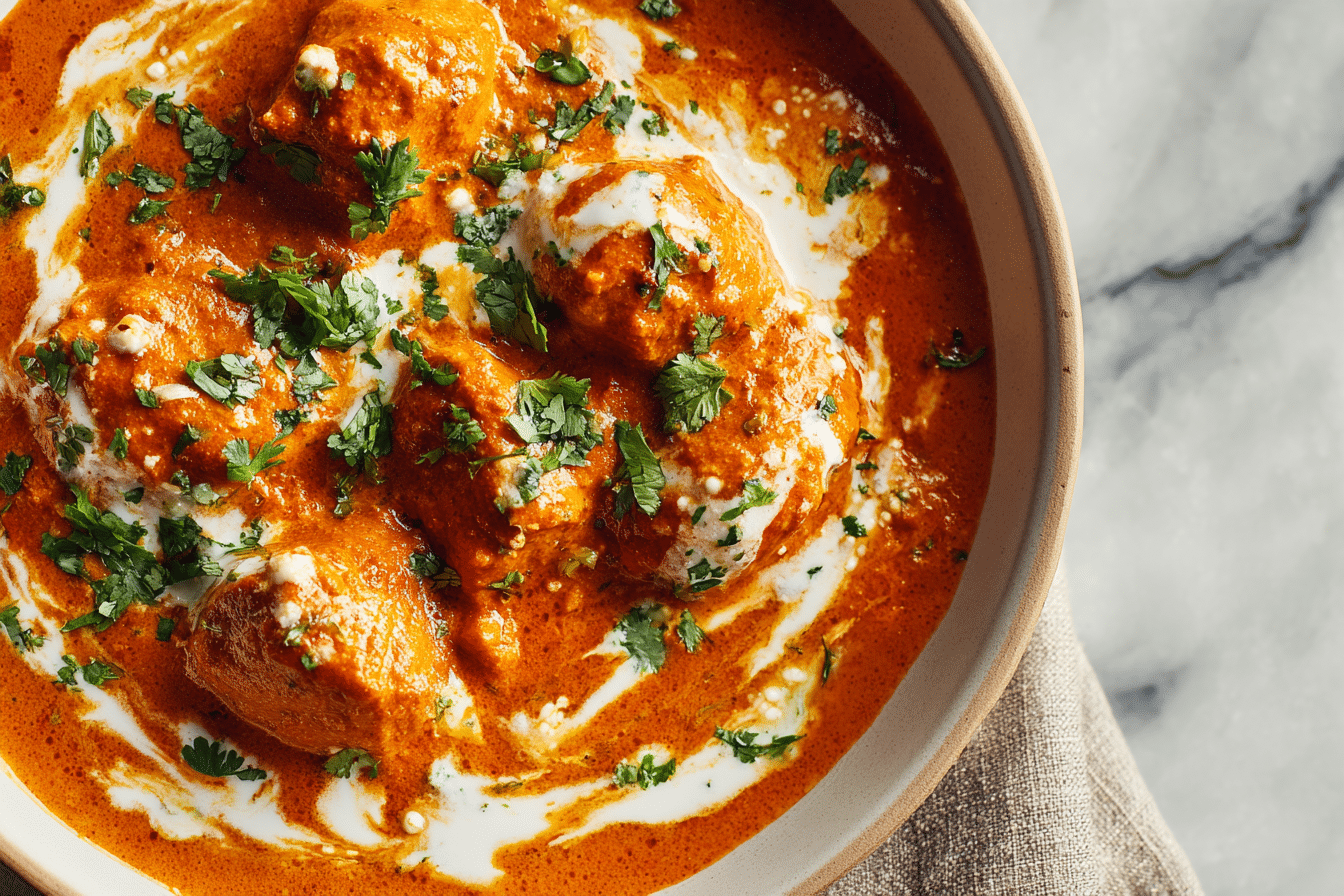
Butter Chicken Recipe
Butter Chicken Recipe is a classic dish built around tender pieces of chicken cooked in a smooth tomato-based sauce enriched with butter and cream. The dish is known for its balanced texture, where gentle spices blend into a velvety gravy that coats each piece of chicken evenly. It is widely enjoyed with rice or flatbread and works well for both family meals and shared dining.
The cooking process centers on layering flavor in stages. First, the chicken is coated in a seasoned marinade that adds depth before any heat is applied. Next, it is lightly cooked to build a base flavor. Finally, it is simmered in a sauce made from tomatoes, aromatics, and dairy, which brings everything together into a unified dish.
What makes this dish stand out is the harmony between acidity from tomatoes, richness from butter and cream, and warmth from spices. Each component plays a specific role without overpowering the others. The result is a smooth curry with a rounded taste and soft texture.
Ingredients Overview
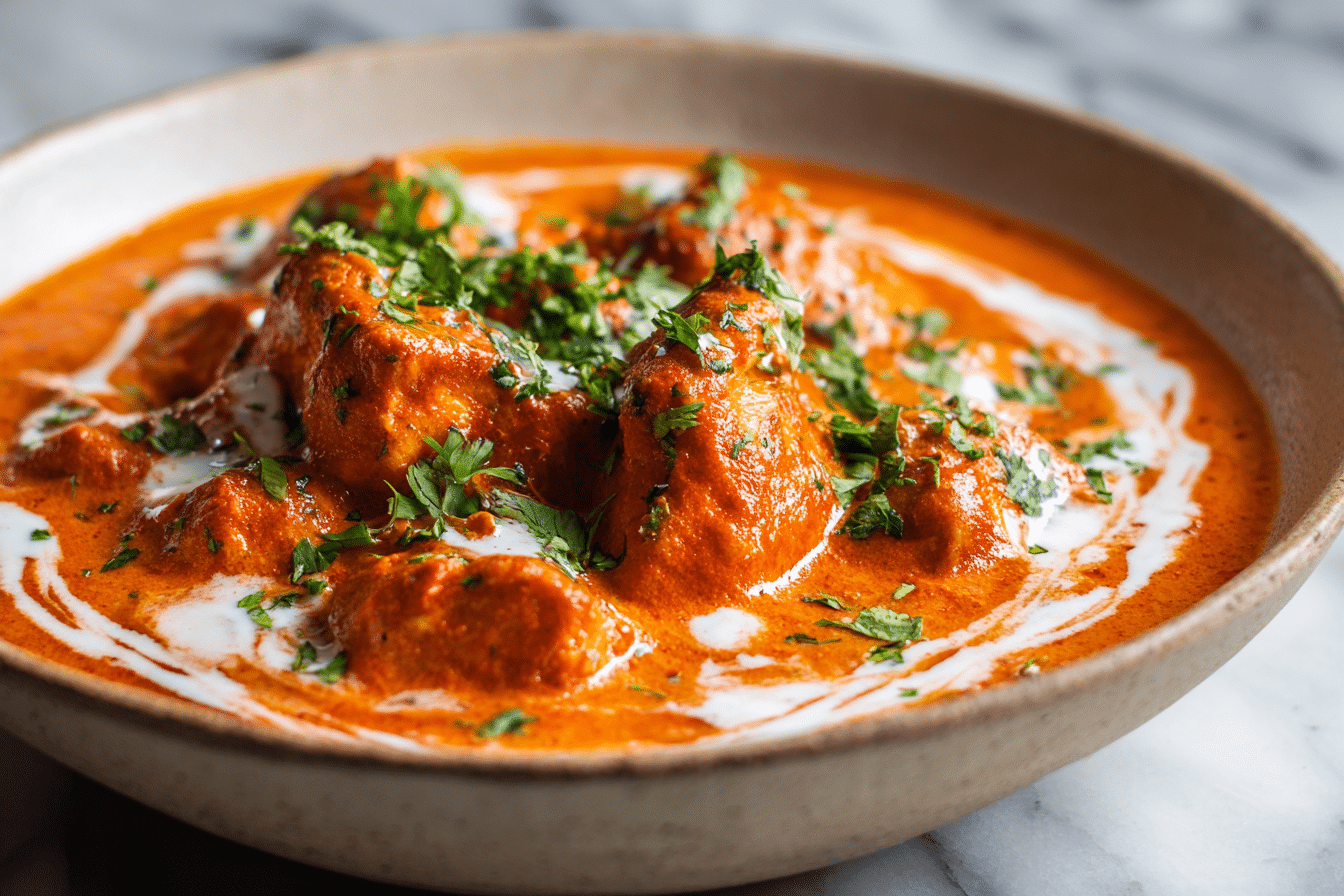
Chicken is the main protein used in Butter Chicken Recipe. Boneless cuts such as thighs or breasts work best because they cook evenly and absorb flavor well. Thighs offer a richer taste and remain tender after simmering, while breasts provide a leaner option when handled carefully to prevent dryness.
Yogurt is used in the marinade to soften the chicken and help the spices adhere. It introduces mild acidity that supports the overall balance of the dish. Garlic and ginger are also included in the marinade to build early depth before cooking begins.
Tomatoes form the foundation of the sauce. Crushed tomatoes or tomato puree are ideal because they break down smoothly during cooking, forming a thick base. Their natural sharpness balances the richness of dairy ingredients added later.
Butter and cream give the dish its signature texture. Butter provides depth and a smooth finish, while cream softens the spice profile and creates a cohesive sauce. These ingredients also help carry the flavors of the spices throughout the dish.
The spice blend typically includes cumin, garam masala, turmeric, and paprika. Cumin adds earthy notes, garam masala contributes layered warmth, turmeric brings color and subtle bitterness, and paprika adds gentle sweetness and hue. Chili powder may be adjusted based on preferred heat levels.
Onion, garlic, and ginger serve as the aromatic base of the sauce. They are cooked slowly to build flavor before tomatoes are added. A small amount of sugar may be used to balance acidity and round out the sauce.
Together, these ingredients create a balanced curry where creamy, tangy, and spiced elements come together in a smooth, cohesive dish.
Ingredients
1 pound boneless chicken thighs or chicken breasts, cut into bite-sized pieces
1/2 cup plain yogurt
2 cloves garlic, minced (for marinade)
1 teaspoon grated fresh ginger (for marinade)
1 teaspoon garam masala
1/2 teaspoon turmeric powder
1/2 teaspoon paprika
1/2 teaspoon salt
1/4 teaspoon black pepper
2 tablespoons butter
1 tablespoon neutral oil
1 small onion, finely chopped
3 cloves garlic, minced
1 teaspoon grated fresh ginger
1 1/2 cups crushed tomatoes
1 teaspoon ground cumin
1 teaspoon garam masala
1/2 teaspoon chili powder
1/2 teaspoon salt
1/2 cup heavy cream
1 teaspoon sugar
2 tablespoons chopped cilantro
Step-by-Step Instructions
Begin by preparing the chicken marinade. In a mixing bowl, combine yogurt, garlic, ginger, garam masala, turmeric, paprika, salt, and black pepper. Stir until smooth, then add the chicken pieces. Coat each piece thoroughly so the seasoning is evenly distributed. Allow the chicken to rest so the flavors settle into the meat.
Heat a pan over medium temperature and add oil along with a portion of the butter. Once the butter melts, place the chicken pieces into the pan in a single layer. Cook for several minutes, turning occasionally so each side develops light color. The goal is partial cooking at this stage rather than full doneness. Remove the chicken and set aside.
In the same pan, add the remaining butter. Add chopped onion and cook slowly until softened and lightly golden. This step builds the base flavor for the sauce. Stir in garlic and ginger and cook briefly until aromatic.
Add crushed tomatoes to the pan and mix with the aromatics. Sprinkle in cumin, garam masala, chili powder, and salt. Stir well and allow the mixture to cook at a gentle simmer. As it cooks, the tomatoes break down and the sauce begins to thicken. Stir occasionally to prevent sticking at the bottom.
Lower the heat and slowly pour in the cream while stirring continuously. The sauce will shift to a smoother and richer consistency. Add sugar at this stage to balance the acidity of the tomatoes.
Return the chicken to the pan and coat it fully in the sauce. Allow it to simmer until the chicken is fully cooked and tender. The sauce should remain smooth and cling to the chicken without becoming overly thick.
Finish by adding chopped cilantro for freshness. Keep heat low during the final stage to preserve the texture of the sauce.
Tips, Variations & Substitutions
Chicken thighs are often preferred because they stay tender during simmering. Chicken breasts can also be used but should be monitored closely to avoid dryness. Cutting pieces into even sizes helps with uniform cooking.
For a different flavor profile, cream can be replaced with coconut milk. This creates a lighter sauce with a mild sweetness. Another option is using a mix of milk and a small amount of cream to reduce richness while maintaining smooth texture.
A plant-based version can be made using paneer, tofu, or chickpeas instead of chicken. Paneer works particularly well because it holds shape and absorbs sauce without breaking apart.
To add thickness to the sauce, cashew paste can be blended and added during simmering. Soaked cashews blended with water create a smooth mixture that blends easily into the sauce.
Heat levels can be adjusted by controlling the amount of chili powder. Reducing it creates a milder profile, while increasing it adds stronger warmth without changing the structure of the dish.
Fresh tomatoes can replace canned ones, though they require longer cooking time to break down fully into a smooth sauce.
Serving Ideas & Occasions
Butter Chicken Recipe pairs well with basmati rice, which absorbs the sauce and complements the spices. Soft flatbreads such as naan or roti also work well for scooping the curry.
For a lighter plate, plain steamed rice or lightly seasoned cumin rice provides balance. A side of fresh vegetables or yogurt-based salad adds contrast to the creamy sauce.
This dish is suitable for shared meals, gatherings, and home dinners where a warm main course is desired. It can be prepared in larger portions without losing consistency, making it practical for group servings.
A simple drink such as yogurt-based beverages or lightly flavored tea pairs well with the richness of the dish and completes the meal.
Nutritional & Health Notes
Butter Chicken Recipe contains protein from chicken and fats from butter and cream. When served with rice or bread, it provides a balanced combination of macronutrients.
Using chicken breast instead of thighs reduces overall fat content. Adjusting cream levels or substituting with lighter alternatives also changes the nutritional profile while maintaining texture.
Spices contribute flavor depth without relying heavily on salt. Garlic and ginger add aromatic strength that supports the overall balance of the dish.
Portion size is important due to the richness of the sauce. Pairing with vegetables or lighter sides can create a more balanced plate.
FAQs
Can this dish be prepared in advance?
Yes, Butter Chicken Recipe can be prepared ahead of time and stored for later use. The flavors tend to settle and develop further after resting. When reheating, use low heat and stir gently to maintain a smooth sauce texture. Adding a small amount of liquid such as water or cream can help restore consistency if it thickens in storage. Keeping it in a sealed container helps preserve freshness.
Can it be stored in a freezer?
This dish can be frozen after cooling completely. Store it in a sealed container and keep it frozen for up to two months. When ready to use, thaw it in the refrigerator overnight. Reheat slowly over low heat while stirring to bring the sauce back to a smooth consistency.
Which chicken cut works best?
Chicken thighs are commonly used because they remain tender during cooking and provide richer flavor. Chicken breast is a leaner option but requires careful timing to avoid drying out. Evenly sized pieces help maintain consistent cooking throughout the dish.
Is a dairy-free version possible?
Yes, dairy-free adjustments can be made by replacing butter with oil and cream with coconut milk. This changes the flavor slightly but still produces a smooth sauce. Unsweetened coconut milk is recommended for balance.
How can the sauce be thickened?
The sauce naturally thickens as it simmers and reduces. Cashew paste can also be added for extra body. It is best to avoid flour or starch as they change the texture of the sauce.
Is this dish very spicy?
The dish is generally mild, with warmth coming from spices rather than strong heat. Cream and butter soften the spice level. Chili powder can be adjusted based on preference.
What makes this dish different from other curries?
Butter Chicken Recipe stands out because of its smooth, creamy sauce and balanced spice profile. It focuses on a blend of tomato, butter, and cream rather than strong or sharp spice intensity, creating a soft and cohesive curry.