
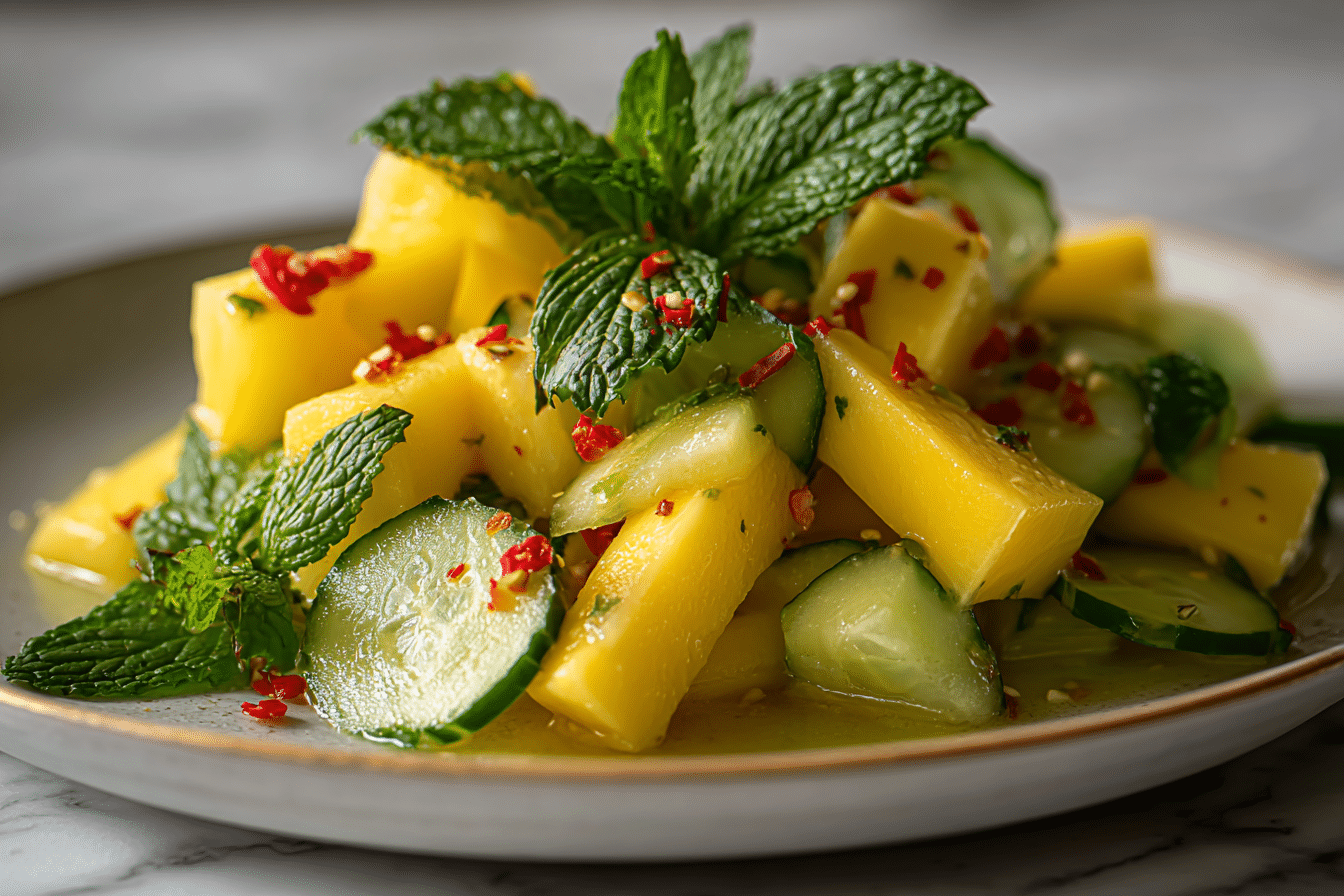
Mango Salad brings together juicy tropical fruit, crisp vegetables, and a light citrus dressing in a way that feels refreshing and satisfying. It is a colorful dish often served as a side or light main, offering a balance of sweetness, crunch, and gentle acidity.
This version of mango salad focuses on clean preparation and well-balanced flavors. Each ingredient is chosen to complement the natural richness of mango while adding texture and contrast without overwhelming the dish.
Ingredients Overview
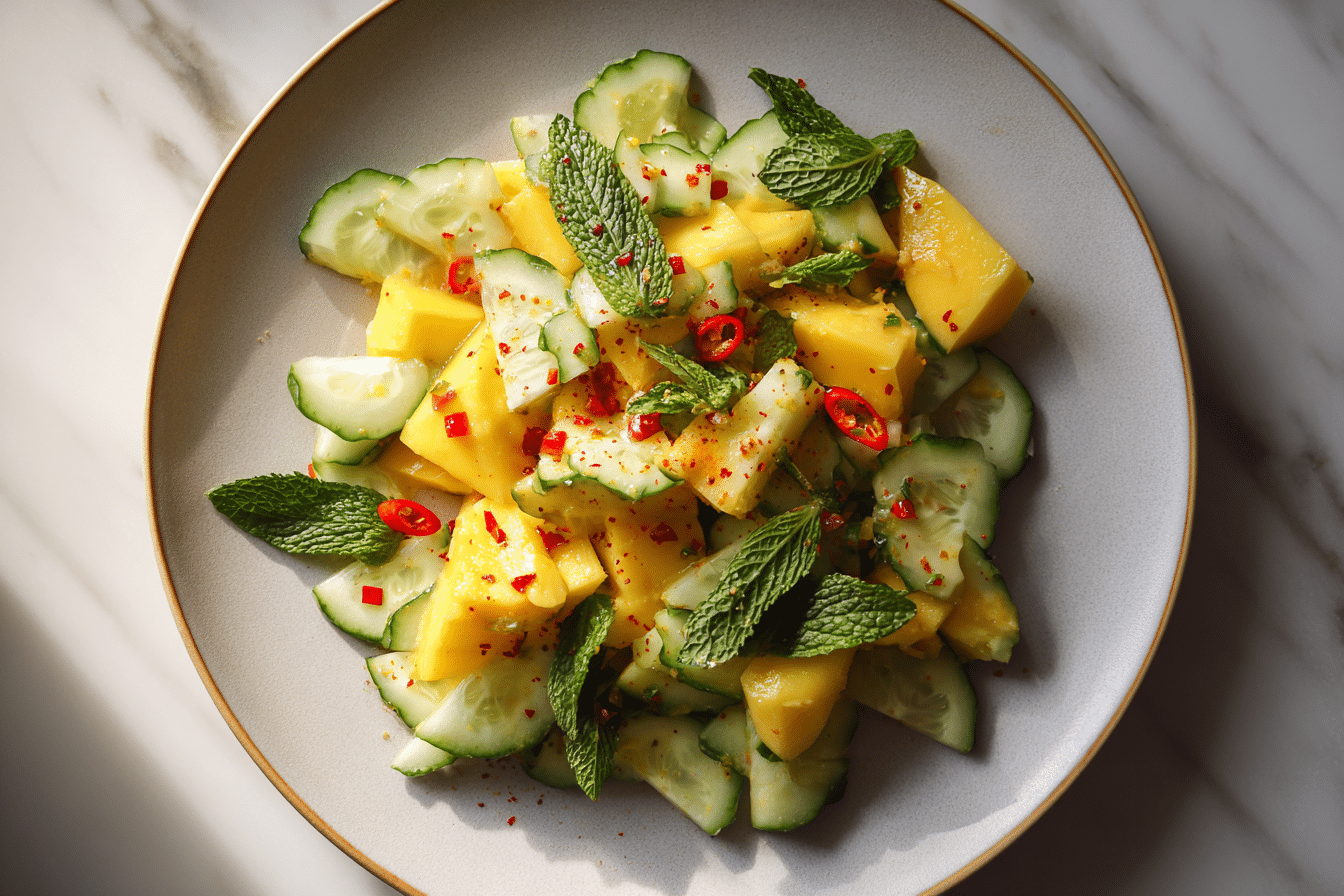
Mango is the heart of this salad, offering a naturally sweet and soft bite. The best choice is a ripe yet still firm mango, which allows clean slicing and helps the pieces stay intact when mixed. If the fruit is overly soft, it can break down too easily and create a mushy texture.
Cucumber contributes a crisp and cooling element. Its mild flavor pairs well with mango and helps lighten the overall profile of the dish. Bell peppers bring subtle sweetness along with a crunchy texture that adds structure to every bite.
Red onion is used sparingly to introduce a sharp, slightly pungent note. When sliced thinly, it blends into the salad without overpowering the fruit. Fresh herbs such as cilantro and mint bring aroma and freshness, helping tie the ingredients together with a fragrant lift.
The dressing is a simple combination of lime juice, olive oil, honey, salt, and black pepper. Lime juice provides acidity that balances the sweetness of mango, while olive oil smooths the texture. Honey adds a gentle sweetness that rounds out the dressing. Salt and pepper bring balance and depth.
Optional ingredients such as avocado, chili flakes, and toasted nuts can add variety. Avocado introduces a creamy texture, chili flakes bring mild heat, and nuts contribute a crunchy contrast that works well with the soft fruit.
Ingredients
2 large ripe mangoes, peeled and sliced
1 cup cucumber, diced
1 red bell pepper, thinly sliced
1/4 small red onion, thinly sliced
1/4 cup fresh cilantro leaves
1 tablespoon fresh mint, finely chopped
1 avocado, diced (optional)
2 tablespoons fresh lime juice
1 tablespoon olive oil
1 teaspoon honey
1/4 teaspoon salt
1/4 teaspoon black pepper
1/4 teaspoon chili flakes (optional)
2 tablespoons toasted almonds or cashews (optional)
Step-by-Step Instructions
Start by preparing all ingredients carefully. Peel the mangoes and slice them into even pieces, either thin strips or small cubes. Keeping the pieces uniform helps the salad mix evenly and improves the eating experience.
Wash the cucumber and bell pepper thoroughly. Dice the cucumber into small chunks and slice the bell pepper into thin strips. Cut the red onion into very thin slices so its flavor is distributed lightly throughout the dish.
If using avocado, prepare it just before mixing to prevent browning. Cut it into medium cubes that can hold their shape when combined with the other ingredients.
Place the mango, cucumber, bell pepper, and red onion into a large mixing bowl. Add avocado if included. Sprinkle in the chopped herbs, spreading them evenly so their aroma is distributed throughout the salad.
In a separate small bowl, whisk together lime juice, olive oil, honey, salt, black pepper, and chili flakes if desired. Stir until the dressing becomes smooth and slightly blended.
Pour the dressing over the salad ingredients. Use a gentle folding motion to combine everything. Avoid heavy stirring, as mango is delicate and can break apart if handled too roughly.
Taste and adjust seasoning if needed. A small amount of extra lime juice can increase brightness, while a touch more honey can soften the flavor balance.
If adding nuts, sprinkle them on top just before serving. This helps keep their texture crisp. Serve immediately for the best structure and flavor, or chill briefly if needed, though long resting times may release extra moisture.
A common issue is using overly soft mango, which can lead to a loss of structure. Another is overmixing, which can cause the fruit to break down and release liquid into the bowl.
Tips, Variations & Substitutions
For a fruit variation, pineapple or papaya can be added alongside mango. These fruits have similar textures and pair naturally with citrus dressing, adding extra layers of sweetness.
To make the salad more filling, add protein such as grilled chicken, shrimp, tofu, or chickpeas. These options turn the dish into a more complete meal while maintaining its light character.
For a creamier version, a small amount of coconut yogurt can be blended into the dressing. This adds smoothness and a mild tropical note that pairs well with mango.
If more heat is preferred, finely chopped fresh chili can be used instead of chili flakes. This brings a sharper spice that contrasts with the sweetness of the fruit.
Vegetables can also be adjusted based on availability. Carrot shreds or thin zucchini slices can replace cucumber for a slightly different texture while still keeping the salad crisp.
Serving Ideas & Occasions
Mango salad pairs well with grilled fish, roasted chicken, or rice-based meals. Its light and fruity profile balances richer or savory main dishes effectively.
It is often served during warm-weather meals, outdoor gatherings, or casual family dinners. The combination of fruit and vegetables makes it suitable for relaxed dining settings where lighter food is preferred.
It can also be served as a starter before a main course. A small portion helps prepare the palate without feeling heavy.
Beverage pairings include sparkling water with citrus slices, chilled herbal teas, or lightly sweet fruit drinks. These drinks match the fresh and bright character of the salad.
Nutritional & Health Notes
Mango provides natural sugars along with vitamin C and fiber. Combined with vegetables like cucumber and bell pepper, the salad offers hydration and plant-based nutrients.
Olive oil and avocado (if included) contribute healthy fats that help balance the natural fruit sugars. Nuts add additional fats and a small amount of protein, increasing satiety.
This dish fits into a variety of eating patterns due to its flexible ingredient base. It is naturally gluten-free and can be adapted easily for different dietary preferences.
Portion control is simple since the salad is light but still satisfying. It works well as a side dish or can be expanded into a full meal with added protein.
FAQs
What type of mango works best for mango salad?
Firm-ripe mangoes are the best choice because they slice neatly and hold their shape when mixed. Varieties such as Kent or Ataulfo are commonly used due to their smooth texture and natural sweetness. If the mango is too soft, it may break apart and release excess juice, which can affect the final texture of the salad. Slight firmness ensures clean pieces that mix well with the other ingredients.
Can mango salad be made ahead of time?
Some preparation can be completed in advance, such as cutting vegetables and mixing the dressing. However, the salad itself is best assembled shortly before serving. This helps preserve the structure of the mango and prevents excess liquid from forming. If needed, it can be stored briefly after mixing, but extended resting may soften the ingredients and reduce freshness.
What can be used instead of lime juice?
Lemon juice is the closest substitute and provides a similar level of acidity and brightness. It works well with mango and maintains balance in the dressing. Orange juice can also be used for a milder and slightly sweeter profile, though it will change the flavor slightly. Strong vinegars are generally not ideal because they can overpower the fruit.
How can excess liquid in mango salad be reduced?
Using firm mango is the first step in preventing excess moisture. It also helps to pat cucumber dry after cutting to remove surface water. Adding the dressing just before serving helps maintain texture. Gentle folding instead of vigorous mixing reduces breakdown of the fruit, keeping the salad more structured.
Can protein be added to this salad?
Yes, proteins such as grilled chicken, shrimp, tofu, or chickpeas work well. They turn the salad into a more complete meal while maintaining its light character. Cooked proteins should be cooled before mixing to avoid softening the fruit or vegetables. Mild seasoning is recommended so the natural mango flavor remains noticeable.
Is this salad suitable for meal preparation?
It can be prepared for meal use if components are stored separately. Mango, vegetables, and dressing should be kept in different containers and combined when ready to eat. This helps preserve texture and prevents moisture buildup. Once fully mixed, it is best consumed within a short period.
Which herbs work best in mango salad?
Cilantro and mint are the most common choices. Cilantro adds a slightly citrus-like aroma, while mint brings a cooling effect. Parsley can be used for a softer herbal note. A combination of herbs can create a more layered flavor without overwhelming the fruit base.
Print
Mango salad blends fresh mango, crunchy vegetables, and a citrus dressing into a light and colorful dish with sweet and tangy balance.
Ingredients
2 mangoes, sliced
1 cup cucumber, diced
1 red bell pepper, sliced
1/4 red onion, thinly sliced
1/4 cup cilantro
1 tablespoon mint, chopped
1 avocado, diced
2 tablespoons lime juice
1 tablespoon olive oil
1 teaspoon honey
1/4 teaspoon salt
1/4 teaspoon black pepper
1/4 teaspoon chili flakes
2 tablespoons toasted nuts
Instructions
- Slice mango and vegetables into even pieces.
- Add all produce to a large bowl.
- Mix lime juice, olive oil, honey, salt, and pepper.
- Pour dressing over salad.
- Fold gently to combine.
- Top with nuts and serve fresh.