
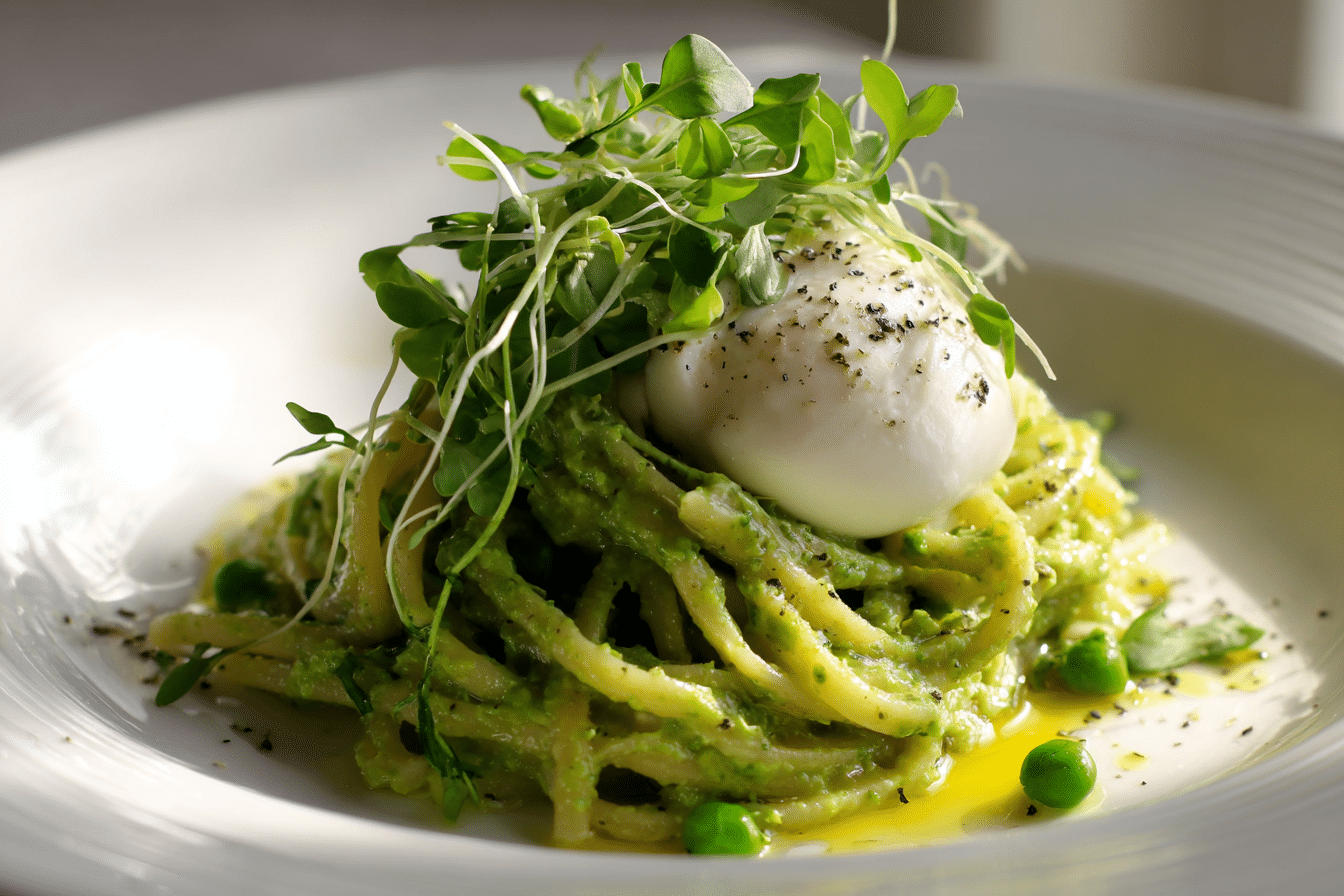
Spring pasta with leek & pea sauce with fresh burrata is a vibrant celebration of seasonal flavors. This dish pairs tender pasta with a creamy, green sauce made from sweet peas and soft, aromatic leeks. Topped with fresh burrata, it offers a luscious, melt-in-your-mouth experience that is both visually stunning and irresistibly flavorful. Perfect for bright spring evenings or a special lunch, this recipe highlights freshness, simplicity, and indulgence in every bite.
The combination of leeks and peas creates a delicate balance: leeks contribute subtle onion-like sweetness while peas provide a natural, earthy sweetness and a pop of color. Burrata adds a creamy richness, complementing the light, vegetal sauce. The pasta serves as the perfect canvas, absorbing the flavors and delivering a satisfying, comforting texture. Whether you’re cooking for a family gathering or a cozy dinner for two, this recipe brings elegance to the table without being complicated.
Ingredients Overview
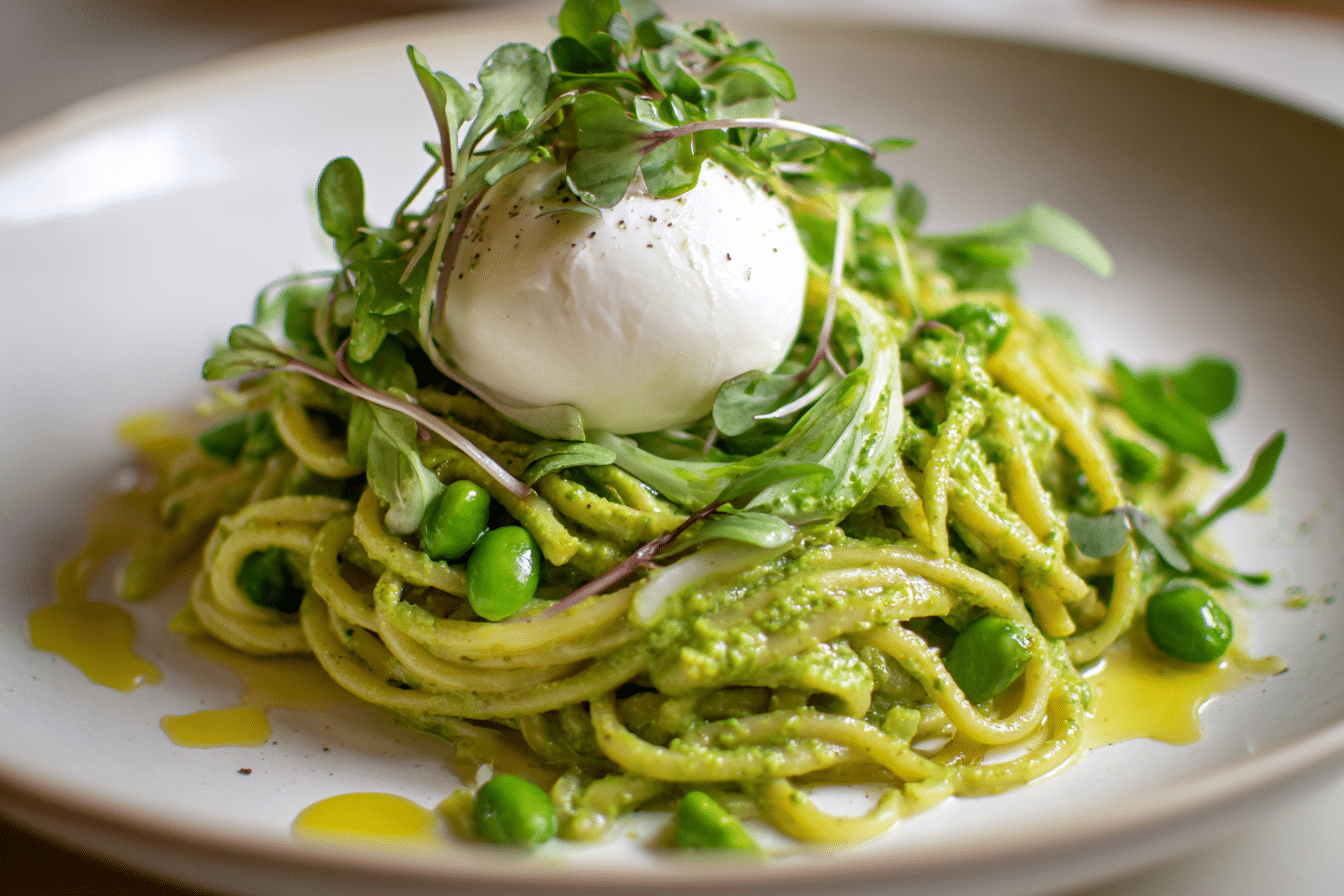
The star ingredients in spring pasta with leek & pea sauce with fresh burrata are leeks, peas, burrata, and pasta. Leeks, tender and mild, form the base of the sauce, gently cooked until soft and fragrant. Sweet peas are blended into a creamy, bright green sauce, offering both sweetness and a vibrant hue that immediately evokes springtime. Burrata cheese is creamy and luscious, adding a luxurious touch when placed on top just before serving.
Extra virgin olive oil is used to sauté the leeks, contributing a subtle richness and a fruity aroma. Garlic adds depth, infusing the sauce with gentle warmth. Fresh herbs like mint or parsley enhance the freshness and balance the creaminess of the burrata. Lemon juice or zest provides a subtle acidity that brightens the sauce and complements the natural sweetness of the peas.
Pasta is chosen for its ability to hold the sauce, ideally a medium-width shape like fettuccine, pappardelle, or rigatoni. Alternatives like whole wheat or gluten-free pasta work well if dietary preferences are needed. For added richness, a splash of cream or a touch of Parmesan can be stirred into the sauce, though the recipe shines with its light, vegetal notes. Each ingredient contributes to a harmonious flavor profile: sweet, fresh, creamy, and lightly herbaceous.
Realistic substitutions include frozen peas instead of fresh ones—though fresh gives the brightest color and flavor. Leeks can be swapped for mild onions or scallions in a pinch. Burrata may be replaced with fresh mozzarella or ricotta for a slightly different texture but similar creaminess. Olive oil can be replaced with unsalted butter for a richer version. Herbs like basil or chives can complement the flavors if mint is unavailable. These adjustments allow flexibility while preserving the character of the dish.
Ingredients
12 ounces fettuccine or pappardelle
2 tablespoons extra virgin olive oil
2 medium leeks, white and light green parts only, thinly sliced
2 cloves garlic, minced
2 cups fresh or frozen peas
1/4 cup vegetable broth or water
1/4 cup fresh mint leaves, packed
1/4 cup freshly grated Parmesan, optional
Salt, to taste
Freshly ground black pepper, to taste
1 tablespoon fresh lemon juice
8 ounces fresh burrata
Zest of 1 lemon
Extra mint leaves or parsley for garnish
Step-by-Step Instructions
-
Prepare the pasta according to package instructions in salted water until al dente. Reserve 1/2 cup of pasta water, then drain the pasta and set aside.
-
While the pasta cooks, heat the olive oil in a large skillet over medium heat. Add the sliced leeks and cook for 5–7 minutes until softened and slightly caramelized, stirring occasionally. Avoid browning the leeks too much; they should remain tender and sweet.
-
Add the minced garlic and sauté for an additional 1–2 minutes until fragrant. Be careful not to burn the garlic, as it can turn bitter.
-
Meanwhile, blanch the peas in boiling water for 2–3 minutes if using fresh peas, then drain. For frozen peas, simply rinse under warm water. Add them to a blender along with the cooked leeks, mint leaves, and vegetable broth. Blend until smooth and creamy. If the sauce is too thick, add a little reserved pasta water to reach a silky consistency.
-
Return the sauce to the skillet over low heat. Stir in the lemon juice, lemon zest, and Parmesan if using. Season with salt and freshly ground black pepper to taste.
-
Toss the cooked pasta in the sauce until well coated. Adjust the texture with more pasta water if necessary, creating a light, clingy sauce that envelops each strand of pasta.
-
Plate the pasta, and top each portion with torn pieces of fresh burrata. Allow the heat of the pasta to slightly melt the cheese, creating a creamy topping that blends beautifully with the sauce.
-
Garnish with extra mint or parsley leaves for color and a refreshing finish. Serve immediately for the best flavor and texture.
Common mistakes include overcooking the pasta, which can make it mushy and unable to hold the sauce. Also, avoid over-blending the sauce for too long, as it may become watery. Ensure leeks are tender and not browned to maintain their sweet, delicate flavor.
Tips, Variations & Substitutions
For extra flavor, you can lightly toast pine nuts and sprinkle them over the pasta before serving. A drizzle of high-quality olive oil or a few drops of truffle oil can elevate the aroma. To create a vegan version, substitute burrata with a cashew cream or plant-based ricotta, and skip the Parmesan.
Add a hint of heat by including a pinch of red pepper flakes during the leek sauté. Seasonal herbs can be swapped according to preference; basil pairs beautifully with peas, and chives enhance the subtle onion flavor. For a lighter version, use only half the cheese and rely on the bright flavors of lemon and mint to carry the dish.
The sauce can be made ahead of time and stored in the refrigerator for up to 2 days. Reheat gently over low heat and stir in a splash of water or broth to loosen it before tossing with freshly cooked pasta. This makes the recipe convenient for meal prep while maintaining its freshness.
Serving Ideas & Occasions
Spring pasta with leek & pea sauce with fresh burrata pairs beautifully with crisp white wines such as Sauvignon Blanc or Pinot Grigio. Serve it with a light arugula salad dressed with lemon vinaigrette for a balanced meal. Crusty artisan bread is perfect for sopping up the vibrant sauce, enhancing the indulgent experience.
This dish works well for casual spring lunches, dinner parties, or romantic evenings when you want a meal that feels special without being overly complicated. Its bright green sauce and creamy burrata make it visually stunning for entertaining. The fresh herbs and lemon zest add an uplifting aroma, making it a centerpiece-worthy dish that celebrates the season.
Nutritional & Health Notes
This recipe balances carbohydrates, protein, and healthy fats. Pasta provides energy-sustaining carbohydrates, while peas add fiber, plant-based protein, and antioxidants. Leeks contribute vitamins A, C, and K, along with gentle flavoring. Burrata provides a creamy texture and adds protein and calcium, though it also increases fat content slightly.
For a lighter version, you can reduce the cheese portion or use a lower-fat burrata or mozzarella. Swapping regular pasta for whole grain increases fiber content and keeps the meal more filling. The sauce is naturally free from heavy cream, making it a lighter alternative to traditional Alfredo or cream-based sauces. Lemon juice and fresh herbs boost the freshness without adding calories, supporting a vibrant and visually appealing dish.
FAQs
Can I use frozen peas instead of fresh?
Yes, frozen peas work well in this recipe and maintain their sweetness when properly blanched. Simply rinse under warm water before blending. Using frozen peas also makes this recipe accessible year-round without compromising color or flavor. Fresh peas will give the brightest green sauce, but frozen peas provide convenience without sacrificing taste.
What pasta shapes work best with this sauce?
Medium-width pasta shapes like fettuccine, pappardelle, or rigatoni hold the leek and pea sauce beautifully. Avoid very thin noodles like angel hair, which may not carry the sauce as effectively. Twists and ribbons of pasta help the sauce cling, ensuring every bite is flavorful.
How do I prevent the burrata from over-melting?
Add the burrata to the plated pasta just before serving. Its creamy center will slightly soften from the pasta’s heat but won’t lose its shape if added at the last moment. Avoid stirring it into the skillet, as it may melt completely and lose the luxurious texture.
Can I make the sauce ahead of time?
Yes, the sauce can be prepared 1–2 days in advance and stored in the refrigerator. Reheat gently over low heat and add a splash of pasta water or broth to loosen it before tossing with freshly cooked pasta. This allows for convenient meal prep while maintaining vibrant color and flavor.
What can I use if I don’t have burrata?
Fresh mozzarella or ricotta are suitable alternatives. They provide creaminess similar to burrata, though the texture will be slightly different. Choose a high-quality version to ensure the dish remains rich and satisfying.
Can I make this dish vegan?
Yes, substitute burrata with a plant-based ricotta or cashew cream, and omit the Parmesan. The leek and pea sauce remains vibrant and flavorful, providing a satisfying, creamy base without dairy. Additional herbs like basil or chives can enhance freshness.
How do I adjust the flavor if the sauce is too thick?
Thin the sauce with reserved pasta water, vegetable broth, or a small splash of cream. Blend thoroughly to achieve a smooth consistency. Gradually add liquid to avoid making the sauce too runny, ensuring it clings perfectly to the pasta.