
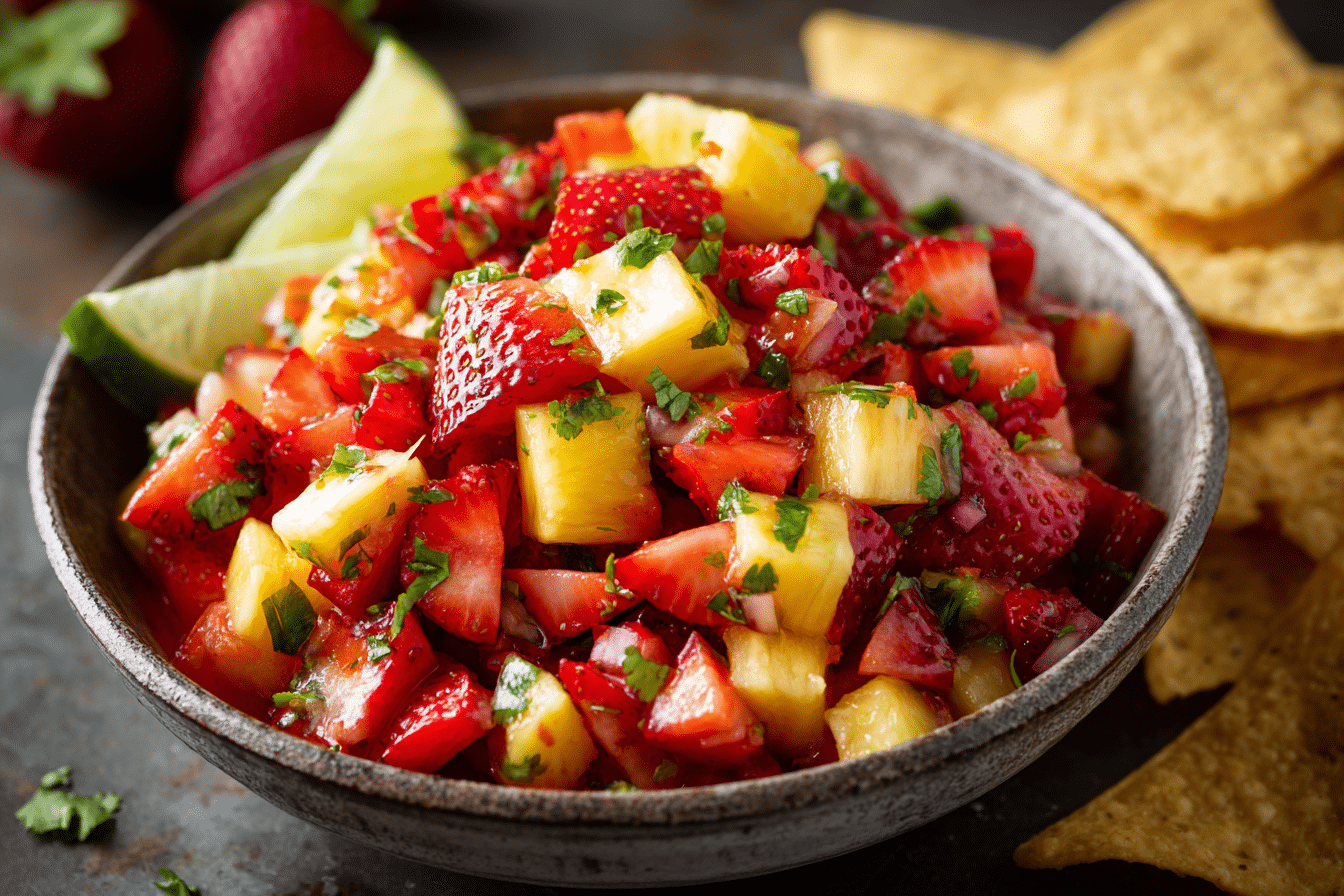
Strawberry Pineapple Salsa is a lively and refreshing dish that combines the natural sweetness of fruit with a subtle hint of spice. Each bite delivers a bright, tangy, and slightly savory flavor that feels both satisfying and invigorating. Perfect for serving as a dip, a topping, or even a salad component, this salsa brings a burst of color and freshness to any meal.
This recipe shines during warm seasons when berries and pineapple are at their peak. The sweet strawberries and tropical pineapple create a naturally juicy base, while a dash of citrus and a touch of heat add complexity. Whether spooned over tacos, grilled fish, or enjoyed with tortilla chips, this salsa makes a striking addition to any table.
Ingredients Overview
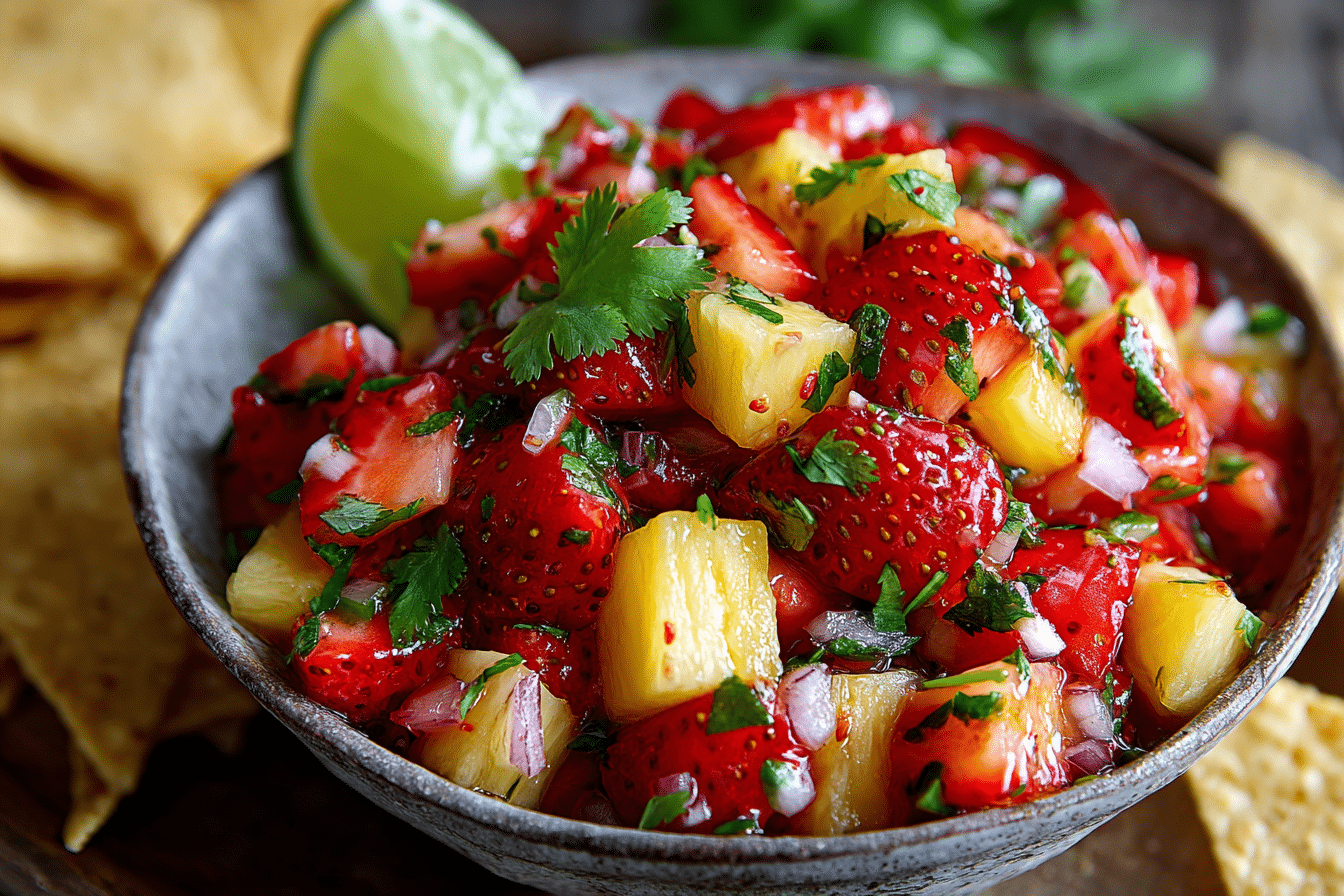
The key to a successful Strawberry Pineapple Salsa is using ripe, fresh ingredients that complement one another in both taste and texture. Strawberries provide a tender, sweet-acidic bite, while pineapple contributes juicy, tropical flavor with a slightly firmer texture. These two fruits form the heart of the salsa, creating a refreshing balance.
Red onion adds a gentle sharpness that contrasts the fruit’s natural sweetness. Finely chopping the onion ensures its flavor blends without overwhelming the other ingredients. Fresh cilantro offers a bright, herbal note that ties the fruit and citrus together.
Lime juice brings zing and helps preserve the color and freshness of the fruit. A small jalapeño adds a subtle heat that enhances the flavor profile without overpowering it. Salt and black pepper round out the seasoning, highlighting the natural sweetness and tartness of the fruit.
Substitutions are simple. Mango or peaches can replace pineapple for a slightly softer, tropical flavor. Green onions can stand in for red onion for a milder taste. The jalapeño can be omitted or reduced to suit personal heat preferences.
Ingredients
2 cups fresh strawberries, hulled and diced
2 cups fresh pineapple, diced
1/4 cup finely chopped red onion
1 small jalapeño, seeded and minced
1/4 cup fresh cilantro, chopped
2 tablespoons fresh lime juice
1/4 teaspoon salt
1/4 teaspoon black pepper
Step-by-Step Instructions
Start by preparing all the fresh produce. Wash the strawberries and remove their stems, then cut them into small, evenly sized pieces. Dice the pineapple into similar-sized cubes, discarding the core if necessary.
Finely chop the red onion to ensure its sharpness blends evenly throughout the salsa. If the onion tastes too strong, rinse it under cold water and pat dry before adding.
Carefully slice and mince the jalapeño after removing seeds. This allows you to control the heat. For a spicier punch, leave in a few seeds or add more jalapeño.
In a medium bowl, combine the diced strawberries, pineapple, red onion, and jalapeño. Gently toss to mix the flavors evenly. Fold in the chopped cilantro, which contributes a fresh herbal lift.
Add the lime juice and season with salt and black pepper. Stir lightly until all ingredients are coated evenly. Taste and adjust seasoning if needed, adding more lime juice for brightness or a pinch more salt to enhance sweetness.
Chill the salsa in the refrigerator for 20–30 minutes before serving. This resting period allows the flavors to meld together while keeping the fruit crisp. Avoid leaving it too long, as excess juice may develop.
Serve chilled, stirring gently to redistribute any liquid that may have settled. This ensures the salsa maintains a consistent texture and vibrant taste.
Tips, Variations & Substitutions
For best results, choose fully ripe fruit. Strawberries should be fragrant and deep red, while pineapple should be sweet and juicy. Underripe fruit may taste flat or overly tart.
You can adjust the sweetness by adding a small amount of diced mango or a light drizzle of honey. For a creamier twist, fold in diced avocado just before serving.
Reduce jalapeño for a milder flavor, or increase it slightly for more heat. Herbs like mint can be used instead of cilantro for a unique variation. Lemon juice can replace lime juice in a pinch, though lime is traditional.
Serving Ideas & Occasions
Strawberry Pineapple Salsa is versatile and fits many occasions. Serve with tortilla chips for casual gatherings or use it as a topping for grilled chicken, fish, or shrimp. It’s especially delightful in tacos or as a fresh salad accent.
The salsa also works well over grain bowls or alongside roasted vegetables. Its sweet-tangy profile pairs beautifully with smoky or savory foods, making it ideal for summer picnics, barbecues, and backyard meals.
Nutritional & Health Notes
This salsa is naturally rich in vitamins and antioxidants. Strawberries offer vitamin C and fiber, while pineapple provides extra vitamin C and enzymes that aid digestion.
It’s low in calories and contains no added fats, making it a light, nutrient-rich option. Fresh herbs and citrus juice enhance flavor without added sodium or sugar, maintaining a healthy balance of natural sugars, hydration, and fiber.
Can I prepare this salsa ahead of time?
Yes, you can make it a few hours in advance. A short chilling period allows flavors to blend. Avoid making it too far ahead, as fruit may release excess liquid and soften. Store in an airtight container and stir gently before serving.
How do I prevent the salsa from getting watery?
Use firm, ripe fruit and avoid overmixing. Pat pineapple and strawberries dry if they are very juicy. Start with a modest amount of lime juice, adding more to taste. Serve shortly after chilling for the best texture.
Can frozen fruit be used instead of fresh?
Fresh fruit is ideal. Frozen fruit releases more moisture and softens when thawed. If using frozen, fully drain excess liquid and note that texture will be softer.
What dishes pair well with this salsa besides chips?
It complements grilled proteins, tacos, wraps, and salads. It also enhances grain bowls and roasted vegetables, adding a sweet-tangy contrast to savory dishes.
How spicy is the salsa?
The spice level is mild to moderate. Removing jalapeño seeds reduces heat. Adjust spice by adding seeds for extra kick or omitting the pepper entirely.
How long does the salsa stay fresh?
Best enjoyed within 24 hours. Store in an airtight container in the fridge for up to 2 days, but fruit may soften over time. Stir before serving and drain excess liquid if needed.
Can other fruits be added?
Yes, diced mango, kiwi, or peaches work well. Keep fruit pieces similar in size for a balanced texture. Adjust lime juice and salt to maintain flavor harmony.