
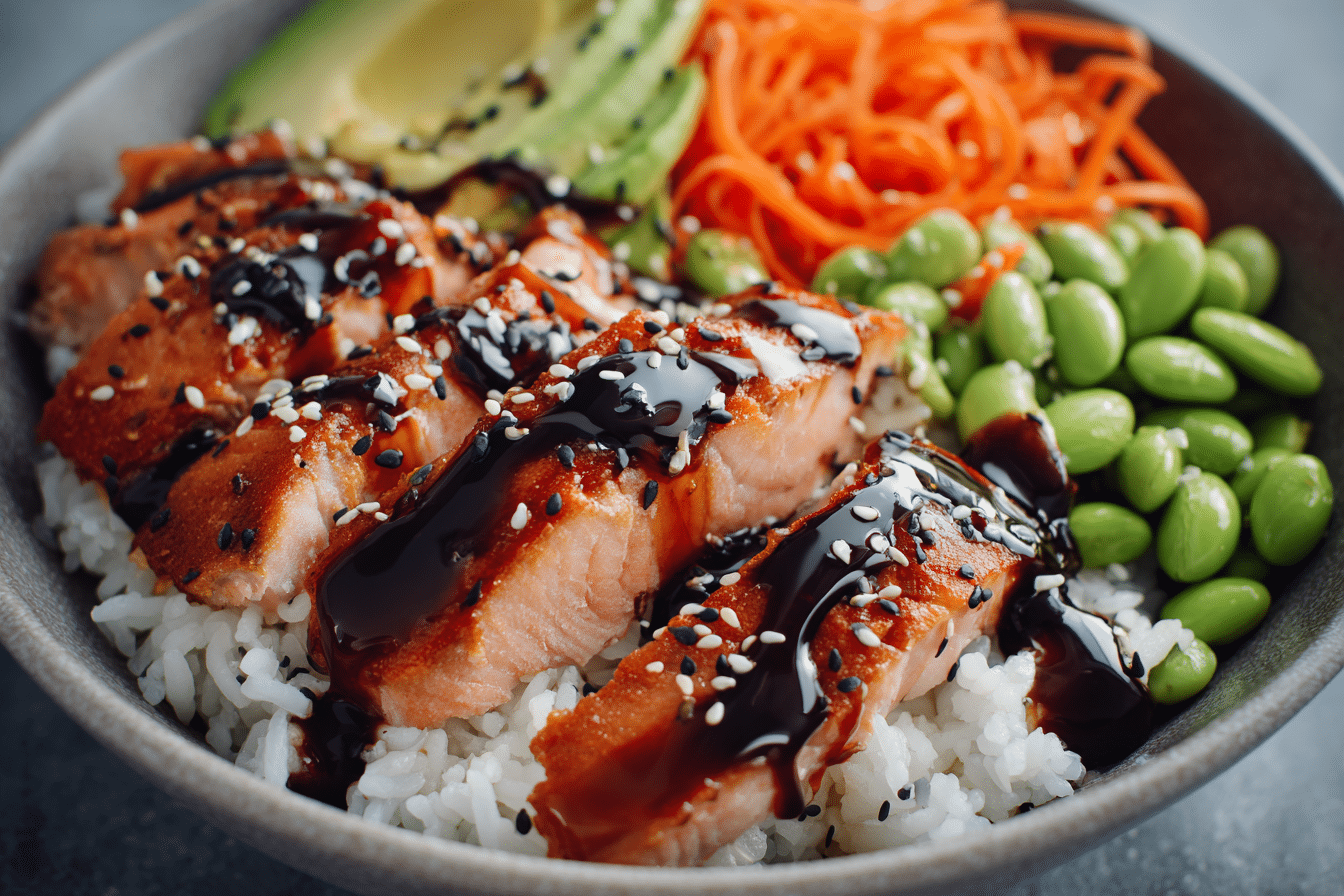
A Teriyaki Salmon Sushi Bowl is a vibrant and satisfying dish that brings together the rich flavors of perfectly seared salmon, sticky sushi rice, and a medley of fresh vegetables. The sweet and savory teriyaki glaze enhances the natural umami of the salmon while balancing the crisp textures of cucumber, avocado, and pickled ginger. Each bite is an explosion of flavor, with the richness of the fish complemented by the subtle tang of rice vinegar in the sushi rice and the nutty aroma of toasted sesame seeds. Ideal for a weeknight dinner or a light lunch, this dish offers a stunning combination of nutrition, color, and taste that can please both sushi enthusiasts and home cooks looking for a fresh, flavorful meal.
The bowl is versatile, allowing for easy customization depending on your preferences or dietary needs. Whether served as a solo meal or as part of a casual gathering, the Teriyaki Salmon Sushi Bowl transforms simple ingredients into a remarkable culinary experience. With the right balance of textures and flavors, this recipe provides both comfort and sophistication without the need for complicated techniques.
Ingredients Overview
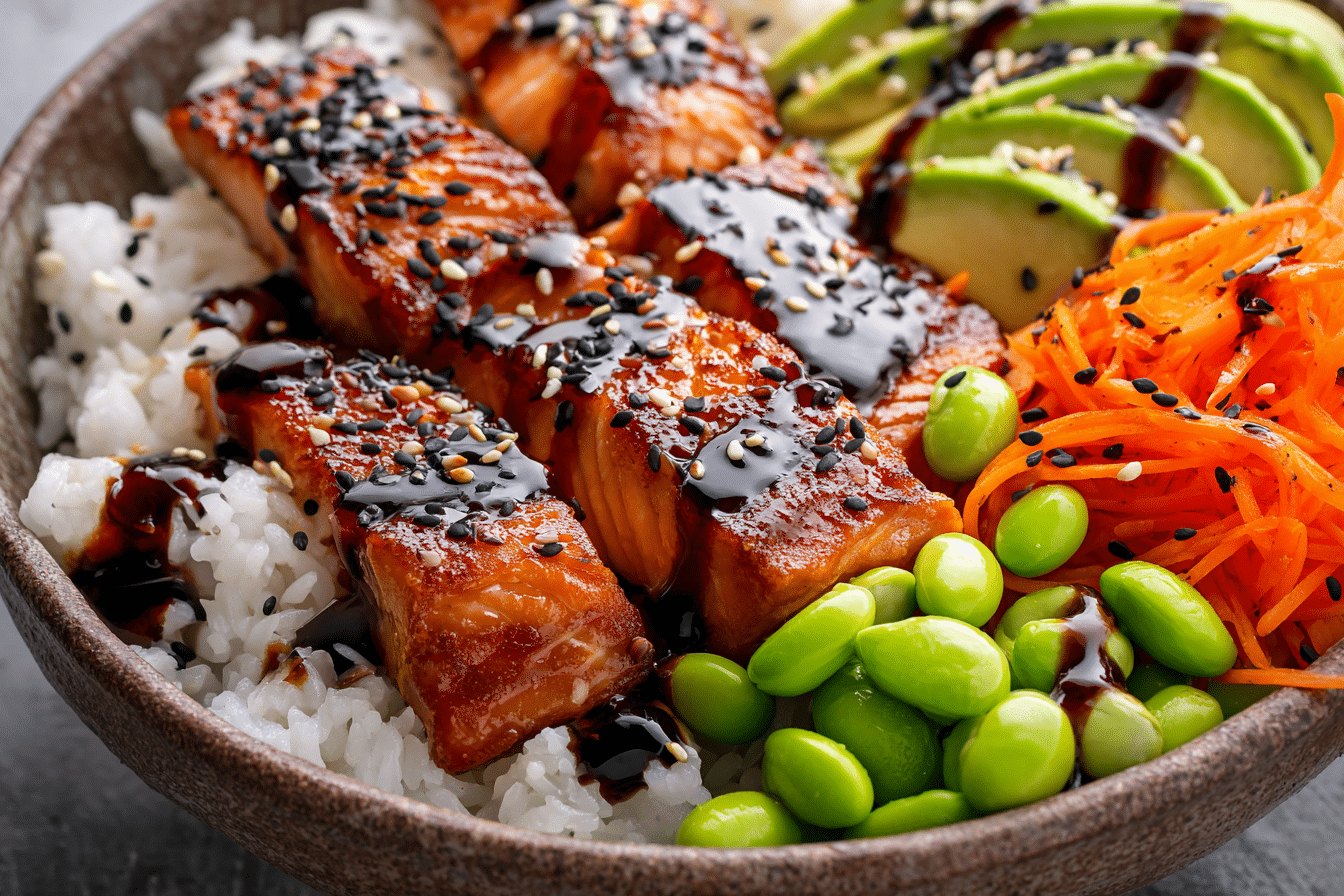
The foundation of a Teriyaki Salmon Sushi Bowl lies in a few key ingredients, each chosen for its flavor, texture, and ability to complement the others. The star of the dish is salmon, which offers a rich, oily texture that pairs beautifully with a sweet-salty teriyaki glaze. Opt for fresh, high-quality fillets for the best results. If salmon isn’t available, other fatty fish like trout or even firm white fish can work as a substitute, though the flavor will be slightly different.
Sushi rice is essential for providing a sticky, slightly tangy base that holds the toppings together. Seasoning the rice with rice vinegar, sugar, and a pinch of salt gives it that classic sushi flavor. Short-grain or medium-grain rice works best, while alternatives like quinoa or cauliflower rice can be used for a lower-carb option.
Vegetables add both crunch and freshness. Avocado brings creaminess that balances the salmon’s richness, cucumber provides crispness, and pickled ginger or radish adds a tangy kick. Edamame or thinly sliced carrots can be included for extra texture and nutrients. Toppings such as nori strips, sesame seeds, and scallions add layers of flavor and visual appeal.
The teriyaki sauce can be made from scratch using soy sauce, mirin, sugar, and a touch of ginger and garlic, which creates a harmonious balance of sweet and umami flavors. Pre-made teriyaki sauces are convenient but check labels for excessive sugar or preservatives. Drizzling a bit of sriracha mayo or spicy mayo over the top can add a gentle heat for those who enjoy a bold finish. Altogether, these ingredients work in unison to create a bowl that is flavorful, colorful, and visually appealing, making it as delightful to eat as it is to present.
Ingredients
1 pound salmon fillet, skin removed
1/4 cup soy sauce
2 tablespoons mirin
2 tablespoons sake (optional)
2 tablespoons brown sugar
1 teaspoon freshly grated ginger
1 clove garlic, minced
2 cups cooked sushi rice
1 tablespoon rice vinegar
1 teaspoon sugar
1/4 teaspoon salt
1/2 avocado, sliced
1/2 cucumber, thinly sliced
1/4 cup edamame, shelled and cooked
2 radishes, thinly sliced
2 tablespoons pickled ginger
1 tablespoon toasted sesame seeds
1 sheet nori, cut into thin strips
1 green onion, thinly sliced
1 teaspoon sesame oil
Optional: Sriracha or spicy mayo for drizzling
Step-by-Step Instructions
Start by preparing the sushi rice. Rinse 2 cups of short-grain rice under cold water until the water runs clear. Cook the rice according to package instructions. While the rice is cooking, combine 1 tablespoon rice vinegar, 1 teaspoon sugar, and 1/4 teaspoon salt in a small bowl, then gently fold it into the cooked rice. This gives the rice its characteristic sweet-tangy flavor. Keep the rice slightly warm while preparing the salmon and vegetables.
Next, make the teriyaki glaze. In a small saucepan, combine 1/4 cup soy sauce, 2 tablespoons mirin, 2 tablespoons sake (if using), 2 tablespoons brown sugar, 1 teaspoon grated ginger, and 1 clove minced garlic. Heat over medium heat, stirring occasionally, until the sugar dissolves and the sauce thickens slightly—about 5–7 minutes. Remove from heat and set aside.
Prepare the salmon by patting it dry with paper towels. Heat a non-stick skillet over medium-high heat and add 1 teaspoon of sesame oil. Place the salmon fillets in the pan, searing for 3–4 minutes on each side, or until the salmon is just cooked through and has a light golden crust. Brush the teriyaki glaze over the salmon during the last minute of cooking, allowing it to caramelize slightly. Be careful not to overcook, as salmon continues to cook slightly after being removed from the heat.
While the salmon cooks, prepare the vegetables and toppings. Slice the avocado and cucumber thinly, steam the edamame if needed, and cut radishes into thin rounds. Chop the green onion and cut the nori into thin strips. Keep the pickled ginger ready for garnishing.
To assemble the bowls, start with a base of sushi rice. Arrange the seared salmon fillet on top, followed by sections of avocado, cucumber, edamame, and radishes. Drizzle any remaining teriyaki sauce over the top, then sprinkle sesame seeds and nori strips. Garnish with green onions and add a small mound of pickled ginger. Optionally, add a drizzle of spicy mayo for extra flavor.
Check for visual appeal: the salmon should look glossy from the teriyaki glaze, the rice fluffy and slightly sticky, and the vegetables bright and colorful. Serve immediately to maintain the contrast between warm rice and cool, fresh vegetables. This recipe avoids common pitfalls such as overcooking the salmon, which can lead to dryness, or overcrowding the pan, which prevents a proper sear. Serve in individual bowls for a polished presentation.
Tips, Variations & Substitutions
For a richer flavor, marinate the salmon in teriyaki sauce for 15–20 minutes before cooking. Use low-sodium soy sauce to control salt levels, and add a touch of honey if you prefer a sweeter glaze. You can swap out vegetables depending on seasonal availability—bell peppers, snap peas, or shredded carrots all work well. For extra texture, lightly toasted cashews or almonds can be sprinkled on top.
To make the dish spicier, mix sriracha with mayonnaise for a creamy, spicy drizzle. Vegetarians can replace salmon with tofu or tempeh, pan-seared until golden, and toss in teriyaki sauce. Quinoa or cauliflower rice can replace sushi rice for a low-carb or gluten-free alternative, though it changes the traditional flavor slightly.
For added freshness, squeeze a little lime or lemon juice over the top just before serving. If you prefer a smoky flavor, broil the salmon for the last 1–2 minutes. Store any leftover components separately in airtight containers for up to 2 days, then reassemble when ready to eat to maintain texture and flavor.
Serving Ideas & Occasions
The Teriyaki Salmon Sushi Bowl is perfect for casual lunches, weeknight dinners, or even a light dinner party option. Pair it with miso soup or a seaweed salad for a complete Japanese-inspired meal. Pickled vegetables on the side enhance the tangy and savory flavors, while a cup of green tea or a chilled sparkling water with citrus slices complements the dish beautifully.
This sushi bowl is also ideal for meal prep. Assemble the rice and toppings in advance, then add the salmon just before serving to ensure freshness. Its colorful presentation makes it suitable for entertaining guests, brunch gatherings, or even a special solo dinner when you want something visually impressive without extra effort. The combination of protein, healthy fats, and fresh vegetables ensures a satisfying, balanced meal.
Nutritional & Health Notes
This dish is naturally high in protein and omega-3 fatty acids, thanks to the salmon, which supports overall wellness. The sushi rice provides carbohydrates for energy, while vegetables such as avocado, cucumber, and edamame supply fiber, vitamins, and minerals. Using low-sodium soy sauce and moderate amounts of sugar in the teriyaki sauce keeps sodium and sugar content balanced.
The inclusion of healthy fats from salmon and avocado supports heart health, while the fiber from vegetables aids digestion. For a lighter option, reduce the amount of rice or replace it with cauliflower rice. The teriyaki sauce contains sugar, so mindful portioning helps maintain a balanced meal. This bowl offers a flavorful, nutrient-dense option without being heavy or overly processed, making it a great choice for a health-conscious yet indulgent dish.
FAQs
Can I use frozen salmon?
Yes, you can use frozen salmon, but it’s important to thaw it completely before cooking. Thaw overnight in the refrigerator or under cold running water. Pat the salmon dry to remove excess moisture, which helps achieve a proper sear. Frozen salmon can retain slightly more water, so monitor cooking times carefully to avoid overcooking, which can make the fish dry. Properly thawed salmon will absorb teriyaki glaze better and maintain a tender, flaky texture.
Can I make the teriyaki sauce ahead of time?
Absolutely. Teriyaki sauce can be made a day in advance and stored in an airtight container in the refrigerator. Reheat gently before brushing onto salmon to maintain the glossy finish. Making the sauce ahead allows the flavors to meld and saves time during meal preparation. Avoid boiling it after refrigeration, as excessive heat can thicken it too much or alter its taste.
Is it okay to use brown rice instead of sushi rice?
Yes, brown rice can be used as a substitute, offering a nuttier flavor and more fiber. Cook it according to package instructions, and season lightly with rice vinegar, sugar, and salt to mimic the sushi rice taste. Keep in mind that brown rice is less sticky, so the bowl will have a slightly different texture, but the flavors remain balanced and delicious.
Can I prepare this for meal prep?
Definitely. Prepare rice and vegetables in advance and store separately. Keep salmon uncooked or cooked but cooled, then assemble just before serving. Drizzle teriyaki sauce over freshly cooked salmon to maintain its glossy finish. Store components in airtight containers for up to 2 days. This method preserves the texture of avocado and ensures the salmon stays moist.
What vegetables work best in this sushi bowl?
Crisp, fresh vegetables complement the richness of salmon. Avocado, cucumber, radishes, and edamame are ideal, but bell peppers, snap peas, and shredded carrots can be added for variety. Pickled ginger or a small mound of seaweed salad enhances flavor depth. The choice of vegetables can be tailored to seasonal availability and personal preference.
How can I make this dish spicier?
Mix sriracha with mayonnaise for a creamy, spicy drizzle. Adjust the amount to taste. You can also sprinkle red pepper flakes or add thinly sliced jalapeño for extra heat. Be careful not to overpower the salmon, as the glaze and toppings are meant to balance flavors. The spicy element should complement, not dominate, the bowl.
Can I use tofu instead of salmon?
Yes, tofu is an excellent vegetarian substitute. Use firm or extra-firm tofu, pressed to remove excess water, then pan-sear or grill until golden. Toss with teriyaki sauce to coat evenly. While it lacks the richness of salmon, it absorbs flavors beautifully and provides a satisfying protein alternative. Combine with the same vegetables and rice for a complete sushi bowl experience.
Print
A vibrant and satisfying sushi bowl with teriyaki-glazed salmon, fresh vegetables, and sticky rice for a flavorful meal.
Ingredients
1 pound salmon fillet, skin removed
1/4 cup soy sauce
2 tablespoons mirin
2 tablespoons sake (optional)
2 tablespoons brown sugar
1 teaspoon freshly grated ginger
1 clove garlic, minced
2 cups cooked sushi rice
1 tablespoon rice vinegar
1 teaspoon sugar
1/4 teaspoon salt
1/2 avocado, sliced
1/2 cucumber, thinly sliced
1/4 cup edamame, shelled and cooked
2 radishes, thinly sliced
2 tablespoons pickled ginger
1 tablespoon toasted sesame seeds
1 sheet nori, cut into thin strips
1 green onion, thinly sliced
1 teaspoon sesame oil
Optional: Sriracha or spicy mayo for drizzling
Instructions
-
Rinse and cook sushi rice; fold in rice vinegar, sugar, and salt.
-
In a small saucepan, combine soy sauce, mirin, sake, brown sugar, ginger, and garlic; heat until slightly thickened.
-
Pat salmon dry; sear in sesame oil for 3–4 minutes per side, brushing with teriyaki glaze near the end.
-
Prepare vegetables: slice avocado, cucumber, radishes, and chop green onion; steam edamame if needed.
-
Assemble bowls with rice, salmon, vegetables, and toppings; drizzle extra teriyaki sauce and optional spicy mayo.
-
Garnish with sesame seeds, nori strips, and pickled ginger; serve immediately.