
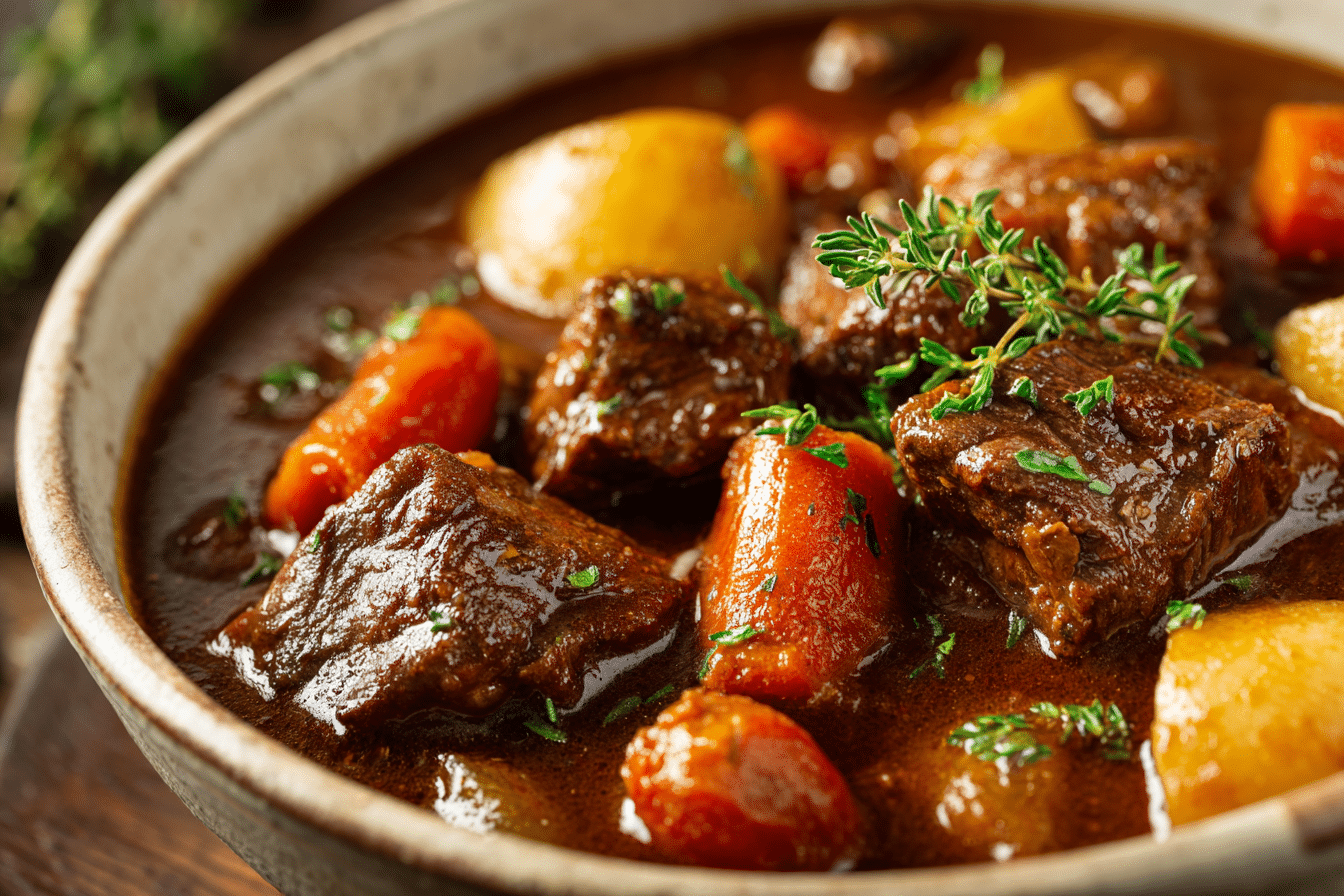
When the temperatures dip and comfort food cravings hit, there’s one dish that always delivers: a deeply flavorful, slow-simmered beef stew. This ultimate beef stew recipe is the perfect blend of simplicity and heartiness. With chunks of tender beef, robust vegetables, and a thick, savory broth, it brings warmth to your table and comfort to every bite.
Everything about this stew speaks of home cooking—no fancy ingredients or advanced techniques. Just real, wholesome food cooked slowly, allowing flavors to meld into something truly satisfying. Whether you’re preparing a cozy family dinner, stocking your fridge for the week, or looking for a weekend cooking project, this stew is the kind of meal that keeps people coming back for seconds.
With just one pot, a little patience, and the right ingredients, you can create a beef stew that’s rich in flavor, nourishing, and incredibly rewarding.
Ingredients Overview
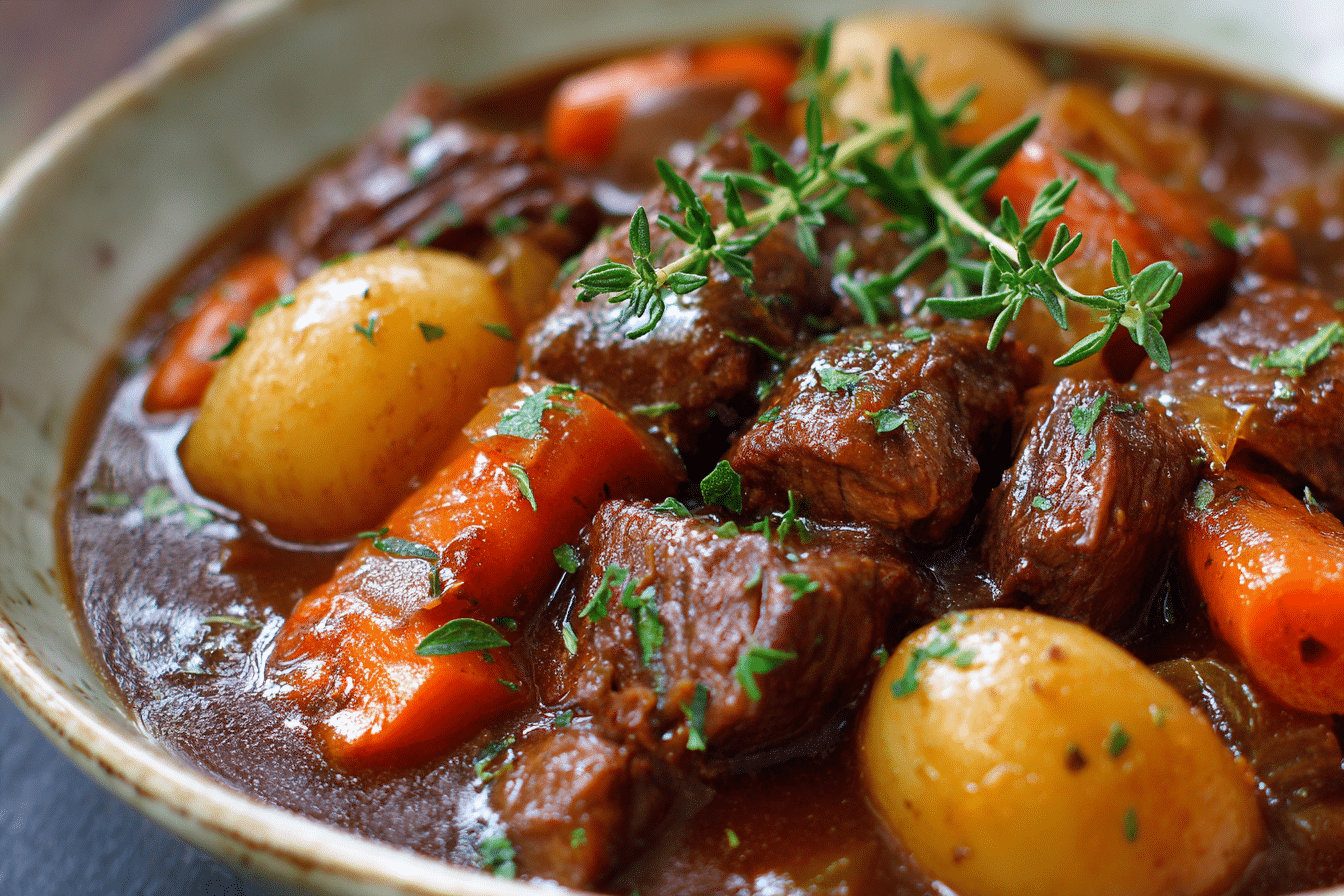
This stew’s success lies in the harmony of a few key ingredients. Each plays an important role in building flavor and texture.
Beef chuck roast: Ideal for stewing, chuck has just the right amount of fat and connective tissue. Over low heat, it turns buttery soft while lending richness to the broth. Brisket or bottom round can work in a pinch.
Carrots: Carrots add natural sweetness and earthiness. Cut them into thick slices to help them hold their shape throughout the long simmer.
Potatoes: Yukon Gold or red potatoes are best for their waxy texture, which keeps them firm. If you prefer a thicker stew, Russets will break down slightly and create a creamier texture.
Celery: Though subtle in taste, celery adds background flavor and a fresh, herbal note that balances the beef’s richness.
Onions: A stew staple, onions bring depth and a mild sweetness once caramelized. Yellow onions are traditional, but white or sweet onions will also work well.
Garlic: Just a few cloves are enough to infuse the entire pot with a mellow, savory warmth.
Tomato paste: Adds a concentrated punch of umami, acidity, and color, helping to deepen the broth’s flavor profile.
Beef broth: A good-quality broth serves as the foundation. Low-sodium varieties give you more control over the salt, while homemade broth will make the dish even richer.
Red wine: Dry red wine brings body and a touch of acidity. Cabernet, merlot, or pinot noir work well. If you’re skipping alcohol, use extra broth plus a splash of balsamic vinegar.
All-purpose flour: Lightly coating the beef in flour before searing creates a golden crust and naturally thickens the stew.
Bay leaves and thyme: These herbs gently infuse the dish with their earthy, comforting aroma throughout the long cook.
Frozen peas (optional): Stirred in at the end, peas add a splash of color and a soft, sweet contrast to the savory stew.
Step-by-Step Instructions
-
Prepare the beef: Cut the chuck roast into bite-sized, even cubes—about 1½ inches across. Pat them dry thoroughly to help them brown well. Toss with flour, salt, and pepper.
-
Brown the meat: Heat a tablespoon or two of oil in a Dutch oven or large pot over medium-high heat. Sear the beef in batches, making sure not to overcrowd the pot. Cook until each piece is browned on all sides, then transfer to a plate.
-
Sauté the aromatics: Add chopped onions to the pot and cook until softened and lightly golden, around 5 minutes. Stir in minced garlic and tomato paste, cooking another minute or two until aromatic.
-
Deglaze the pot: Pour in the red wine, scraping up any browned bits stuck to the bottom. Let the wine simmer and reduce slightly—this intensifies the flavor.
-
Assemble the stew: Return the beef to the pot, then add chopped carrots, potatoes, and celery. Pour in enough beef broth to cover everything. Add bay leaves and thyme.
-
Cook low and slow: Bring the stew to a light boil, then reduce to a gentle simmer. Cover and cook for 2 to 2½ hours, stirring occasionally. The beef should be tender and the vegetables cooked through.
-
Final touch: In the last 10 minutes of cooking, stir in the peas, if using. Taste and adjust seasoning with salt and pepper as needed.
-
Rest before serving: Remove bay leaves and allow the stew to sit for 10 minutes off the heat. This gives the flavors time to settle and the broth to thicken slightly.
Helpful reminders:
-
Always dry the beef before browning—it’s the key to great texture.
-
Avoid crowding the pan or the beef will steam instead of sear.
-
Keep your simmer low and steady for the most tender results.
-
Give the stew time; it only gets better the longer it cooks.
Tips, Variations & Substitutions
Simple ways to improve your stew:
-
Chop your veggies evenly so they cook at the same rate.
-
To thicken the broth more, remove the lid during the last 30 minutes of cooking.
-
Stir in a tablespoon of butter at the end for extra richness and shine.
Add new layers of flavor:
-
A splash of Worcestershire or soy sauce boosts the umami.
-
Try a teaspoon of Dijon mustard or balsamic vinegar for a subtle tang.
-
Add mushrooms, parsnips, or other root vegetables for variety.
Adjust to dietary needs:
-
Gluten-free: Use gluten-free flour or cornstarch in place of regular flour.
-
Low-carb: Omit the potatoes and add more carrots, turnips, or cauliflower.
-
Meatless: Swap the beef for mushrooms, lentils, or plant-based meat alternatives, and use vegetable broth.
Serving Suggestions & Occasions
This beef stew is as versatile as it is comforting. Serve it in deep bowls with warm, crusty bread for soaking up the thick broth, or ladle it over mashed potatoes or egg noodles for a heartier presentation.
For lighter pairings, a crisp salad with vinaigrette balances out the richness. Roasted Brussels sprouts or green beans also work well as sides.
Ideal for weekend cooking or weeknight meal prep, this stew also stores beautifully. In fact, the flavors are even more developed the next day. It’s a great dish to make ahead and freeze for busy days.
Pair with a bold red wine or a dark beer for a complete, cozy meal.
Nutrition & Health Notes
This one-pot meal can be part of a nourishing, balanced diet when made with whole ingredients and mindful seasoning.
Lean beef offers high-quality protein, iron, and essential nutrients. Carrots and potatoes bring fiber, vitamin C, potassium, and antioxidants. Using low-sodium broth allows better control of your salt intake.
If you’re aiming for a lighter version, consider trimming extra fat from the beef and increasing the vegetable ratio. Adding greens like kale or spinach near the end of cooking adds nutrition without overpowering the flavor.
Serving smaller portions with a large side of salad or roasted vegetables keeps the meal hearty but balanced.
Frequently Asked Questions
1. Can this stew be made in a slow cooker?
Yes, and it’s just as delicious. After browning the meat and sautéing the aromatics, transfer everything to the slow cooker. Cook on low for 7–8 hours or high for 4–5, until the beef is very tender.
2. What’s the best beef for stew?
Chuck roast is your best bet. It has enough marbling and connective tissue to become incredibly tender with slow cooking. Brisket or bottom round are acceptable alternatives.
3. Is this stew freezer-safe?
Absolutely. Once cooled, store in airtight containers and freeze for up to three months. Defrost overnight in the fridge and reheat gently on the stove with a splash of broth if needed.
4. How can I thicken my stew?
Simmering with the lid off will naturally reduce and thicken the broth. Alternatively, mix 1 tablespoon of cornstarch with 1 tablespoon of cold water and stir it in near the end of cooking.
5. What can I use instead of wine?
If you’d prefer not to use wine, simply replace it with more broth and a splash of balsamic vinegar or Worcestershire to mimic the wine’s depth.
6. Why is my meat still tough?
It likely needs more time. Even stew cuts like chuck require at least 2 hours of low, steady simmering to fully tenderize. Keep the heat low and let it cook until the meat breaks apart easily.
7. Can I add other vegetables?
Definitely. Mushrooms, turnips, sweet potatoes, or parsnips are great additions. Just add softer vegetables later in the cooking process so they don’t fall apart.
A rich, slow-simmered beef stew packed with tender meat, hearty vegetables, and a savory, thick broth. Perfect for cold weather or make-ahead meals.
- Prep Time: 10 minutes
- Cook Time: 20 minutes
- Total Time: 30 minutes
- Yield: 4 servings 1x
Ingredients
2½ lbs beef chuck roast, cubed
2 tbsp all-purpose flour
Salt and black pepper, to taste
2 tbsp olive oil
1 large yellow onion, chopped
3 garlic cloves, minced
2 tbsp tomato paste
1 cup dry red wine
4 cups low-sodium beef broth
3 carrots, thickly sliced
3 celery stalks, chopped
3 medium Yukon Gold potatoes, diced
2 bay leaves
1 tsp dried thyme or 1 tbsp fresh
1 cup frozen peas (optional)
Instructions
-
Toss beef with flour, salt, and pepper.
-
Heat oil in a Dutch oven and brown beef in batches. Set aside.
-
Sauté onion until soft. Add garlic and tomato paste, cook 2 minutes.
-
Pour in wine, scraping up browned bits. Let reduce.
-
Return beef to pot. Add vegetables, broth, bay leaves, and thyme.
-
Bring to a boil, then simmer covered for 2 to 2½ hours.
-
Stir in peas in the last 10 minutes. Adjust seasoning.
-
Remove bay leaves. Let rest before serving.